Since I can remember I have a little ritual at the end of the year when i take a few days of from work. I like to make something, no matter how small or big to focus on something completely different. Last year was no different with a little prezzie left on my PC’s keyboard. Thinking it was a voucher of some sort I opened it up to find something unusual, a flat pack of two laser cut sheets of metal to make up a 3D 1965 Mustang.
The kit was no bigger than an A6 sheet and looked interesting. I had never heard of ‘Metal Earth’ before, but after a quick bit of research they make quite a few different kits, something for everybody.
My wife was out for the day so I had some peace and quiet to build my model. I put some music on in the background and settled down for a few hours. I won’t repeat everything that is on the walkthrough page, but just some of the highlights and a couple of low lights I encountered during the build. The photos have some random colour tinges to them, but the model is a shiny polished steel, except where some detailing has been added for effects. The kit recommends some tweezers, needle nosed pliers and wire cutters where I fetched in from the garage some of my Snap On tools. The tweezers needed to be top quality in order to create the bends and folds for the models to join together via the tab and slot process.
The instructions were just diagrams which suits me as I’m a visual/kinaesthetic learner. The parts needed to be clipped away from the sheet, this is where the accurate and clean cutting by my wire cutters was invaluable. Pay close attention to the which are the mounting lugs on the sheet and which is the actual tabs for the fitting of the model. You are shown what to bend and where (the red bits on the diagrams), in order to make the parts fit together.
The hood, roof trunk and sides all needed to be linked together for the main shape, the sides added to hold the upper body all together. The tabs slot into openings and need to be bent over to hold the pieces together.
Some of these parts are insanely small which are then built up to create the 3D image. The two images below are the rear lights
With the upper body complete it was onto the chassis, this is where things got a little frustrating, during the bending process which I was very careful of doing, the fold lines snapped while trying to create the wheel arches. The left image shows the broken away section.
You could superglue the parts together but that would need to be a very accurate positioning. Instead I used a ultraviolet setting glue. I didn’t fully set the part together, just enough to hold the position but moveable. You apply the glue, then shine the ultra violet light which sets the glue hard. Only a partial exposure would be a soft set. When I was sure of the position i completed the full light exposure to give a strong bond.
The interior, seats, centre console, gear stick and steering wheel were added to the floor pan to complete. Again a seat back broke as I was bending it up into position, the other one was fine. Lower left image shows the broken seat.
The Wheels and axles was cleaver, two disk to make the front and back with a band to make the tread.
Fitting the rear axle to the floor pan another breakage that need some gluing, lower left image. The top image is complete repair.
The two halves were ready to be joined. At this point I had a good idea where the bends were supposed to be so I could finish the setting of the glue points.
Fitting together was satisfying as the model took shape, Some fettling to bend and align the parts was needed but nothing much. At this point nothing really aligned correctly, I sorted that out a bit later.
The back of the car need the bumper over riders which were only 1mm when folded.
The Front of the car needed the most amount of fettling to get things to fit, the stone guard, bumper and grill all needed to be aligned and was the trickiest part of the build keeping partially completed parts together while trying to fit to the upper body and floor pan.
Once everything was technically attached and in place, I was using the tweezers to hold the part and the other to make the bends to align up correctly..
The finished article was satisfactory.
The model isn’t the prettiest I have seen, but by nature of the kit it isn’t bad and certainly something different to make. It took about six hours to complete, including the regluing and taking pictures for the guide. The glued parts was on the inside and can’t be seen from the outside, which is good. The overall size is quite small at: 9 x 2.5 x 3.2 cm.
For the cost of £10 it was a fun way to spend some time and forget your troubles for a few hours. Not the greatest of modelling experiences I have had, but a challenge to create from a flat pack to 3D. I’m just glad it wasn’t an Ikea full sized model!
I have collected many books and reviewed most of them on my blogsite here. The latest addition to my book collection I stumbled on by accident and decided that I needed to check it out. The book is based on a highly debated topic; was there a 1964 1/2 or just the 1965 model of Mustang. This book goes into great detail about the the 1964 1/2, 1965 and the 1966 model Mustangs. If you thought there was no 1964 1/2 model, then this book will explain why there was in fact a first 1964 model year. The first Mustang was launched to the public 17th April 1964 at the World Trade Fair in New York, the car had to be developed and built for that launch date early 1964. The first Mustang rolling off the Dearborn plant’s production line on 9th March 1964. Along with the book below I also managed to bag myself a rare Ford issue workshop labour time book for the Ford production lines. This ‘Labor Schedule’ also proves there was a different process for some aspects of the 1964 cars compared to the 1965 and 1966, the ‘first gen’ Mustangs as they are often referred to. Each of the model years has its own time allocation. If the 1964 and the 1965 were the same then there would only be two years listed, and why would Ford go to the effort of listing three years. In fact there were also subtle differences between the 1965 and the 1966 models as well, such as the grill, dash layout, rear quarter furniture etc. But we won’t be delving into those differences here.
19641/2 Cars
March 9th 19664: Production begins at Dearborn, Michigan
July 13th 1964: Production begins at San Jose, California
July 31st 1964: Last documented build dater for 1964 1/2 cars at Dearborn and San Jose
Production totalled 121,538 units of which coupes 92,705 and Convertibles 28,833
1965 Cars
August 1st 1964: Production begins at Dearborn & San Jose
February 1st 1965: Production begins at Metuchen, New Jersey
July 31th 1965: Last documented build date for 1965 cars at Dearborn
August 13th 1965: Last documented build date for 1965 cars at Metuchen
August 20th 1965: Last documented build date for 1965 cars at San Jose
Production totalled 559,541 units of which coupes 409,260 Fastbacks 77,079 Convertibles 73,112
1966 Cars
August 16th 1965: Production begins at Dearborn and San Jose
August 25th 1965: Production begins at Metuchen
July 27th 1966: Last documented build date for 1966 cars at Metuchen
July 29th 1966: Last documented build date for 1966 cars at Dearborn
Production totalled 607,568 units of which coupes 499,751 Fastbacks 35,698 and convertibles 72,119
Although Ford never officially marketed a “1964½ Mustang.” The term was enthusiast-created to distinguish early builds. By 1965, Ford had standardized the lineup, but the nickname stuck, becoming part of Mustang lore and collector culture. Many owners don’t care, but a lot do. It’s just like owning a first edition book or a second edition.
The first book which has lots of well researched details and pictures in this excellent publication by Colin Date is called “Collector’s Originality Guide Mustang 1964 /12 to 1966“, a bit of a long title, but it explains exactly what this book is all about. This is obviously a very small niche market and will only appeal to die hard fans of the Mustang or those interested in the history and birth of the ‘Pony’ car.
Do you know where the term ‘Pony Car’ come from? After a couple of searches I found these interesting explanations.
‘The term originated in the USA in the mid-1960s which refers to a class of American automobiles that are characterized by their sporty appearance, affordable price, and the availability of a range of powertrain options. The term was popularized just after the launch of the Ford Mustang which reflects not only the mustang horse, which symbolizes speed and agility, but also emphasizes a focus on youthful energy and ‘spirited driving’.’
‘The general idea was to create a compact, affordable, and stylish platform that appealed to younger drivers. The Mustang’s success led to the emergence of similar cars, including the Chevrolet Camaro, Dodge Challenger, and Pontiac Firebird, all competing in the pony car segment.’
Onto the first book by Colin Date;
The book is now sadly out of print and the first edition hardback version being even harder to find. Some resellers are listing these books for stupid amounts of money to make a quick buck, (check out the screen shot below). You really do need to shop around and you can still pick one up at a reasonable cost from eBay., I got mine for just under £30 including Shipping. Mine has a little discolouration to the cover, but the inner pages are all excellent along with the binding.
The book lists many differences from rust protection to hub caps, from dash to fuel tanks, far to many to list here or I may just as well rewrite the book on my blogsite.
Here’s a quick list of 20 differences between the 1964½ and 1965 Ford Mustangs in no particular order;
Production timeline The 1964½ Mustangs were built between March and August 1964, while the 1965s began after August. Ford officially classified all as 1965 models, but enthusiasts coined “1964½” to distinguish early cars. This timeline difference explains why certain mechanical and styling updates only appear in later ’65 builds.
Charging system 1964½ Mustangs used a generator for electrical power, while 1965 models switched to a more efficient alternator. This change improved reliability and reduced maintenance issues, marking one of the most obvious mechanical differences between the two versions. Collectors often check this detail to confirm authenticity.
Horn placement On 1964½ cars, horns were mounted on the frame behind the radiator, while 1965 models relocated them to the engine bay apron. This subtle change simplified assembly and improved accessibility for servicing, making it a useful identification marker for restorers.
Hood design Early 1964½ Mustangs had uncrimped hoods with beveled headlamp bezels, while 1965 models featured improved crimped hoods. The change enhanced durability and reduced vibration issues, reflecting Ford’s quick response to early production feedback.
Radiator support The 1964½ radiator support included battery cooling vents, which were eliminated in 1965. This modification streamlined production and reduced unnecessary complexity, as overheating issues proved minimal in later testing.
Engine options 1964½ Mustangs offered unique engines like the 260 V8 and 289 “Hi-Po” V8, while the 1965 lineup standardized around the 200 six-cylinder and 289 V8 variants. This rationalization simplified choices and aligned with Ford’s broader performance strategy.
Fastback availability No fastback body style existed in 1964½. The fastback debuted in 1965, expanding Mustang’s appeal to performance enthusiasts and cementing its image as a sporty pony car.
Wheel size Standard wheels on 1964½ Mustangs were 13 inches, while 1965 models upgraded to 14-inch wheels. The larger wheels improved handling and ride comfort, reflecting Ford’s effort to refine driving dynamics.
Interior door locks 1964½ cars had round door lock knobs, while 1965 models switched to tapered knobs. Though minor, this change improved ergonomics and became a quick visual cue for identifying early cars.
Seat belt anchors 1964½ Mustangs lacked reinforced seat belt anchors, while 1965 models included them to meet evolving safety standards. This reflected Ford’s adaptation to regulatory pressures and consumer expectations.
Fuel pump The 1964½ used a longer fuel pump with a vacuum line for wipers, while 1965 models adopted a shorter pump with a separate wiper motor. This improved reliability and simplified maintenance.
Headlight buckets Early cars had beveled headlight buckets, while 1965 models featured smoother, standardized buckets. This change improved assembly consistency and reduced manufacturing costs.
Starter motor 1964½ Mustangs used a smaller starter motor, while 1965 models upgraded to a larger, more durable unit. The change addressed early reliability issues and improved cold-start performance.
Carburetor linkage The 1964½ featured a unique carburetor linkage setup, later revised in 1965 for smoother throttle response. This refinement reflected Ford’s commitment to improving drivability.
Hood release 1964½ cars had a different hood release mechanism, which was redesigned in 1965 for easier operation. This small but practical change improved user experience.
Brake light switch The 1964½ used a hydraulic brake light switch, while 1965 models switched to a mechanical switch. The mechanical design proved more reliable and less prone to failure.
Windshield wipers 1964½ Mustangs powered wipers via the fuel pump vacuum line, while 1965 models used a dedicated electric motor. This upgrade improved performance, especially in wet conditions.
Exhaust system Early cars had a unique exhaust routing, revised in 1965 for better clearance and reduced noise. This change reflected Ford’s quick response to customer feedback.
Heater blower motor The 1964½ Mustangs used a four‑wire heater blower motor, while the 1965 models switched to a two‑wire design. This change simplified the electrical system, reduced potential failure points, and made servicing easier. Collectors often use this wiring difference as a reliable way to distinguish early cars from later ones.
Paint Colours There were different paint options for 1964; Guardsman Blue, Skylight Blue, Cascade Green, Phoenician Yellow, Twilight Turquoise, Pagoda Green, Chantilly Beige and Pace Car White and for 1965 were Springtime Yellow, Champagne Beige, Silver Blue, Honey Gold, Tropical Turquoise, and Ivy Green.
I also have another link to the differences in a slightly different quick reference format here.
Although I mentioned that Ford never officially marketed the 1964 1/2 model, they certainly did separate them for their production lines purposes. This production line manual which I review and scanned here “Suggested Labor Time Schedules” has some interesting points. There are no diagrams or photos, just categorised production plant specific tasks and how long that particular part of the assembly should take to complete.
I have selected a few instances where the production times are different between the years or not available on the early 1964 cars such as the suspension components.
This ‘Time Schedule’ shows the various sections of the car and how long it should take to assemble.
These ‘Schedules’ were updated regularly hence the clip folder, the old sections were removed and thrown away in favour of the new updated sections sent to the production plants. These schedules were often discarded once the production lines changed to the new models to be made. Finding one is rare, let alone a complete one with some of the older sections as well as the new sections still in place. To many people this is a nothing document, but to collectors it’s a brief historical glimpse into the past. I have scanned all the 550 pages into a single PDF file here. Be warned though, it’s a big PDF download coming in at some 450mb in size.
Not only does this ‘Labor Schedule’ prove there was a difference, but it also confirms the findings of Colin Date where he has noted the differences, such as the suspension.
Conclusion:
Most of the time many Mustang owners will lump the 1964 1/2 into the 1965 model and leave it at that. But, those that are into their cars will know there is indeed a difference. The many third party books and articles that are out there document the differences (including myself), and there is this official Ford production line schedule. Either way, take it from Ford that there wasn’t an official 1964 1/2 car, or take it from Ford’s very own documentation that there was indeed a 1964 car! My own point of view is that I lean towards the latter point of view.
Since I had gotten my car back on the road some eleven years ago now, I still try to keep it as original as possible. Keeping the original parts where I can, replacing the parts that can’t be seen with modern reliable alternatives such as the wire loom, LED bulbs, electronic ignition etc. I have collected many things relating to the 1966 Mustang, original printed media, magazines, memorabilia all from that mid sixties era. I like things in my car to look and appear correct for the period the car was on the road first time around. With that in mind I have various eBay saved searches to look for these gems. One such search a few days ago popped up with a Tax Disc holder which I had to buy. A little more on that later after a little history lesson on what I’m talking about regarding the UK ‘Road Tax’, ‘Vehicle Excise Duty’ what ever it’s now called or will be called.
The fist motor vehicles hit the roads in the mid 1880s, by the early 1900s automobiles had increased significantly, where the current UK road infrastructure couldn’t cope. In the 1921 the UK government decided to raise funds which would be ring fenced to improve the roads. They applied a “Road Tax” to each vehicle to fund the much needed expansion. In 1934 the revenue raised from motorists has now gone into a much larger pot of revenue which is used for other things such as housing or welfare.
Since then virtually every year the motorist is targeted by successive governments to raise more money, thus the UK motorist is often seen as the cash cow of the UK. Not only can a road tax, or vehicle excise duty cost be stupid amounts, but a fuel levy is imposed as well so you pay every fill-up. To show just how much that is, if we take it that a litre of fuel costs £1.50, a fuel duty of £0.53p is applied per litre. Then on top of that there is VAT (Value Added Tax) which is in effect a tax on the tax, so that means a litre of fuel costs around £1.875 a litre. The road tax, vehicle excise duty or whatever ever name it’s given now, the way it’s calculated changes to squeeze even more out of you, now it’s based on the CO2 emissions, along with a new showroom tax for a new car. It’s no wonder the UK motorist feels a little hard done by.
As of October 2025 these are the vehicle tax costs and how it ramps up which is now based on the “CO2” emissions the vehicle produces. I can sort of see it because of the environment impacts, but the money raised will more often than not be allocated or wasted elsewhere on other ’causes’.
Anyway, rant over – back to the ‘Road Tax’ disc; to show this duty had been paid by the vehicle’s owner, there was a requirement to place a 75mm round disc in the vehicle’s windscreen to be clearly seen. The tax disc would hold the discs unique ID number, vehicle’s registration mark, the amount paid, class of vehicle and the expiration of the tax either on a rolling six-month or annual basis, the annual cost being slightly discounted. To prevent fraud of these discs there were many changes made over the decades in colour, perforations, watermarks, embossing, holograms and stamped from the issuing location.
The original on the left and the final iterations on the right.
All well and good for most people, but they were hated and not really liked. With the evolution of technologies, the requirement to display a physical tax disc in the vehicle’s windscreen was removed effective from 1st October 2014 as the tax information is now stored on a government database. Ironically many people now miss these little discs for nostalgic reasons. There is even a following where the study and collection of these tax discs is called “Velology”. The term was created by combining the initials VED (for Vehicle Excise Duty) with the commonly used “ology” suffix. There is even a little niche market to provide replica discs, exact copies would be seen as fraudulent. Some of the rare older discs can go for high values.
Finally onto my point, these tax discs need to be held onto the glass. Early days there was suction, metal displays, sticky foam or plastic as time moved on, even sticky tape or glue. Motorbikes had a metal fitting which encased the disc from the elements, also on some vintage cars too. There were many fancy designs for holders such as polished chrome, sticky with removable magnetic backs etc. The earlier plastic iterations had a mild glue around the outside (like this one) and were a one time application. Then later on a plastic vinyl-like formula which when moistened would stick on the screen and reusable. As I mentioned earlier, my eBay saved search came up with an original 60’s tax disc, once I saw it, I had to put a bid in for it, which I eventually won some six days later. What made me want this? Apart from the fact it’s period correct, but it’s also a product I have used in the past on my car.
These tax disc holders became good sources of advertising and were often given away, or information such as emergency numbers for an insurance company, car dealer’s information or a breakdown service details on the back of them. My new purchase was simple advertising and also useful information, “Duckhams” oil and the weight of oil 20w50 specified for my car, it all ties together.
I currently had a larger holder in my car given to me by Mustang Maniac, which has been on the screen for the best part of ten years. It has been faultless, but this Duckhams purchase on eBay is the only reason to change it.
I carefully pealed the old holder away from the screen, and placed it on top of my toolbox. Comparison of the old Mustang Maniac holder and the new Duckhams one. The Mustang Maniac holder also had a place to hold their (or any other) business card on the back.
The replica Tax Disc I use is also from Mustang Maniac who have a large selection of discs for many various years and different styles of stamp on the disc, click here for the link.
The design of the Duckhams holder is a simple slightly larger disc with a sticky outside to hold it on the screen. Before I peeled the backing paper off I checked it for size. Normally I would have put this with my other collectibles, but in this case I was sure it should be used.
Making sure the disc and the Duckhams text were aligned front and back I offered up the holder to the screen.
It was surprising just how sticky the outside was, but I still made sure the holder was evenly pressed onto the screen all the way around.
From the outside the holder isn’t really seen, just the tax disc itself as a minimalist look now.
With the older holder removed I used some Isopropyl Alcohol and a glass cloth to remove the slight residue on the glass which I arrowed below. This also gave a good clean surface for the new holder to adhere to.
Something like this is pretty non-de-script and over looked to be honest, and who really cares? But for me, it just adds a little something extra for the car’s originality. Also in the package there was a sticker from Duckhams which would have been stuck under the hood during a service near the oil filter.
I’m not sure if I should stick this under the hood or not, I’m not a great lover for lots of stickers apart from the factory ones of course. What do you think, should I stick it under there? Currently, I’m using Millers Semi-synthetic 20w50 oil, so technically it’s not actually correct, there again neither is the tax disc holder holder with a replica tax disc. I wonder what else awaits me on eBay to spend my money on which nobody will ever notice!
At the beginning of May I was contacted by a guy who had just finished reading about my AMT dealership models which I had posted about with some history a while ago, link here. That guy’s name was Kevin who emailed me some photos of a model that he had found at an estate sale. I responded as soon as I could to say that I was very interested. A few emails were sent back and forth where we arranged a fair price for his find, time and effort plus the postage and packaging of course. Kevin emailed me to say he had received the money and sent me a copy of the tracking number from the US Postal Service where he had kindly posted it pretty much the same day. The package arrived across the pond to the UK a short ten days later and was very well packaged.
After carefully unwrapping the packaging to expose the contents I was thrilled to see this little beauty, yes it’s just a box. But, it has survived six decades so it’s very, very cool in my eyes.
Opening the original posting box with even more care I could see the model inside. The box was fragile and I made a point not to overbend the carboard as I didn’t want it to tear.
The model enclosed model is the American Blue version which was in near mint condition.
Taking the car out the box to take some photos. The dimensions are exactly the same as my other ones just over 7″ long and just under 3″ wide.
The inside of these models have some amazing details.
Not only is it rare to find a boxed dealership model in such good condition, this one still had the original press release leaflet that came with it. I have never seen one of these before and I’m sharing the images I have taken of it to share and historic relevance. Again due to the paper being sixty plus years old, I didn’t fully straighten out the leaflet or open the folds fully, as I didn’t want to weaken the paper or risk damaging it.
The leaflet is printed in such a way as you open it the images and text read correct.
Front page:
Reverse Page:
First opened page:
Fully opened front page:
Reverse Full Page:
As my other two models are in a display case I had to get a matching case for this one with the box.
My other two prized AMT Dealership models:
My latest American blue AMT model now in my collection:
Here they are together, probably not going to be handled again for a very long time.
My red and white dealer models now share their case with a couple of the rare editions matchbox toys donated to me by a fellow Mustang enthusiast.
I’m absolutely delighted with this addition to my collection. It’s all down the thoughtfulness and kindness of Kevin O’Donnell for contacting me. It still amazes me that the postage box has survived when they are usually binned there and then. These cars were more often than not given to children to play with when the new models came out, thus they invariably had a tough life there after it would be fair to say. As for the press release leaflet that would have gone the way of the postal box, in the bin. The complete model package had travelled one last time across the pond to it’s new pampered home in the UK.
That just leaves me to say a huge ‘Thank You’ to Kevin for getting in contact with me.
If you would like to contact me regarding some memorabilia you would be willing to part with or can provide any information at all, please feel free to leave a comment on my pages or just drop me an email:
For quite a while I have been thinking to myself, wouldn’t it be good to have a nice reference guide for collectible Mustang memorabilia or for the rarer items from the past. I even thought to myself perhaps I should start looking into it and undertake the monumental task of trying to collate one. I perched myself in a comfy chair and started to look around the internet. Then up popped a book up on one of my searches which was published over twenty years earlier, already covering what I had in mind. I was gutted, but at the same time relieved. The book was authored by Bill Coulter and called Mustang Collectibles which looked to cover more or less what I had in mind. My search on eBay found it for a ridiculous price three times the price of the original publication. I tried to find a new copy, but couldn’t, in the end I settled for a second hand copy found in a USA book store, all for the reasonable and almost original published price of $25 plus shipping of course to the UK.
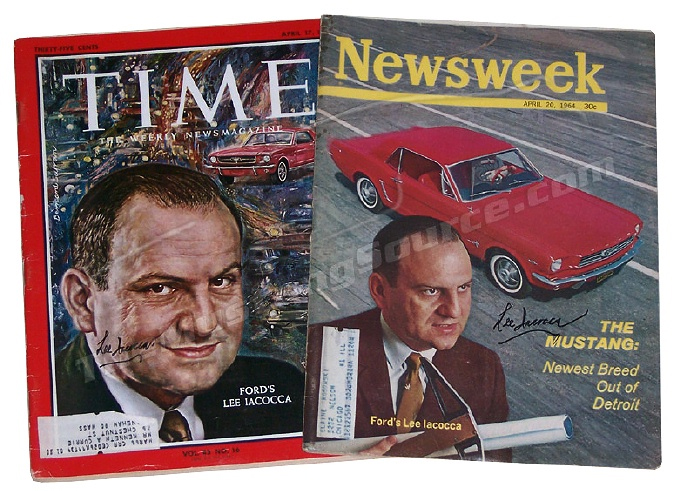
I reviewed the book here which I thought I should share on my Blogsite. The only downside is that it’s now well out of date by a couple of decades, but that didn’t effect my review score which is based on the time it would have been published. There are over 200 items covered, but it does miss things like third party manufacturers like Avon aftershave bottles way back in the day. Things that are now highly collectible are items related to the 1964 World Trade Fair for the Mustang launch. Throw away items such as entry tickets, leaflets, magazines, sales brochures (I’m still looking for an original 1964 version), original owners manuals, or even the boxes for the items that they came in originally can command strong money. Autographs are obviously are still highly desirable now days, sadly for people today they take selfies instead. It’s not quite the same as somebody taking their time out to sign something for you. I do own verified autographs from Carrol Shelby and Lee Iacocca which are some of my more prized possessions. (All these pics below are from my own collection.)
If anybody knows of another resource which is more up to date, then please do let me know. Realistically I don’t think I could have created the book, as I’m not in the USA and there is just so much memorabilia out there, I wouldn’t know where to start or have the time, maybe it’s a job for retirement. I’m also pretty sure that the people who would know about all these things will have moved up to the great car lot or sales offices in the sky.
During the winter I spend time looking for little upgrades, this year is no different. When I or any of these classic cars, not just Mustangs with large filler necks fill up, the fuel pump doesn’t shut of in time when full and more often than not the car gives a gulp of fuel splosh back out the filler pipe. I did get wise to this fairly common issue pretty quickly though. Now whenever I fill up I always put a cloth over the rear bumper ready to catch any spillage and ready to mop it up, especially off the paint job. While I was looking through some Mustang forums I found a random thread talking about an anti splashback modification which fits within the original filler neck. After checking it was all legit, I ordered one and it came a week or so later, in fact the same day as the collectible book I talk about above.
I will be doing a review and a fitting guide for this mod part soon, only when the weather is nicer of course. It should be a simple fitting but really effective upgrade. It’s an out of sight mod that could make a big difference to my Mustang driving experience, mainly because I now won’t stink of Shell V-Power petrol after a fill up!
Over the course of the last few months at home we’ve had a project on the go to sort out the loft or attic and get it boarded out. Trying to get anything up or down was nightmare and consisted of random acts of skill balancing on rafters being mindful not to put a foot through the ceiling. While sorting through the boxes of stuff I found a little box which contained a few coins that I had found in my car when taking it apart ready for the restoration. To be honest I had forgotten about them and decided to get them in a little frame, just because I can. The framers we use isn’t far away from us and I took the coins there to be mounted and get a nice frame to match the coins. I wanted black background and silver frame to match the coins, which turned out to be more difficult that I had imagined, as many frame styles had been discontinued. Before you get on my case and say “don’t clean old coins”. I don’t care, they buffed up really nice with bit of polish which is how I wanted them. I’m not getting rid of them due to their sentimental value to me. Their condition isn’t the best as half dollar was found under the seat, the 1976 Dime was found wedged in the seat track, hence the damage on the head, the other dime was under the back seat if I remember correctly.
The phone call came to pick the coins up a couple of weeks later. There were three coins which had been set into a single cut mount on a black velvet like card (for maximum contrast), and double low reflection picture glassed so I could see the front and backs of the coins. Trying to photograph a very black mount with a shiny silver coin was much harder than I thought it would be. With that in mind, forgive the random colours of the ‘black’ mount not being quite as black as it should be.
The coins are 1964 Half Dollar, 1976 One Dime and 1984 One Dime. While I was looking to add some research to the coins I learned that the coin collecting market is a minefield where condition is everything. Mine now being cleaned and one with a damaged head on the 1976 Dime doesn’t make them worth a lot now. However, both the Half Dollar and my edition of the ’76 Dime are rare to own, so I’m lead to believe.
Something that I hadn’t noticed before was that the front and backs of the coins are upside down to each other. Originally, the US Mint wanted to differentiate their coins from their medals, as the medals’ faces are struck with the same orientation as they are supposed to be worn, and therefore when rotated, still show an upright image.
Did you know?
By law, US coin designs must give “an impression emblematic of liberty.”
The USA, as a nation, are well known for being one of the most patriotic countries in the world. They uphold strong values of liberty and freedom, from everyday life to sporting events and even on their coinage! As a result of this, US coin designers are legally required to display an impression emblematic of liberty in their coin designs.
The coinage act of 1792, establishing the U.S. Mint, made defacing, counterfeiting, or embezzling of coins by Mint employees punishable by death.
The death penalty is still legal in 31 US states and the coinage act of 1792 is still in place today. This states that any Mint employee caught defacing, counterfeiting or embezzling coins can be, in theory, sentenced to death. Whether or not this would be upheld in today’s court of law is debatable.
Origin of the term “buck” (One Dollar)
This well-known slang term for an American dollar is thought to have originated in the early US frontier days when the hide of a male deer (a buck) was common currency, due to the scarcity of coinage. The term has since been adopted into everyday language.
The U.S. Mint’s coin production has grown over 131,000,000% since production first started in 1793.
The US Mint’s operation has grown and advanced greatly since the first mintage in 1972, when production consisted of 11,178 copper cents. Today the Mint produces an average of 14.7 million coins per day. The first mint in Philadelphia actually used horses to drive the machinery, obviously with today’s modern techniques are used and greater numbers of coins can be produced.
1964 Silver Half Dollar:
The United States Mint struck 156,205,446 1964-D Kennedy Half Dollars at its Denver Mint facility. Production began on January 30, 1964. The Denver Mint held an official “ceremonial striking” on February 11. The coin was first issued on March 24. This was the only circulation-quality 90% silver Kennedy Half Dollar issued by the U.S. Mint.
The Kennedy half dollar, first minted in 1964, is a fifty-cent coin issued by the United States Mint. Intended as a memorial to the assassinated 35th president of the United States John F. Kennedy, it was authorized by Congress just over a month after his death. Use of existing works by Mint sculptors Gilroy Roberts and Frank Gasparro allowed the dies to be prepared quickly, and striking of the new coins began in January 1964. The United States Mint struck 156,205,446 1964-D Kennedy Half Dollars at its Denver Mint facility. You can see the mint “D” is to the left of the stalk of the olive branch in the eagle’s right claw.
The silver coins were hoarded upon their release by collectors and those interested in a memento of the late President. Although the Mint greatly increased their production, the denomination was seldom seen in circulation. The continued rises in the price of silver increased the coin’s hoarding – many early Kennedy half dollars have been melted down just for their silver content which is a shame as it’s an amazing coin to look at.
Starting with 1965-dated coins, the percentage of fine silver was reduced from 90% to 40% (silver clad), but even with this change the coin still saw little circulation. In 1971, silver was eliminated entirely from the half dollar. Though production increased, the clad coin saw only a moderate increase in circulation; by 1980, usage had gradually fallen to the point where the half was only occasionally seen in circulation.
Obverse
Portrait of John F. Kennedy to the left, date below.
Script: Latin
Lettering: LIBERTY GR IN GOD WE TRUST 1964
Engraver: Gilroy Roberts
Reverse
Modified presidential seal of the United States of America: A shield (with vertical stripes) on the chest of an American eagle. The eagle holds an olive branch on its right talon and a bundle of thirteen arrows on its left, and in its beak a scroll with “E PLURIBUS UNUM”. A circle of stars surrounds the eagle.
Script: Latin
Lettering: UNITED STATES OF AMERICA E PLURIBUS UNUM FG HALF DOLLAR
Translation: United States of America Out of Many, One FG Half Dollar
Engraver: Frank Gasparro
There are some rare versions of this coin where the President’s hair was proofed to look different said to have been on the request of Jackie Kennedy and later changed again. Those rare coins can command considerable money.
1976 One Dime
The first Roosevelt dimes appeared in 1946, a few months after the President passed away from Polio. For the first twenty years of production the coins were made of silver. Since 1965, these coins were made of cupronickel, and that stayed the same until 1976. The interesting data is that dimes are still the smallest and thinnest American coins.
You can see the portrait of Franklin D. Roosevelt, serving as the 32nd US President, on the obverse looking to the left. Sinnock did his best to emphasize depicted facial and hair details. There were 1,268,132,504 minted this year, 568,760,000 were minted by Philadelphia and released into circulation.
Obverse
The portrait of Franklin D. Roosevelt facing left, the 32nd President of the United States from 1933 to his death in 1945, accompanied by the motto: “IN GOD WE TRUST” and surrounded with the lettering “LIBERTY”.
Script: Latin
Lettering: LIBERTY IN GOD WE TRUST 2017 P JS
Engraver: John R. Sinnock
Reverse
Ahead of the motto “E • PLU RIB US • U NUM”, an olive branch, a torch, and an oak branch symbolize respectively peace, liberty, and victory and are surrounded with the face value and the lettering “UNITED STATES OF AMERICA”
Script: Latin
Lettering: E • PLURIBUS • UNUM UNITED STATES OF AMERICA • ONE DIME •
Translation: Out of Many, One
Engraver: John R. Sinnock
My particular edition doesn’t have the “D” minting mark which makes it a date from 1965 to 1979.
1984 One Dime
The design of this coin hasn’t changed from the 1976 so the details are the same apart from the number produced 856,669,000.
Obverse
The portrait of Franklin D. Roosevelt facing left, the 32nd President of the United States from 1933 to his death in 1945, accompanied by the motto: “IN GOD WE TRUST” and surrounded with the lettering “LIBERTY”.
Script: Latin
Lettering: LIBERTY IN GOD WE TRUST 2017 P JS
Engraver: John R. Sinnock
Reverse
Ahead of the motto “E • PLU RIB US • U NUM”, an olive branch, a torch, and an oak branch symbolize respectively peace, liberty, and victory and are surrounded with the face value and the lettering “UNITED STATES OF AMERICA”
Script: Latin
Lettering: E • PLURIBUS • UNUM UNITED STATES OF AMERICA • ONE DIME •
Translation: Out of Many, One
Engraver: John R. Sinnock
The previous owner had lost the coins in the car, within the interior. It would be nice to think that the Half Dollar was around at the time in ’66 when my car was purchased and had been in the car since then. The Dimes are still in circulation today and they could have been lost any year. The ’76 coin was wedged in the seat track and the seat wouldn’t move, hence the damage to the coin. Like I said earlier, the sentimental value is immeasurable to me, especially as they Half Dollar is so close to the year of my car being made. Not quite Ford Mustang memorabilia, although there is a very tenuous link. The Half Dollar was also released in the same year as the Mustang was launched in April 1964. I’m pleased with how the coins and frame has come out. Although I would have liked the frame to have been smaller, unfortunately it was the minimum size they could make with that particular type of frame. The silver frame which I wanted was sourced just for me as a special order.
Has anybody else found something in their cars like this, let me know if you have, or was I just lucky?
I have been known to collect many things Mustang related, but I try to keep the collection to the tasteful items. I draw the line at such things like Mustang trainers, soft cushions, bedding sets, teddy bears, aftershave, Zippo lighters etc. as they are all just seem to be cashing in on the Mustang name. I like to collect things that are an of historical importance from the first generation of Mustangs, 1964 – 1966. Some of those items have been historical documents for the 1964 World Trade Fair Mustang launch, Newsweek, Time and Life, along with various other popular car magazines that covered the Mustang launch, test drives or articles at the time. I also managed to grab some items like original sales brochures, promotional literature and such like, which ended up in my collection. As many of the items I have are paper they tend not to stand the test of time unless looked after. Most magazines like Newsweek were just thrown away, making survivors of the time in good condition had to find. I collect these sort of items for their importance and not the monitory resale value trying to make a quick buck. I don’t keep them for a while and then sell the items on as an investment. I won’t part with anything I have, or sell it on for a profit. I have been given many rare items over the years which started my collection off – a special thanks to Gary W. who is also a big collector. It was Gary that started me on this slippery slope of emptying my wallet on a regular occasion.
I have added just added a couple of more items to my collection, which I have been looking at for a while now and wanted good condition ones. There isn’t much known about these items in descriptive detail so I wanted to put that right. I have spent a fair bit of time researching and also created a page dedicated to them here which I hope to add to as time goes along.
As I will add more posts to this website, then this article will be gradually pushed down the order. So having a permalink in the menu will help keep the information to hand and hopefully help out others.
So, what am I talking about? The answer is; ‘dealership model’ cars.
These models are something that were official promotional items made for Ford for their various in production and future production line cars as they changed the real car designs. These models therefore served an important purpose. I suspect many of these models were thrown away after a couple of years or given to children as toys to take part in some fantasy destruction derby with other toys, many of which ended up in the great (plastic) scrap yard in the sky.
The background to these models is that various forms of these promotional models started to appear at motoring dealership around the 1950s from various suppliers. These ‘dealership’ models as they became to be known are certainly not to be confused with the component model kits which were built and stuck together, like Airfix, Tamiya or Revell. These dealership models were prefabricated and distributed to the motor company dealerships. They were to promote and give a three dimensional representation of the new models that were being introduced by the various manufacturers. This gave the potential customer a much better experience of what they are going to buy, rather than just flicking through a printed catalogue. With these dealership models you got to appreciate the dimensions of the car from any angle.
I will try to sum up the information that is out there from the likes of Wikipedia and other collectable model based sites, concentrating on the dealership cars side of the AMT business.
What we do know is that these quite fragile models are highly collectable as memorabilia especially for important cars from the manufacturers, not just Ford. As for the numbers actually produced I haven’t been able to quantify, but they limited in number and not a mass produced item. The actual numbers produced will obviously vary from various motor manufacturers, and the number of dealers actually selling the cars of course. These models were not for commercial retail, they were just a promotional item that was going to binned when that model is no longer produced. Many of these model cars that appear for sale now days are pretty battered. However over time they have become recognised to be for what they are now, collectable items from a bygone era.
The costs for these models production has been reported at the time as anything between $50,000 ($650,000 in todays money), to $250,000 ($3,000,000 in todays money). Either way that is not an insignificant amount of money for a launch of a car with no idea of how it will actually sell, thus recoup some of the promotional money back at the time. A big advantage that Ford had was on 17th April 1964 at the New York World’s Trade Fair, the Mustang was launched to the public to critical acclaim. This was backed up by selling over 680,000 Mustangs in the first year, which is still a record. With that type of response Ford felt the investment would be worthwhile as they couldn’t make the cars quick enough for the public to buy them, with some dealers having lengthy waiting lists. Having an accurate model of the car that could be seen by the customer was a huge bonus at the time.
The History of AMT
In 1948 a company called ‘AMT’ was started up by West Gallogly Sr. in Troy, Michigan USA. ‘Aluminium Model Toys’ was created as a secondary business by Mr. Gallogly. Other manufacturers were already creating dealer models which were mostly zinc based. Gallogly also wanted to make the models out of aluminium, hence the name ‘Aluminium Model Toys’ was given to the company. However, very shortly after the name was chosen, the use of plastics materials rocketed around the world and the name Aluminium Model Toys deemed to be confusing for their plastic models, thus the name was rebranded to a shortened version of the name, ‘AMT’. In 1978 AMT was bought out by Lesney better know for ‘Matchbox Toys’. In 1983 Lesney relocated to Baltimore and sold the AMT company to ERTL, which was then to be known as AMT-ERTL. Later in 2007 the AMT name was no more and the company name was now just ERTL.
In 1958 AMT were producing ‘3 in 1’ kits which allowed three different version of model which could be made; ‘Stock’, ‘Custom’ or ‘Racing’ with numbered decals.
In 1962 AMT were also involved with ‘Slot Car’ industry which started in 1912 which is still hugely popular today. They manufactured various sizes of car such as 1:24, 1:25 and 1:32. The 1:32 scale was adopted as the standard by Scalextric for fun racing at home or the more serious competitive racing scene.
In the mid 60’s Mr. Gallogly went on to use his good connections with the Ford Motor Company to manufacture some highly detailed promotional models for them. What was said, who agreed it and what the actual deals that were struck at the time during those meetings is unclear. But, it must have been pretty good for the Ford Motor Company executives agreeing to the Dealership Promotional Models.
It was recognised during that golden era for the motor manufacturing industry, it was deemed the norm for a new model to be produced every year or two years max. To make people aware of the new vehicle designs which were in coming and in production, these promotional models were distributed to the dealers, often well before the actual cars arrived for demonstration cars or actual stock of cars for sale.
Sadly towards the late 1960’s and certainly before 1970s the dealer models were not a thing anymore and all but faded out from being produced and no longer sat proudly on a salesman’s desk.
The Mustang Models
Focusing on the first generation 1965 models as those are the ones I have. These models are extremely well detailed, and they were supposed to have been made with the colours that the manufacturers were painting their cars at the time. The colours I have appear to be ‘Rangoon Red’ and ‘Wimbledon White’.
Dimensions
The models are manufactured to the scale of 1:25, that converts to a measurement on model of 1cm will convert to 25cm on the real thing.
Photographing the dimensions against a tape measure is a little distorted perspective by the camera, so I have taken a few variations. But, the stated measurements are correct with the photo taken directly above the line of sight to the tape measure.
The length of the models are 183mm long or 7.20 inches or 7 3/16″
The Width of the models are 70mm or 2.75 inches or 2 3/4″
The Height of the models are 50mm or 1.96 inches or 1 31/32″
The whole model weighs in at just 105grams or 3.7oz
Construction
The construction is very fragile and light weight brittle plastic which is easily marked or dented especially on the leading edge of the hood which narrows to almost nothing.
The single piece floor pan forms details of the underside of the car, suspension, engine, gearbox, all the jig points, grommets, bolts, fuel tank, brake lines for the emergency brake cable, and a single exhaust system which comes from a V8 (I will elaborate on this below under The Details heading), as there are two exhaust manifold pipes, going to a single pipe, and on to a single muffler box. There are four screws in total two at each end that hold the model together. The exhaust tip is missing on the right side (passenger) as the one of the screw points cuts it off.
The other side (inside) of the floor pan forms the seats, dash area and centre console (which would have been an optional extra at the time).
The steering wheel and column looks to be a separate moulding attached to the dash. The interior detailing shows the heater controls, radio, lateral dash instruments, glove box, steering horn and even the markings for the automatic gearbox box selector, but there is no T Handle for the shifter or indicator stalk. Both of which I suspect would have been so delicate they would have broken being removed from the moulds or from just being handled. Looking in the footwell there is a third pedal for the clutch, this would be a contradiction for the automatic gearbox markings. The door cards look to be the ‘Pony’ interior or deluxe option, but there is no running horse embossed on the back of the seats, which are part of the ‘Pony’ interior package. The front seats are the bucket style and not the rarer bench seat option (around 2.5% of total Mustangs made) which was available at the time.
The four wheels are attached to a bar rested in locators on the floor pan mould (unseen) and spin freely. The wheels are shown with the hub caps and white wall tyres which also show some details as radial grooved. The hub caps will cover the wheels bolts, which would have been four lugs for the inline six cylinder or five lugs for the v8s.
The ‘glass’ or windscreen is a single moulded part which covers the front screen, the two small door quarter lights and the rear screen. It’s not uncommon to see one or both of the door quarter lights broken as they are quite fragile. The clear plastic is susceptible to easy scratches and marking. If you look on the inside (below) where the headliner would have been, you can see where the clear plastic has been attached to the top part of the model. You can’t quite see it on the picture, but the centre of the ‘glass’ is missing, obviously to save some costs on the clear plastic used.
The Details
The chromed parts of the models such as the bumpers, bumper overriders (front and rear), headlights, rear light bezels and grill are high quality with a good reflection, not just cheaper silver paint. These look to be separate components attached after the assembled model. On my models the red car has a little wear and tear on the hood leading edge. I suspect that picking them up and putting them back on the salesman’s desk a few times would contribute to that, or being raced around the furniture at home.
Starting at the front there are the headlights and the cross bar coral grill, the grill itself shows a honeycombed effect. The Coral and Pony logo are crisp mouldings. The licence plate just shows the Mustang brand. The hood leading edge shows the ‘F O R D’ lettering but not in chrome.
The side of the car shows the Mustang ‘Tribar’ emblems and ‘Mustang’ font wording behind the front wheels near the bottom. On the actual cars there is an engine option emblem that sits above the front bumper and below the waist line of the car, a few inches back from the headlight. These models don’t have those emblems, even though the underside of the model shows a v8 engine in place. The options would show, 289 (v8 option), 200 sprint (inline 6 cylinder) or HiPo for the GT model etc. Not having individual models made just for a i6 or v8 and more generic would keep the costs down for the models.
The rear quarter panel ornaments are shown as well as the side rocker cover strips, added as an optional extra at the time. The back of the car shows the rear light bezels with red plastic for the lenses. There are also back up lamps which were also an optional extra. The bumper has the overriders shown, but on my red model they are broken off, a common casualty on these models. This is the only part of the red model that has something broken or missing. The rear licence plate shows the Mustang branding.
The top down view of the models shows the cowl grill and the wipers. There are no door rear view mirrors on these models, as they were an optional extra at the time fitted by the dealers.
Other Dealer Models
Other colours were made such as Tropical Turquoise (top), Vintage Burgundy Red (middle), and American Blue (bottom). There may have been other colours, but as yet I haven’t seen them, which doesn’t mean they don’t exist.
There were some Fastback models made a little later on in the ’65, other colours are unknown.
The holy grail for many collectors would be the boxes that these models came in, they weren’t any special to look at. I haven’t seen any boxed versions up for sale yet, but I did find this image of one. With the box the models are worth a little more, but as with all things collectable, condition is everything.
SomeLater YearModels
1966
There was the trim changes notably to the front grill with the Coral bars removed, the grill now having brushed leading edge horizontal lines. The rear quarter panel ornaments updated to the three pronged style. This model looks to have been in Calypso Coral colour.
1967 – 1968
There was a major body redesign, with the models being Fastback, and not the Coupe style. The minor difference between the ’67 and ’68 were the side markers, which were not shown on these models.
(This image I found of a ’67 shows a broken front bumper.)
1969
This model is showing the performance end of the range. These models didn’t show any emblems on the front fenders that would have been there.
There was another face lift for the 1970 models. But, as I mentioned earlier, by then these plastic dealership models were no longer being made.
On Display
I purchased a display case (more details on that on the main page), for the models to be stored safely and away from dust.
I’m not sure I have covered everything or missed some important facts out. So if you have any additional information or maybe correct me, then please drop me an email, or add a comment and let me know. I will then update with additional information.
I’m always on the look out for any similar memorabilia with a certain online auction site being my main source. If you have anything interesting you may wish to pass on, then please also let me know and I will obviously pay for it along shipping costs.
Eight and a half years ago, way back on October 28th 2012 I wrote my first post on my little ol’ blog. I had nothing planned other than to share with a few friends what I was getting up to and how I was getting along with my Mustang restoration. Ultimately I could look back in a few years time and take a trip down memory lane with the photos I had taken a certain points of the restoration.
Delivery of my project car 17th September 2011, before it went to Mustang Maniac where I had professional help & guidance on my restoration over the years. Those guys have become some of my best mates of mine as a result.
When I attend car shows or via my blog and emails etc. I often get asked how I clean and detail my cars;
Some of the Car Shows and photo opportunities;
I get asked how I fitted things, how I upgraded this or that, I even get asked for advice on their own restoration projects.
That got me to thinking about adding extra sections like the tools (a selection of them here), that I used on project and since use, considering that I’m just a weekend warrior with a spanner.
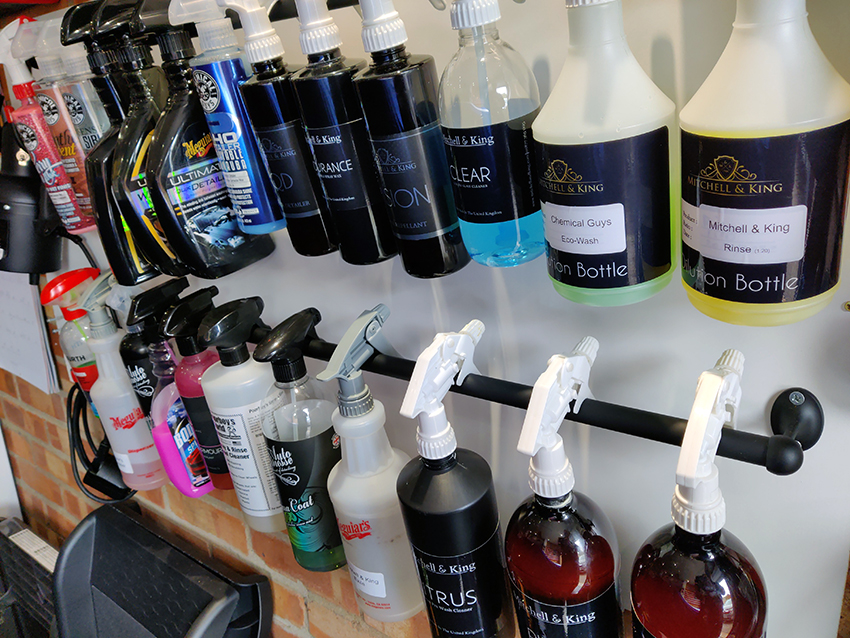
Products that I used to keep our daily cars clean and the Mustang fully detailed.
My merchandise I bought over the years or have been given since I started my journey with the Mustang.
I even get requests to review items, all of which I buy if I think I could use them myself. As a result of all these things, my blog has evolved into an entity of it’s own.
Fast forward a number of years to 2021 where I my little ol’ blog has reached a massive milestone. This is not intended as some bragging rights by the way, but more like myself being proud of the result. Somebody within the USA this morning 15th May 2021 made my day:
My blog has just passed 1,000,000 hits!
I am absolutely amazed to think this could ever happen, I remember getting excited about getting ten hits in one day!
I value every single one of you that has followed me or just pops in for a quick read, like or even the odd comment. I would like to say a massive “Thank You” from the very bottom of my heart.
I don’t actually get anything from my blog/website on WordPress, other than some add money that goes straight to the hosting and my domain fees. It’s sort of self sufficient in a way. If anything I’m out of pocket, but reading the comments and seeing the views more than make up for it. Hopefully I can help somebody, somewhere with something.
My first follower was Debbie Nuessle (click here for her latest venture), from across the pond. We both started blogs within a few days of each other, both revolving around our love of American Muscle cars, especially Ford Mustangs of course. We keep in touch outside of the Blog circle and have become good friends.
I have a number of followers who ‘like’ the posts I put up after even after all these years, thank you all, it means a lot to me. I have such a range of followers; a very talented and well-known Soprano opera singer; Charlotte Hoather (click here for her blog), mechanics, engineers, oil rig mover, artists, photographers, builders, wildlife photographers, fellow classic car owners, writers, product manufacturers, shops, brands, a few younger bloggers, students, world travellers, petrol heads, gear heads, car clubs, writers, novelists, journalists, teachers, photojournalists, professional bloggers, social influencers, religious followers, the list just goes on. (There is even ‘ahem’ some adult orientated content following me!) The full list makes for some amazing reading.
Just in case anybody is interested in some of the more selective stats;
I have a total of 2,700 followers, of which 871 are on WordPress, 2,300 on social media, just over 2000 on Facebook, which is not my favourite of all the platforms I must admit.
I have been visited by 199 countries and the top ten countries in order are; USA, UK, Canada, Australia, Germany, China, France, Netherlands, Finland and New Zealand.
There are stunning islands that have visited me, Mauritius, Seychelles & Maldives. Some of those Islands are so small they wouldn’t be able to fit a Mustang on them! My bucket list is to spend a few days on these islands to chill and take in some sun.
The more obscure countries with a single visit are: Burkina Faso, Falkland Islands, Kosovo, Tonga, Northern Mariana Islands.
To date I have posted 340 blogs including this one over the eight and half years I have been posting on this blog.
These figures are quite low compared to some of you mega stars out, there with you super popular blogs I know that. But for me, like I said earlier, I’m honestly humbled and grateful to every single one of you who wants to look at a blog all about one man and his Mustang!
Today is my car’s birthday. This day fifty four years ago on the 11th July 1966 my car rolled off the Ford production line at Dearborn, Michigan. USA.
1966. A Mustang hardtop coupe comes down the final assembly line at DAP.
Speaking of things being built, I was bought a model kit a while ago which was the LEGO GT500 kit, which I reviewed here. I thoroughly enjoyed it of course and wasted a good few hours making it. For my birthday (which was a good few months ago), I was bought another kit from my wife. I think it was to keep me quiet to be honest. This time it was a Technical kit which can cost between £75 and £150 depending on where you buy it. This kit is not an official LEGO kit but is pretty much identical to the real thing. I have done a full review of this kit here.
The kit is based on the official Hoonigan v2 made by LEGO with 3168 pieces. Model kits of this type differ in the fact it doesn’t rely on bricks, it relies on pegs and holes to fit together.
There is an option to be powered by motors and remote control which are purchased separately. An option I didn’t want to go for.
In the box was fourteen bags of parts, none of which were numbered like the Lego kits. There were bigger bags, the wheels, sheet of stickers, and then there were smaller bags of the pegs or fixings of different sizes and colours.
The instructions are not brilliant due to the fact that the print colours did vary a bit and the difference between the light grey and brown was difficult to spot on some pages.
There is a distinct pattern for the build as its cleverly build in a modular style. The smaller build part instructions are clear enough with arrows of what goes where. With the modular parts being added to the bigger build, it can be difficult to see where some bits are fitted together on the complex diagrams.
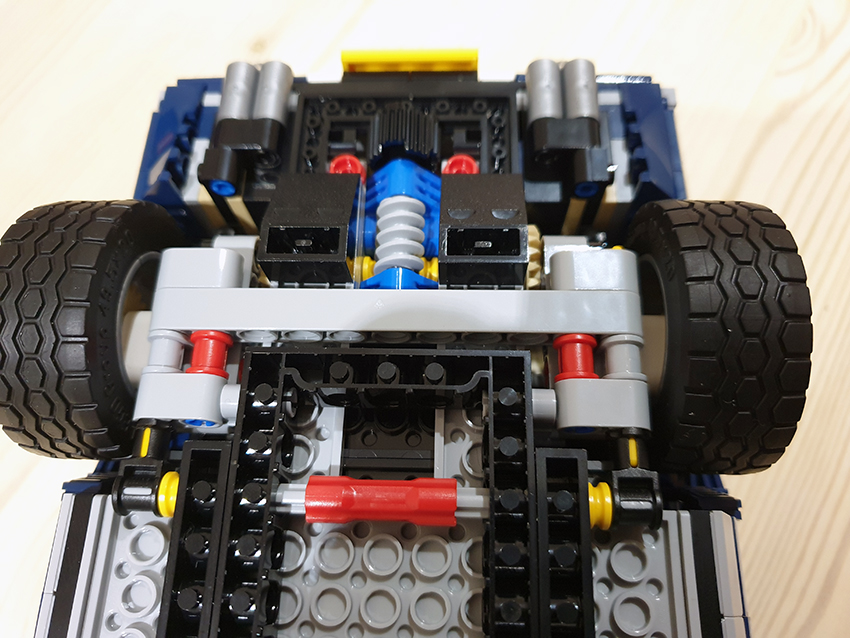
The model starts from the inside out, you build the differentials and gearing for the rear of the car. The diff then gets added to a bit of chassis which is ready for the next bit and so on.
As you build a part you can check the movement and operation. Little cogs marry up and are held by splines in part holes to allow it to move.
The rear suspension was fun and the way the whole section moves is very clever indeed. What starts out quite flimsy then with more parts it’s bolstered up and quite solid.
With the tunnel section completed in the middle the floor pans are added and all of a sudden the scale of the model becomes clear.
The build of the engine block has working pistons for you to see running off their own cam shaft.
The front suspension is complex and perhaps the hardest part of the model for me. Lining up the mini half shafts and gearing was a bit fiddly with my big hands. The curved sections are a long flexible spline that has tubes slid over it and the ends plugged into a termination point. Things like the headlights look great but can be easily dislodged, a little more on that later.
The fenders are built up to complete the look with the hood. The hood has a large cut out in the centre and does the frame of the hood a little fragile. Silver parts are added to the engine for the turbos and exhaust pipes.
The bag of silver parts some of which were obvious for the engine parts, the rest were for the seats sides and head rest. The steering wheel inside the car could in theory move the wheels, but it’s not strong enough for that and jumped a tooth or two on the cog, I had to jump it back again to centre the steering back up. But if you move the steering rack the steering inside the car will move fine.
The seats fit well into the car, but you have to be careful of the dash area not to dislodge the delicate steering joints.
The rear quarters are added and the wheel arches. Again these are twin flexible splines where the tiles are slid over and have to be even spaced out to look right. The fitting is plugged into termination pieces at each end and has to bend like a rainbow shape to fit. Give them a knock and they will come off which is very annoying.
Behind the seats is reinforced with more building. There is a silver part of the interior roll cage behind the drivers seat that attaches one end and just left to flap about inside.
This aggravated me and with some bits that were obviously going to be left over I made a little mod and attached it to a spare hole and attached it properly. Seen below with the left hand elbow joint. Also adding a little more stability.
The doors were straight forward enough, with a complex hinge mechanism which allows the door to open wide. The attachment to the rest of the car was more awkward as the one of the rubber bands that holds the doors shut pinged out of place which resulted in a deconstruction to refit the bands. Terrible idea I think as the band will perish and break leaving the doors to flap around at a later date.
The back of the car’s light panel gets built with lots of red and black thin bricks to make the tail lights. The result is a very effective and convincing light panel. Although no lights work on this car at all.
The trunk opens and closes with a hinge idea the same as the front hood.
The roof using the last of the long flexible splines threads the roof panels for the A pillars.
The front wheel arches are based on the same principle as the rears were and fitted into place, again not to a very secure fitting. But it does give a nice gentle curve with flat bricks.
The wheels were required to be fitted about two thirds of the way into the build. I kept knocking them off while turning the model over and around to work on different sections. So I fitted them as the last things on the car.
Once the model is built it does look really good and a pretty good representation of Ken Block’s Hoonigan v2.
Grievances I found with the model:
Wheel Hubs: A critical part of the ‘movable’ model. The wheel hubs; they are terrible. The wheels are held firmly in place to the hubs (brake discs) by three pegs. When you try to push the wheels into place the suspension moves and the tiny part of the UJ (universal Joint) that also has two little pins to turn the wheels from the gears pops out and there is no drive. If you are to power this model I promise you that the drive hubs will break loose on the front due to single point of fitting a UJ. This has to be the case as the wheels turn for the steering, rotate for the movement (using the two pins to stop it spinning within the hub), and to move up and down for the suspension. A three-way movement ball that is only a couple of millimetres wide at its widest part. I had to deconstruct the front end (twice until I learned my lesson), and some of the steering section to refit the part back onto the spline. The problem is that the spline is not long enough and allows a backward movement from the hub which should never happen. You could get round the spline movement by a blob of superglue to the UJ fitting end onto the spline.
Motorised Option: During the build for the suspension and the steering the motors instructions are an option. This will require a few tweaks to the construction. The motors will drive the rear wills via a diff and the front wheels via the second diff. The problem is that that the splines and cogs are a bit to delicate for my liking.
There is a super clever option to allow the car to ‘drift’ under it’s own power by a configuration of the diff. I have no idea how fast these motors are supposed to go. But guessing there is a drift option it should have a fair amount of speed to move the model.
Decals: These are cheap and obviously don’t say the correct branding due to the copy right. It’s very clever how the use of fonts and slight rearranging of characters can lead you to misread it as you know what it should say. The decals are not the water based style which leaves very little visible evidence of the background or clear parts. These stickers are self adhesive and clearly show on the black bricks of the model. The air bubbles are a nightmare and ruin the smooth outline. The decals are not cut correctly for some parts that go over some raised surfaces, such as the ford logo on the front, a sharp scalpel to cat the deal to allow it to lay flatter makes a big difference. An option is to even leave the stickers off the car. It will still look great.
These cheap decals seriously lets the model down for me unfortunately.
Tyres & Rims: The just slip over the rims and can be moved on the rims once fitted. I suspect that a bit of serious drifting will dislodge the tyres on the rims. This can be cured of course by a few well placed blobs of super glue to hold the tyres to the rims. But if you scrub the rather thin tyres out it will become a nightmare to replace them. The rims themselves don’t actually look like the real car! Something to do with copyright maybe I don’t know. But it’s a bit of big ‘error’.
Doors: The hinges are helped to stay shut via twisted elastic bands. Give it time like I mentioned above the bands will perish and the doors won’t stay shut if under it’s own power. They will probably fly open and shut depending on where it goes I guess.
Build Quality: Some of the parts will be knocked of and dislodged fairly easily, such as the headlights, front air splitter, the turbo parts of the engine and wheel arches in particular. Nothing which a bit of superglue wouldn’t sort out.
There are two options for the model and the static option looks great in a cabinet for display. The model is large and heavy. Trying to push the vehicle along will hear all sorts of teeth jumping and the engine pistons (which you can’t see anyway with the hood down) in particular getting stuck.
If you are going to motorise this then you need to beef it up with some superglue! The wheel hubs will dislocate from the centre of the wheels, this can be easily done by just pushing the car along, or trying to turn the wheels on steering lock.
The underside of the car has cut outs for the cogs, this allows for dirt and debris to contaminate the meshing of the cogs and will cause problems.
As the sales blurb says itself; “It is not really a toy, but rather a model for the showcase”.
The majority of the car is a real fun build and took me many hours to complete. There were no parts missing and all the parts fitted together correctly. The kit is indeed a challenge to build and I liked that. It sounds like a I had a downer on the model, but I actually don’t. If the model is left alone it will look great.
Now I have completed this model I need to look for the next one, quite where I’m going to put them is a challenge as well. The model is a lot of money and I hope it gives a rough idea of what it’s like as a model and to build it before maybe buying it.
So here I am under government instructions to stay at home to stem the spread of the Covid19, as is the rest of the country. Some are taking this enforced lockdown more seriously than others I might add. All the car shows I had lined up to go to and have been looking forward to have been cancelled, I can accept that if it’s short term, as long as I can at least get a few in before the end of the year. But what can you do in the mean time? To while away the time I have just finished my mini project which I was going to make last when I have a little time over the weekends. Now I have more time than I actually planned for. So not only have I completed my project, I have written about it too. You will be pleased to know that it’s Mustang related of course, but in the form of Lego. So if you were wondering is it worth it and what’s involved let me explain;
The Sales Pitch from : Lego
Discover the magic of an iconic 1960s American muscle car with the LEGO® Creator Ford Mustang, featuring dark-blue bodywork with white racing stripes, bonnet scoop, printed mustang grille badge, GT emblems and 5-spoke rims with road-gripping tires. Developed with input from Ford, this authentic replica comes with optional add-ons for customization, including a selection of license plates, supercharger, rear ducktail spoiler, beefy exhaust pipes, front chin spoiler and a nitrous oxide tank. You can even adjust the lift of the rear axle for an extra-mean look! Remove the roof panel or open the doors and you have access to the detailed interior with handsome seats, radio, working steering and a mid-console gearshift. Store items in the trunk or lift the hood to reveal a detailed big block 390 V8 engine with battery, hoses and air filter detailing. This advanced building set has been designed to provide a challenging and rewarding building experience full of nostalgia and makes a great centerpiece for the home or office.
– Authentic replica of a 1960s Ford Mustang featuring dark-blue bodywork with white racing stripes, air scoop, 5-spoke rims with road-gripping tires, and a selection customization add-ons.
– Open the doors or remove the roof panel to access the detailed interior with handsome seats, radio, mid-console gearshift and working steering.
– Open the trunk to store items and lift the hood to reveal a detailed Ford Mustang V8 engine with battery, hoses and air filter.
– Includes a printed mustang grille badge and 2 GT emblems.
– Customize the Ford Mustang with the included supercharger, rear ducktail spoiler, beefy exhaust pipes, front chin spoiler and a nitrous oxide tank.
– Choose from a selection of license plates.
– Lift the hood to check out the realistic engine detailing.
– Adjust the lift of the rear axle for a real mean look!
– New-for-March-2019 special elements include 5-spoke rims, 2×8 brick with bow, 1×3 mustang logo tile, 2×4 bow with ‘GT’ Emblem.
Measures over 3” (10cm) high, 13” (34cm) long and 5” (14cm) wide.
You get a big box and a lot of smaller plastic bags inside, an instruction manual and a sticker sheet.
What’s In The Box?
You get eleven plastic bags of parts although they are labelled as one to six with all but bag five having a smaller bag with the same number. A total of 1471 parts for you to try and sort out.
TIP:
Don’t open all the bags at once, only open what you need!
Instructions:
The instruction book starts with a brief background to Ford and the Mustang with time lines. A nice little addition it must be said.
The start of the instructions tells you which packets to use for which section build.
The instructions are all diagram based with the parts you need counted out and shown to you before assembly. Where the similar looking parts and colours are used the instructions has a 1:1 check to make sure you get the correct part. Some of the differences are very subtle.
Building the Model
This is the first time I have touched Lego in about forty five years or so. Oh how it’s moved on. The tolerances are still perfect, things fit together and don’t fall apart. A huge leap forward to building cars and houses when I first played with it and stood on the bricks!
The hours just rush by when building this. I challenge anybody to spend only what they think is an hour doing a build without anything to tell you the time. When you think it’s been an hour it’s a lot more than that. I found it addictive to do a page, then think ‘I will quickly do that bit as well’, it draws you in.
You start at the back of the car building the suspension, lots of little cogs seem to be placed for no apparent reason, then a few pages later it suddenly comes together. The sense of achievement is well thought out and makes you want to come back for more.
I found it easier to get all the parts I would be using for that little build located into an area to save looking for the parts as I went along, which I found could delay my build of that little section. Find it, collate it, then build it and repeat. No matter how you do it, the whole process is enjoyable. It actually started to upset my OCD in the end and I had to line the bits up I was about to use and separate into little bub piles of parts.
Next you move to the middle of the car for the transmission tunnel, adding the gear shift, radio and dials to the bricks. Parts seem to be built modular style then applied to the overall model itself.
Steering and engine next, considering the level of detail in this model I found my first grump. The engine only has four spark plug leads. They could of made it eight and just gave it that little bit extra detail.
Nice detail touches on the engine due to the name and the oil cap etc.
Building the body work is interesting how it comes together.
The door hinges caught me out as I had a little bit round the wrong way. The supplied brick separating tool is great and saves digging your fingernails between the bricks.
The design of the model has taken a lot into account for the assembly. They get you to place some round white bricks under the front corners of the car. When you press the bricks onto the model, these corner blocks means that it doesn’t flex or come apart when you add the little sub sections of build. When the car is finished the round white bricks are then removed, fitted together to make the NOS bottle for the trunk, providing you want that of course. How cool is that to reuse bricks in order to make your build journey enjoyable?
Just like restoring a real car, seeing the seats go in and the rear ‘glass’ starts to show the model is nearing completion. The hood offers the option for the stock scoop look or the opening for the super charger. It doesn’t matter if you change your mind later, it only takes around five seconds to swap it over.
The roof is designed to be a single section so it’s easy to remove and see the detail inside the model.
The other options for the model are the side pipes, front spoiler, rear spoiler and NOS bottle.
The completed model looks just as mean as the real thing.
I mentioned earlier about the two engine options; the standard or the hot rod version. The super charger will poke out the opening in the hood, or use the stock pan and the scoop. I built both just because I could and can swap them as I want.
The Super charger option works well and looks in proportion to the rest of the car.
The underside of the model shows the level of detail you can’t see, it also allows access to the thumb adjustable wheel to raise up the back of the car’s stance.
The completed model looks quality and withstands being handled without falling apart.
There is a third party option to add LED lights to the model. It does involve some disassembly, but the instructions and video show you how to do that and only take fifteen minutes or so to upgrade. If you want your car to be on show with the lights then it could be worth fitting that kit at the same time to save a bit of hassle later.
Results:
An amazing model and sits nicely with my other model. I need to get a little case for this one as well I think
It was a joy to make, and is a pleasure to look at. The parts are real top quality as you expect from genuine Lego kits, everything just works together. I had no missing parts and everything was there.
Rating: 9 out 10
An excellent model as I said, but there was just the number of spark plug wires that let the detail aspect down a bit as a model for me.
The instructions are very good indeed and well paced, the printing was fine and clear. The colour definition between the lighter coloured parts could be confusing and I would liked to have seen a bit more colour definition. Those are the only two reasons I marked it down.
Ease of use – 8 out 10
Finish – 10 out 10
Conclusion:
A lot of money for a Lego kit, but I was impressed. On the other hand you do get a lot of good quality model for that money. The price may put this kit out of reach for many to buy and build. As with all things Lego the price seems to stay put and not vary much.
The age range to start this is suggested at 16+ which I personally think is a little harsh, perhaps a petrol headed 14 year old into cars would like it, 15 years old on should be fine. Sometimes the small fingers do help, rather than my big hands getting in the way. This build will keep you quiet for a good few hours either as a young adult or a middle aged man like me.
The instructions take you on a journey that you’re not aware of, and completing each little bit leads gives you a sense of achievement enough to make you want to complete the next section. The Lego look with the little bumps and strange lines works well on the model and certainly doesn’t detract from the over all look. You can see it’s Lego and will appreciate that somebody has gone to good lengths to complete it and enjoyed it at the same time.
When it was finished I was a bit gutted that I didn’t have any more to build to be honest.
Would I recommend it? Yes. But, it’s expensive.
So there you have it, a good many hours spent working on a Mustang, all be it a much smaller, modular version of the real thing. I will be writing some more car detailing reviews soon, so keep an eye out for those. If I can’t drive my my car at least I can still clean it, even though it’s already clean. It also keeps me out of the way being indoors with the wife. The more I get under her feet the more she will find me “jobs” to do. She is trying to teach me to cook as well, me and kitchens don’t go well it has to be said. Yet when I try and get her to clean, polish, wax and detail her own car, the same levels of (non) enthusiasm I showed to cooking is reciprocated and more.
I do know that my time is already being allocated to redecorating the house, even though it did some of it just over a year ago. I have spotted the delivery of a few large tins of paint. So I need to keep busy, keep scarce in order to put off the the job that I seriously detest – decorating.
I think I need to get another model though to keep me quiet in these unprecedented times of forced isolation. Or I may end up cleaning walls and applying paint rather than applying extra layers of top quality wax to my pride and joy. Who am trying to kid? It’s not if if decorate, it’s a case of when!