It’s Snowing All Year Round

I have been asked a few times about snow foam when I have been to car shows. I do use it now, depending on the product and how you use it can make a nice difference or leave you bitterly disappointed. When i started out with snow foam I just didn’t get it, what was I doing wrong? Combinations of equipment and product trials I eventually managed to get results worth talking about. I decided to create a little article of my own which I hope will help and guide you through the pitfalls and hype between products, or why we even consider using it. I mean it wasn’t around fifteen years or so ago so do we need it and why?

Snow foam looks amazing from a distance and often gets a few looks when you use it. Before this step was introduced, you used to get as much car shampoo bubbles on the paint to wash it right? This cleaning process has now been separated out into two steps. The snow foam and the shampoo. We will only be dealing with the shampoo step here.

Put very simply snow foam step is there to reduce the likelihood of damage to the paint during the cleaning process, a “Pre Wash” non touch step. This snow foam process is not necessarily restricted to car detailers or professionals, but also the weekend washer.

When you wash a dirty car with a sponge or a single bucket wash, the chances are that you could introduce paint damage by microscopic particles damaging the surface of your paint as they cling to your sponge or microfibre wash mitt. The deeper the damage, the worse the paint will look. I have explained these principles in depth on another article here and how to fix them. The basics are highlighted in the picture below to show the varying degrees of damage.

Common Terminology:

  • Pre-wash: A treatment that helps to make contact washing your car easier and more effective. 
  • Non Touch: Cleaning without any physical contact with the paint.
  • Contact Wash: Any part of the washing process that touches your paint.
  • Contact time: How long your cleaning solution is in contact with the dirt on your car.
  • Dwell Time: How long the product needs to be left in order to work its magic.
  • Foam Consistency: Thick snow foam clings to cars, so it has a high contact time. Watery snow foam will dribble off your car, less contact time and won’t be as effective. 
  • Cling: The ability of the product to stick to the panels without falling off.
  • Dilution: Reduction of concentrate to make the correct mixture operate effectively without waste.
  • Canister: The container where the mixture is held.
  • Snow Foam lance: A special nozzle for your pressure washer that turns the snow foam liquid into a thick foam. Also referred to as Snow Cannon, Snow Gun etc.
  • Nozzle: The end of the lance/cannon/gun which controls the amount of product and how it applies the foam to the car.
  • pH neutral: A substance which is neither acidic nor alkaline but chemically neutral.
  • Water Spots: The marks left behind from the hard water drying out on the paint work.

We know that (contact) washing a dirty car will make it look better, but done wrong that short term cleanliness will be taken over by swirls, marring scratches etc. So before you even think about putting a wash mitt or similar cleaning item, the less debris that there is on the car, the better.

This is where ‘Snow Foam’ comes in. The snow foam is designed to cling to the paintwork, which will in turn moisten and loosen up any of the surface dirt. When you rinse and wash off the snow foam it should take the dirt and grime with it. This in theory will leave you with a much cleaner surface to clean with significantly reduced chances of damage to your car’s paint job.

The ideal scenario is a foam that will dwell on the paint for a while, then roll off the paint prior to rinsing taking the dirt with it.

How does a Snow Cannon work?

In a nut shell; the water pressure from the jet washer creates a syphon that lifts the snow foam mixture from the canister via a pipe into the pressurised water stream. The wire mesh inside the the cannon body agitates the mixture up into foam. More water the less dense the foam and will lasts longer. The nozzle is the key as to how the foam is sprayed onto the car, anything from a jet spray to a wide angle fan. These cannons can vary from £15 to £100 depending on style, fitting(s) and quality of build.

Misconceptions:

+ The thicker the foam the better.

To a degree this true, but what is the point of a great foam if it sticks to the car, but doesn’t clean it? If the snow foam is more like a bubbly water and bounces straight of the paint then again it has done no good. There is a happy medium based on the car’s requirements and is explained a little further down.

+ PH Neutral is a must.

If you start researching snow foams, at some point the chemical composition will show up. So all you really need to know is the difference between pH neutral and non-pH neutral (or alkaline) snow foams.

The pH obsession has arisen due to information propagated by self-professed experts on the internet. In actual fact, most damage to car finishes is caused by tiny particles stuck onto a road film or dirt that cause abrasive damage when being removed by washing with mitt or sponge. Thus inducing the swirls, hologram, scratching and paint wear depending on the severity of damage to the paint.

Even some manufacturers of ‘ceramics’, last stage products and waxes insist on a pH7 (neutral) shampoo or cleaners.

This intrigued me, so after a quick bit of Google research it showed me that the normal range for rain water is pH 5-6. (Look it up if you don’t believe me! ‘pH balance of rain water’.) This is one of the main reasons that your car wax/sealants tend to loose their effectiveness over time and need reapplication.

+ pH Differences

A pH neutral snow foam is generally gentler on your car’s paintwork, so it’s worth getting if your car is valuable or needs to look its best for a special occasion. This comes at a cost as heavy debris is still there.

A normal or regular alkaline snow foam isn’t quite as good for your paintwork, but it is more effective at removing dirt. However, you can easily mitigate some of the effects on your paintwork by giving your car a proper wash and wax, though, which will put a new layer of protective wax onto your car. If you have the protection on the car, the alkaline snow foam won’t remove the wax protection or touch the paint anyway. It’s certainly not a caustic mixture for your car.

The damage from a heavy alkaline product is; caustic soda (sodium hydroxide). This can dull and leave paint finishes matt and lifeless when used on a long-term basis.

Perhaps you may need two types of snow foam, regular maintenance wash for light soil using pH neutral product, and a stronger alkaline for the heavier soiling when needed.

+ You need a jet wash or pressure washer

Nope. The jet wash is not the be all and end all of the snow application to the car. Some snow foams are quite happy to be applied by a hand held pressure pumped bottle. As long as the foam product is the correct dilution, is applied to the paint and allowed to dwell before its removal – then its job is done.

+ All Snow Foam lances are the same

Nope. They come in all shapes and sizes. Some brass body, some made of cheaper metals or plastic. You get what you pay for.

Honestly, I had a Karcher cannon that could barely muster a lather no matter the product. The Autbrite snow cannon with the same mixture was an incredible difference. My only advise here is to make your choice wisely.

+ You must use Snow Foam

Well sort of. You could use some good quality shampoos at a push. But their pre-wash cleaning ability is not as good as the snow foams. Most car shampoos tend to have additives to allow slick washing and glide the cleaning applicator (mitt of sponge) over the paint and a level of protection. It’s best to get a product designed as a snow foam.

Types of Snow Foam:

Apart from the pH values as we have discussed above most snow foams are pH neutral. The main differences are the cost per litre when mixing for the dilution ratio. The cling properties which varies a great deal, their proclaimed cleaning properties, colour and the scent. Some of these scents are sublime; water melon, lemon, citrus fruits, strawberries, cherry, beer etc. Or nothing if just want a no gimmick product that does the job. I have used a few in my time:

Some have been worse than useless, some have been better than others and one is my now go to product.

Application:

Mix your snow foam as per the manufacturers recommendations. This is usually a ratio of around 1:10 or 1:20 etc. some are even 1:100.

Next attach the snow lance to the jet wash, adjust the mixtures and apply (if needed). This will take a little tweaking for the ideal balance between dilution ratio, the water pressure, size of the nozzle and the product you are using.

Different products on the same foam cannon will be very different and need further adjusting to suit.

Most of the products advise not to allow the product to dry out. The product can be affected by the Sun, warm paint, wind rain etc. Most manufacturers go on to say apply ‘in the shade’ and ‘apply to cool paint’ etc in order to mitigate the drying out process of the product.

Always start from the bottom and work up. The huge majority of debris and soiling is on the bottom half of the car. As you get to the top less show foam is needed.

Types of application.

A snow foam application will solidify into nothing eventually and slide off the car. If the snow is to thick it will fall of the car (no clinging properties) in clumps before it has had a chance to work. So, thicker is not always better. But it does look good below.

After a few minutes of dwell time it will look less impressive.

Some of the poorer week applications look half dead before they are applied and very watery. These products tend to run off and dry out very quickly.

If the product starts to dry out, there is no harm in reapplying more.

Some of the better quality products have ‘wetting’ agents in them to aid in keeping the product wet on the paint to avoid it drying out. This product application is a little thin now, but was taken after a few minutes. Although below looks less, it has in fact been doing it’s job well and was staying like this without additional applications.

Once the dwell time has elapsed, rinse of with a medium force jet wash. You can then wash the car as normal to avoid any water spots.

Results:

The results vary considerably by product. I have some before and after pics to show what it was before the application and what was there after rinsing.

Here is a very well known market leader product that has a very good cling and thick foam. But, it left a film of dirt and didn’t wash off the dirt.

Another very well known brand but is a cheaper product. Thin application, not very good cling and failed to wash of dirt. the dirt was still on their without being moistened.

A Premium brand, clings well, but failed to wash the dirt off completely. The dirt was moistened and was easier wipe off with a finger. So it did help.

This is well know brand to those in the detailing world. The foaming qualities not great and are to be desired. But when this runs of the paint it takes the dirt with it.

This is the result you want. The dirt and film is gone ready for a proper contact wash. It even cleaned some brake dust off!

Summary:

Don’t believe all the hype. The snow foam step is not a magical ‘foam the the car and it’s clean’ process. This foam step is to pre wash the car and should be treated as such. You need to manage your own snow foam expectations depending on the product. I have done a number of snow foam reviews on this website now.

I have been sceptical of the snow foam step even critical to a point. I saw it as the latest fad with no benefit to be honest. I have learned the hard way by working up the ladder. I tried the weaker brands which put a bit of foam on the car and emptied my wallet for no reason. I tried the big name brands which gave a great clinging foam but not much else. I tried premium brands which gave a good enough foam and decent moistening to the dirt. I tried the in the know ‘detailers’ brands. These later ‘detailer’ brands were by far the best performing of all the brands I have used so far.

Some brands are so much better than others to the point I haven’t even reviewed some of them, I used them up as a patio cleaner. After application of some brands, the dirt was not loosened and was still difficult to remove with a finger even after rinsing, like you shouldn’t do by the way. If the dirt is difficult to remove after the snow foam step then you are potentially going to washing a little harder to get the debris off the paint, in turn potentially introducing damage that you are trying to avoid in the first place.

If you are careful and use top quality shampoos with a two bucket method, then you can do away with this step as we have done for decades way before all this snow foam malarkey.

This snow foam step is trial and error which works for you. I have tried at least six products before I found something came close to something i could review or even partially liked. You may need to do the same, or look out for fellow detailer’s product reviews.

Share my Content

A Little Village Day Out

A ‘Bank Holiday’ in the UK usually means one thing, rain. Not all the time but most of the time as a rule of thumb. But this weekend is different as it has been a gloriously sunny weekend for all three days. Yesterday was a local village about 20 miles away, Bardwell where their little village green pays host to a small friendly car show with around two hundred pre booked cars to exhibit.

On arrival the cars were allocated their own parking spaces with a numbered peg in the ground. There was an option to be ‘judged’ in different categories, but you had to pay extra for that. I wasn’t worried about that side of things and just wanted to have a day in the sun and enjoy a bit of people watching. I was parked up next to a newer S197 Mustang and on the other side of me was 280CE Mercedes. The owner of the Merc and his wife were sitting in their deckchairs with me and we had some good ol’ chats throughout the day.

With all the cars parked in place the gates opened at ten sharp to where the public was allowed in. There was a constant stream all day and the atmosphere was fantastic. I decided to go for a little walk after I had wiped the dust and dead bugs from the front of the car cleaned the glass on my car. I think the bugs had Lemmings DNA in them. I do believe that I managed to hit every bug on the way there, it certainly seemed like it though 🙂

I tried to get a few scenic shots in of the show, the best of it was that there wasn’t a single cloud in the sky – all day.

On my last post I took a picture of the back end of my car next to another 65 coupe, this show I managed to repeat it with the S197 convertible.

I saw this car come in and I made sure that it would be my first port of call. The car was a Lamborghini Countach. I had posters of this car on my wall as a kid at school, next to the Mustangs and many Debbie Harry ones. By todays super car performances this isn’t that devastating now, however it’s still no slouch by any stretch of the imagination and will hold its own against most cars. In its day this car destroyed pretty much destroyed everything around that dared to try. Not to everybody’s taste I get that, but what a car it is to see in the flesh and still looks good. Is it automotive art or pure automotive porn?

So I walked around clockwise and no particular order, there where a couple of super cars parked next to a super small car;

At one end of the end green opposite to the main gate was the village pond, I think these cars had the best spot of the day, beautiful backdrop and also the coolest place in the shade on the green.

There was an outside perimeter of cars and a couple of rows in the middle.

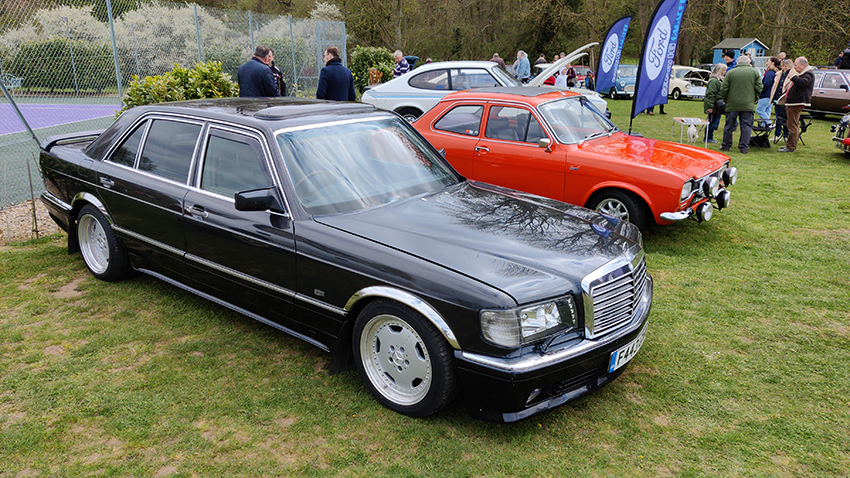
There was a healthy helping of luxury cars past and present;

I past this little lady on the way to the show that was just minding it’s own business and chugging along at 20mph or so.

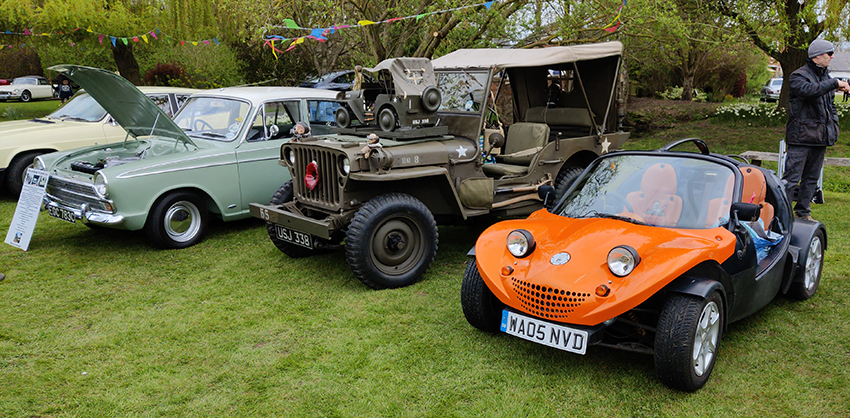
There was a few UK fords in the show and I grouped them together here, most of them being Capri(s);

The USA contingent were scattered around, with only two Mustangs being there. Similar story to the Corvettes old and new side by side.

The rest of the cars that I took a fancy to on my rounds, a few of which I have seen a few times before at local shows.

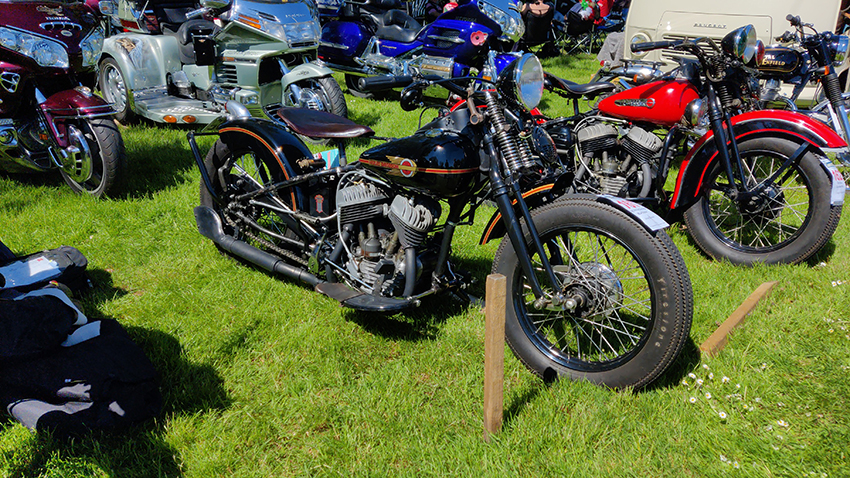
Just outside the main green there was motorbike collection. I have never seen such amazing bikes with levels of luxury to rival a car. Some of the custom artwork had to be seen to be believed. How on earth do these things stay upright?

Celebrity Spot:

Roy Mcfruin.

This gentleman may not be an A-lister in the general definition of a celeb, but to me – he is. I could of spoken to him for hours and wished I could of done so. I had so many questions, but not enough time to answer them all. 🙁

Roy found me by my car and started talking to me about my car. He told me how he picked up Henry Ford II from the airport as he was given a 66′ Mustang Coupe as a company car. I was so intrigued I asked more; it turns out that Roy was working the SVT in the early ’60s when they were relocated to the Slough works just outside Heathrow Airport in the UK. He told me how he was there developing the GT40’s ready for the infamous 1966 annihilation of Ferrari at Le Mans. He had flown to Dearborn a number of times to the Ford head offices. He was there at the iconic Le Mans 1,2,3 win in the garages. He met Carroll Shelby and of course the race drivers. What amazing stories, I actually met a man who helped shaped the History of the Ford Motor Racing legend that lives on today. Such a nice guy, I hope to catch up with him again.

Thank you for your time with me Roy.

Entertainment from ‘The Nightingales’.

At mid day and two in the afternoon the ‘The Nightingales’ took to the stage to sing a flurry of tunes. They were very good and I stood there for ages watching them. They sang everything from queen to The Twist and of course Mustang Sally. There was a group who looked like they came in the Chevy Bel-Air who were doing some really good Jive and Rock & Roll dancing. Petticoats and flared dresses were cool to look at, but I bet they weren’t so cool to wear and dance around in the hot sun. A great atmosphere with the dancing.

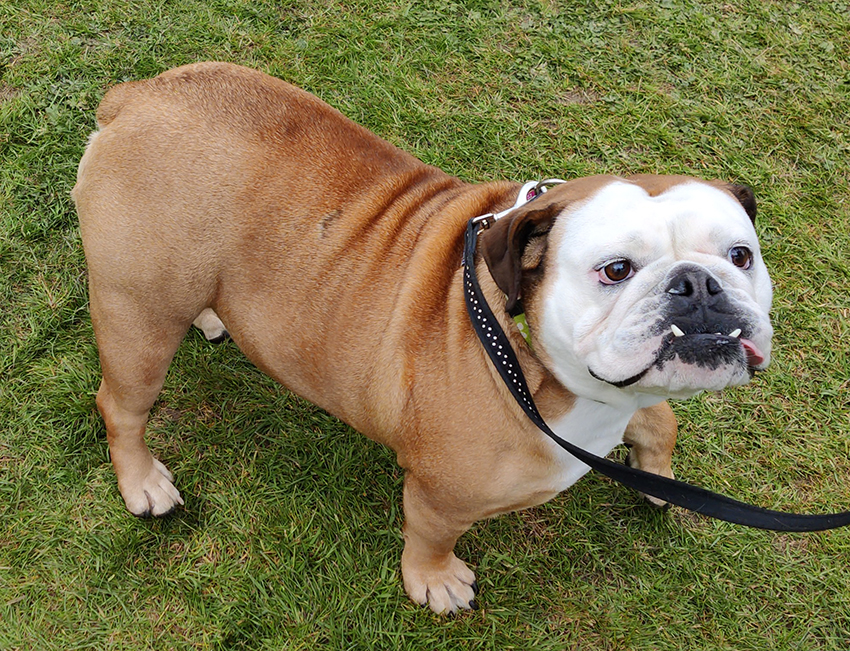
And to finish up the Canine Corner, some very hot looking dogs out for the day.

It was a great day out, I spoke to a couple old friends, made new friends and even allowed a couple of people to sit my car. The drive home was strategically timed, as the awards were being given out at one end of the field furthest away from me, I made an exit to avoid the rush. I thoroughly enjoyed the day and drive home was so relaxed.

It was great to be out and about again. 🙂

Share my Content

A Big Milestone….

Eight and a half years ago, way back on October 28th 2012 I wrote my first post on my little ol’ blog. I had nothing planned other than to share with a few friends what I was getting up to and how I was getting along with my Mustang restoration. Ultimately I could look back in a few years time and take a trip down memory lane with the photos I had taken a certain points of the restoration.

Delivery of my project car 17th September 2011, before it went to Mustang Maniac where I had professional help & guidance on my restoration over the years. Those guys have become some of my best mates of mine as a result.

When I attend car shows or via my blog and emails etc. I often get asked how I clean and detail my cars;

Some of the Car Shows and photo opportunities;

I get asked how I fitted things, how I upgraded this or that, I even get asked for advice on their own restoration projects.

That got me to thinking about adding extra sections like the tools (a selection of them here), that I used on project and since use, considering that I’m just a weekend warrior with a spanner.

Products that I used to keep our daily cars clean and the Mustang fully detailed.

My merchandise I bought over the years or have been given since I started my journey with the Mustang.

I even get requests to review items, all of which I buy if I think I could use them myself. As a result of all these things, my blog has evolved into an entity of it’s own.

Fast forward a number of years to 2021 where I my little ol’ blog has reached a massive milestone. This is not intended as some bragging rights by the way, but more like myself being proud of the result. Somebody within the USA this morning 15th May 2021 made my day:

My blog has just passed 1,000,000 hits!

I am absolutely amazed to think this could ever happen, I remember getting excited about getting ten hits in one day!

I value every single one of you that has followed me or just pops in for a quick read, like or even the odd comment. I would like to say a massive “Thank You” from the very bottom of my heart.

I don’t actually get anything from my blog/website on WordPress, other than some add money that goes straight to the hosting and my domain fees. It’s sort of self sufficient in a way. If anything I’m out of pocket, but reading the comments and seeing the views more than make up for it. Hopefully I can help somebody, somewhere with something.

My first follower was Debbie Nuessle (click here for her latest venture), from across the pond. We both started blogs within a few days of each other, both revolving around our love of American Muscle cars, especially Ford Mustangs of course. We keep in touch outside of the Blog circle and have become good friends.

I have a number of followers who ‘like’ the posts I put up after even after all these years, thank you all, it means a lot to me. I have such a range of followers; a very talented and well-known Soprano opera singer; Charlotte Hoather (click here for her blog), mechanics, engineers, oil rig mover, artists, photographers, builders, wildlife photographers, fellow classic car owners, writers, product manufacturers, shops, brands, a few younger bloggers, students, world travellers, petrol heads, gear heads, car clubs, writers, novelists, journalists, teachers, photojournalists, professional bloggers, social influencers, religious followers, the list just goes on. (There is even ‘ahem’ some adult orientated content following me!) The full list makes for some amazing reading.

Just in case anybody is interested in some of the more selective stats;

I have a total of 2,700 followers, of which 871 are on WordPress, 2,300 on social media, just over 2000 on Facebook, which is not my favourite of all the platforms I must admit.

I have been visited by 199 countries and the top ten countries in order are; USA, UK, Canada, Australia, Germany, China, France, Netherlands, Finland and New Zealand.

There are stunning islands that have visited me, Mauritius, Seychelles & Maldives. Some of those Islands are so small they wouldn’t be able to fit a Mustang on them! My bucket list is to spend a few days on these islands to chill and take in some sun.

The more obscure countries with a single visit are: Burkina Faso, Falkland Islands, Kosovo, Tonga, Northern Mariana Islands.

To date I have posted 340 blogs including this one over the eight and half years I have been posting on this blog.

These figures are quite low compared to some of you mega stars out, there with you super popular blogs I know that. But for me, like I said earlier, I’m honestly humbled and grateful to every single one of you who wants to look at a blog all about one man and his Mustang!

A huge “Thank You” to you all.

Here’s to the next one million!

Share my Content

Run Of The Mill (Part 2)

Continuing from a couple of days ago this is the second part of the Kersey Mill car show 25th April 2021 . The rest of the cars from the show that I liked in no particular order.

A few cars were by the stream that fed the water mill

The rest of the cars from different zones, all mixed up made for a great day’s viewing.

This car got lots of attention, not sure if it was because of the condition or the owners overwhelming enthusiasm to enjoy his car, he said it was almost finished for a tribute project.

I sat back at my car and totally enjoyed my afternoon of people watching and took this, my 66 next to a real nice ’65.

Dogs of the Day;

I just snapped these as they walked by or I walked past them on my round of the show.

My favourite has to be this nine month old puppy, what a star this little guy will be.

I often see dogs at car shows, some with the owners cars, but most are with the general public. Should I make it a regular feature from a car show to show the dogs I see? I’m not sure, but they sort of look good at the end of post. Being a huge dog lover with two of our own I couldn’t help myself.

Don’t worry, I’m not turning into a cutesie wootsie blog, this blog will always be about cars. But I have to admit, I’m a sucker for a dog who wants a little attention.

Was my wife right to get me to take some dog pics, or should I not bother in the future? I’m happy to go with the flow of the majority. Please let me know with a little poll just for fun:

Share my Content

Run Of The Mill (Part 1)

The car shows have started and it was great to get out and about. I was excited all week and just hoped that the weather was going to hold out for us. I had a decision to attend a choice of two shows; Stonham Barns which I attend a number of times or a new new venue, Kersey Mill. I get a little hacked of with the old mates scenario of the Stonham barns which are same cars winning in the show and shine all the time. Kersey is smaller show, not by a lot it has to be said. After a mental busy day at work I was hoping for a good night sleep before Sunday morning. The dogs, made sure of that by playing musical beds, wanting to go out for a howl at the moon and just try everything in their books to cause havoc, I didn’t get much sleep. Sunday morning arrived the weather was dry and bright if not a bit chilly. The weather forecast was for a dry day for the first car show of the year – 25th April 2021.

The car pulled out the garage and I loaded up with provisions for the day, drinks, food and sun cream! Optimism I guess.

The drive to Kersey was amazing, the roads were fine and I was on some minor roads for part of the journey so I could just plod along at my own pace and enjoy the drive. I arrived to a single entrance that I would have driven straight past if the marshal hadn’t of directed me to the opening. The car show itself was separated in seven different zones, and a number of car clubs were grouped together and the whole thing looked to be well thought out. The constant influx of cars was always moving and I have to admit it, well organised.

A little bit about the location; Kersey Mill is located just north of the Suffolk & Essex county border. Around 1860 Kersey Mill was a water and engine driven Stone Mill.  The three pairs of engine driven stones must have been amongst the last and most sophisticated stone milling machinery produced by Whitmore & Binyon, Millwrights of Wickham Market. Pic on the left below is borrowed from their website.

The Mill had the lead from the roof stolen which caused significant water ingress damage. The four storey Mill has since been undergoing restoration to rectify the damage. The completed result is a beautiful venue for weddings, photography, fitness, Arts & Crafts, boutiques, coffee shop, design, flower shop, or just a nice day out or go for a walk.

I parked up within in the Bury Retro Car Club stand in area seven, which was in basically in the back garden of some properties within the beautiful beautiful grounds.

By mid morning the club allocation was full. I managed to park next a friend of mine who purchased his 1965 Coupe in the middle of our lockdown last year. Parking space was as as you wanted and was nice change to being shoved in as close as possible.

The Bury Retro Car Club stand;

A group of us stood around and chatted, the first words out of everybody’s mouth was, ‘it was great to be out and about again’.

Chairs were placed at the back of the cars and quick wipe over of the car to get rid of the road dust and we were set for the rest of the day. Everybody was respectful and kept their distance. Those in the club and also the visitors to the stand.

I decided to go for a walk to take some pictures of the scenery and the cars. There was a massive selection of cars and not just classic cars. I decided to add a little section on the next post for ‘Part 2’ for “Dogs of the day”, that I spotted. The wife asked me to send her some pictures while I was there and walking around as she had never been their herself.

There was some run of the mill cars (pun intended – sorry), to celebrity cars. These cars were at the main part of the complex. The bottom pic was the BBQ which done the most wonderful smelling bacon rolls!

Just outside the main mill house itself was some real golden oldies, classics and a fire engine.

These cars in the group below top picture were Vauxhall Cavaliers, these cars were considered just use and dispose as mainly sales rep cars, now they are on classic car stands!

This pic did tickle me as a one of the worlds worst cars, this Lada was next to one of the worlds prestige marques Aston Martin GT.

Old 1973 Mk 1 escort next to one of the worlds sporting icons, Ferrari.

A beautiful steam engine just quietly chugging away with rhythmic precision and the unbeatable smell of steam. I believe this engine was over one hundred years old!

There was a section for TV star cars. All of which need no introduction. The A-Team van had been signed by all the cast and the sandwich boards had pictures of them signing it.

Faceman’s ‘vette

Starsky & Hutch car had me hooked as a kid, I so wanted that Ford Torino, it was the coolest car on TV.

No words needed from a Mustang fan:

The Simon Templar Volvo was amazing. The character was played by Sir Roger Moore before he became James Bond.

Some more cars from that area.

Part 2 will have the rest of the cars from the show and few cute dog pics.

Share my Content

A Sticky Situation

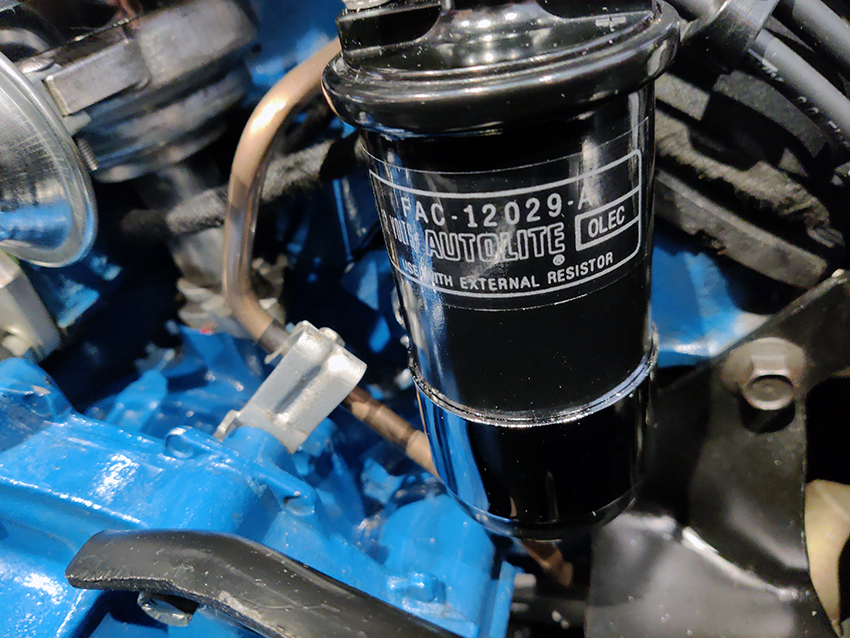
Looking for things to do and decided that it was time for a little update again. A few posts ago around Christmas 2020 I replaced my chrome 40,000v coil to a black version. The reason then was that I had erratic starting issues and decided to change the coil just for the sake of it to see if it helped. It didn’t and the coil turned out to be fine and is now a spare just in case.

The original look was a chrome coil with the original Ford coil clamp in black.

On the coil was the Ford sticker to say what it was and add a little bit of authenticity.

I went to visit Mustang Maniac for a replacement as the pics above. I tried to peal the old label off and reuse it. But it rolled up like a toilet roll and just wouldn’t stick again.

I started to undo the clamp for the coil and lifted out the coil.

The old bolt was fine, but as my new bracket is chrome I wanted to polish the bolt with the Dremel, some nylon brush wheel and some final metal polish.

The supplied clamp was a screw head with a nice zinc finish.

My old bolt was a chrome Allen headed style and would look better.

The polished result was quite good and looked better than zinc and chrome. The new bracket was a direct replacement for the old one and bolted straight in.

The coil just drops back in and and then you can tighten the thin clamp bolt to hold it still, and then the single bolt for the bracket to the engine.

The new look is black and chrome, the old style was chrome and black.

The new sticker just needed to aligned up properly and then stuck on.

So the silvery coloured text on the black finish is more visible than the former silvery lettering on chrome.

Although the old bracket was restored and looked OK, I can’t bring myself to chuck it out now. Yes it’s old, it’s worth nothing, it’s the original, it’s pitted and not ageing very well.

The bracket will now be stored with the other old parts that have been replaced, either at the time since then. Will the chrome bracket last fifty five years like the old one? Of course it won’t, but I like the new look of black and chrome.

Bring on the car shows. We need the fresh air and to get out and about.

Share my Content

What Goes Up Can Stay Up

I admit it, I’m so bored of the lockdowns, no car shows and there is talk of longer lockdowns again. To cheer myself up I decided to do a bit of upgrading that I have been thinking about for a while.

The stock Mustang aerials are usually on the right side fender and cant be retracted. Not a problem most of the time, but if you are out and about there could be some jealous vandal who wants to bend it. Then 1) you lost signal for the radio, 2) it’s a whole heap of hurt to swap out for what it is. Hence often wire coat hangers are jammed in the hole after.

In my case it’s more the fact that I want to cover the car and not have to make holes in the cover. Plus I can raise or lower the mast as I see fit.

There are lots of styles of aerials, standard mast, push down mast, stubby aerials, rubber aerials, rear window integrated, shark fin, fully automatic, semi automatic etc.

The fully automatic aerials works via a pulse signal from the radio when it turns on that in turn activates the aerial up, and another signal to lower. This needs a radio outlet to work it, and once the radio is on, you can’t listen to a cassette or blue tooth without the mast being raised.

Semi Automatic runs of a positive and earth via a manual operated switch which will raise the mast, then reverse the poles on the motor to lower the mast. This way I can have the radio on, without the mast up, or only half up, a bit up almost up or any variation in-between.

Let me explain why I wanted the semi auto option; my radio is an original stock item for a ’66 from the USA. But, I had it modified to take a 3.5mm jack point when I press a certain radio pre-set. That means that I can run an mp3 player, my phone for sat nav or a blue tooth dongle to the radio.

I’m going on the assumption that you already have the hole in the fender. If you don’t have a hole, work out where you want the aerial to go and make that hole.

Removing the old aerial;

I managed to do this with the car jacked up on axle stands and with the wheel off. How you get to the fender aerial is up to you and what works for you.

We need to remove the old aerial from the fender. Unplug the aerial lead from the back of the radio and make if fall loose into the footwell.

Under my fender are the splash guards that I fitted during restoration. If you don’t have them then your task is that much easier.

There are four bolts that hold this splash guard in place. One from under the hood at he very top. Then there a two at the sides on the middle picture, finally one at the bottom that also holds the fender in place too.

To remove the splash guard undo the bolts and will pull towards you and free of the chassis. On mine there was a layer of silicon to stop water ingress between the gaps. I managed to scalpel the silicon away and the guard broke free.

Here the guard is removed and the chassis behind it on the right pic.

The rubber on the sides of the guard were still supple and could be refitted and they had not torn. On the right pic you can see the aerial mast and just to right where the grommet goes into the chassis which protects the wires.

On top of the fender undo the hexagon nut and the mast will fall away from the fender.

That’s the mast out, now you should be able to pull the aerial lead through the grommet from inside the car.

Assembly:

Here is the Harada HA-50D. There are only three wires brown and white which control the motor mechanism and the black one for the coaxial.

For the most part fitting the part its a reverse of the above. I threaded the aerial coaxial cable back through the grommet and also the two coloured wires for the up down operation of the aerial.

In the kit there is a bar which is used to support the bottom of the bracket and is pliable to be able to be bent where you need it. There is a switch, and mounting bracket. To allow the the wires to pass into the body the brown and white wires have been bullet connector separated.

I made a test fitting to see where the bottom of the mechanism will roughly be. I worked out that I could re-use the bolt to hold the back of the fender in place. In the pic below you can see that loosened it to show you.

With the Aerial’s soft steel bracket I fitted it to the bolt and then replaced the nut back onto the fender’s bolt.

Thread the two power wires brown and white into the body via the grommet.

Now we can thread the mechanism up through the fender hole and randomly place the caps and hexagon fixing bolts loosely to hold the aerial in place. That way when you can move it around to the correct position and clearance a little later.

With the aerial roughly in place I loosely fitted the aerial in place and held in place with the bracket for support. The mild steel will bend so a pair of pliers twisted the strip and bent it to the aerial hole, which is arrowed above.

It says on the instructions that the aerial will ground under the fender. I’m not happy to go to bare metal in this case, so I made a small solder joint to the case of the aerial mast and attached that single wire to the bottom bracket. The smaller of the two black wires above. This will then also provide an additional ground. But not essential.

Take the aerial coaxial inside the car now and fit to the back of the radio.

The two wires will now need to be connected to the switch. connect the switch’s brown and white wires to the aerials brown and white wires.

The switch to control the aerial is a “Double Pole – Double Throw – Momentary Switch”

A live feed which is the green wire and an earth which is black will need connections as well.

I have a similar switch to this in stainless which I thought would look good. But when I trial fitted it, the switch didn’t look right in the car, but I did use one bit from it! (More on that in bit.) Below is the wiring diagram from the box. Due to the age of the box and the tape some of the diagram was missing, it had been crudely re-drawn on for the missing bits back on.

There aren’t many diagrams on the net for the wiring of these switches. If you need to change the switch out for a different style or want to know how it works here is the diagram I made.

In the diagram the brown wire is obvious, but the white wire is shown as a grey.

A point to note is that the up and down poles are reversed on the switch. ‘A’ and ‘D’ are engaged when the switch is held up to make the aerial go up and spin the motor in one direction.

When the toggle is push down then ‘C’ and ‘F’ are used to spin the motor in the other direction. They can’t be wired the same or the aerial will only go up or only go down.

To overcome this, the switch will reverse the polarity by crossing the wires over; ‘A’ to ‘F’ and ‘D’ to ‘C’. Thus the “Double Pole” part of the switch. The “Double Throw” is the up and down movement, the “Momentary” is that the switch will only work while you activate it and drop to the off position in the middle of the switch.

Power to the switch is provided by the 6A fused green wire to ‘B’, and the ground to ‘E’.

I made a temporary fitting for the power and ground to raise the aerial fully.

Adjust the aerial to the correct verticals. Then tighten up fully when you are happy. Lower the aerial to make sure that it’s full functioning.

Now we can look inside the car for the correct positioning of the switch and the power you are going to use. This is your choice where you want it to be. You could make a feature of it or just hide it.

I decided that the switch would look best under the dash as I didn’t want to drill holes in the dash facia itself. The bracket supplied has two two holes for screwing up under the dash.

I found a hole right next to the aircon blower unit which I would use. As there would only be one hole in use on the bracket the air-con bracket could be used to clamp the bracket in place.

With such a large hole I didn’t need to drill that either. I found a course threaded screw and a matching self tightening clamp to put behind the dash itself to hold everything in place. It was at this point I now used a part of my stainless switch; the wording plate instead of the up and down arrows on the plastic. Screw on the retaining ring and all was in place.

(Now take the brown and white wires and connect them back up again, if you disconnected them after the test fitting.)

I wanted a switched live from the ignition. So with that in mind I need to remove the current open connector on the end of the green wire and replace it with a piggy back spade fitting.

The best place I could see was to junction of the heater motor. I connected the heater motor spade to the new fitting and connected both.

Now I could tidy up the wires, tape them with wire loom cloth tape to look like stock fitting.

The black on the switch matches the black camera case inside and the stainless wording label is not too intrusive on the inside.


Now everything is working and in place we can get back under the fender. There is one last thing for the aerial which is the drain pipe. This just pushes on to the bottom. Me being me didn’t want any water dripping inside the fender and accumulating with the tube which was only four inches long. I found the old radiator overflow rubber pipe which was a the same bore and I managed to squeeze it inside the polyurethane pipe. I heat shrink a sleeve over it to make sure it stayed in place. and now comes out at the bottom of the fender.

Now we can finish by refitting the splash guard. This will just press back into place, making sure the rubber edges are not pinched.. Replace the four screws.

The additional part is the silicon. Place a little on your finger and smear it into the gaps metal to metal.

That’s it all done.

I now have a working aerial which can be raised or lowered from inside the car. I won’t need to make a hole in the car cover and it’s protected from vandals or accidental bending.

The results are great and everything is subtle in appearance. I don’t know of any other classic Mustang’s have an electric aerial either full auto or semi auto. There will be others out there of course, but I hope it puts me into a unique club now.

On a side note a question; how often do I use the radio? Hardly ever, but I can put it up just for a car show for the original stock look if I want to.

I’m running out of things to do on the car, best I get the car back out and clean it yet again!

Share my Content

Filling The Void

A while ago I spotted a a Mustang with a grill to radiator cover plate fitted and I liked the look of it. Over the years I have sort of kept an eye out for one for my car and eventually found one a couple of weeks ago. This is a little post on me fitting it as it doesn’t warrant a full fitting guide as there are only four bolts to hold it in place.

The old look of the car was fine but there is always that gap after the grill to radiator, it’s just an empty void.

The part was ordered from the USA and arrived about ten days later well wrapped in a box with plenty of padding.

The “Show Panel” as the company called it done a few variations; natural finish, anodised black or a brushed steel finish. As my under hood colour scheme is naturally a satin black with chrome, I went for the black anodised look.

This panel is the single flat panel type and my preference, as it covers the gap, but leaves the natural look of the radiator top rail. The other point is that it will allow just a little more airflow to the radiator as well. There are other designs on the market where the panel is bent up into an “L” shape to then cover the front of the radiator support.

With this panel there comes a roll of edging strip and four plastic washers.

On the first test fit it was obvious that the panel was not going to fit with the horns in their correct locations mounted on top of the radiator support.

The supplied instructions (which came on a post it note sized bit of paper), advised you to move the horns out of the way lower down. Where you wanted to move them to is your choice of course, but lower down to keep things looking clean made sense instead of cluttering inside the engine bay.

I removed the first one and it just happened to be that the top radiator bolts would be perfect, but the horns would need a little mod. The mod came to the holding brackets of the horns which need a more pronounced “S” curve to move it away from the support panel. I could have left them untouched if I pointed them both towards the centre of the radiator, which could have a detrimental effect on the cooling.

The test fitting here shows the initial bracket ‘modification’. The locating pin to stop the horn twisting in the original position(s) was straightened out to allow a flush fit.

Both horns were removed and cleaned before they were refitted to their new locations.

There was enough slack in the horn wiring loop to allow the connection again all be it through a different hole where the aircon radiator pipes would have passed through.

That was the worst part done, now it was time to fit the edging strip to the panel. This was a nice touch and finished the panel of nicely. I made sure that the join wouldn’t be seen as it would be hidden under the fender lip.

The instructions advise to cover the panel with masking tape to protect it from damage while fitting along with the edges of the fenders and around the hood latch. As I was being super careful and I didn’t actually need it.

Two bolts from the middle hood latch and two that hold the top of the grill in place to the headlight buckets needed to be removed. As they were satin finish I thought they would look better in polished finish. I think that was a good call, same bolts here, but one was polished and the other still in natural satin.

The panel needed to be slotted under the radiator support top rail, while bowing the middle up to slot under the front edge of the fender lip.

With the panel in place it was a case of refitting the two centre latch bolts and the two end bolts for the headlight and grill. The supplied plastic washers were used to protect the panel.

The two end bolts didn’t quite line up, so I had to loosen a few smaller bolts to locate the panel where I could then refit the bolts. With everything aligned it was simple case to tighten everything back up again.

With everything in place, I could then clean the show panel from my finger marks.

As it was getting dark now. I decided to call it a day there and fit the remaining edging strip to the hood bump stop holes.

In hind sight I should have done it before fitting, arrowed.

So there you have it, my new panel that I made dirty again with my finger prints, which needed another clean. I can see me constantly cleaning this panel as it shows any finger prints.

the final step was to fill the holes in the radiator support where the horns were with black grommets to finish the look.

Before………………………………….After

I just think the panel neatens things up a bit and I’m really pleased with the result. 🙂

Share my Content

Spring Doubles Up

I decided to make a little upgrade to the car to help with a very minor issue that I decided to rectify. The modification also added a little blink under the hood and something else to clean while I’m at it.

The issue was that on the odd occasion when lifting my foot of the throttle and stopping the idle would be a little too high. This could be cured by tapping the gas pedal and it would settle down again. On investigation it appeared to be the throttle return springs on the standard throttle rod didn’t strong enough to return the carb throttle body to it’s correct closed position every single time.

For a stock set up there is a single spring to return the angled throttle rod. Not very safe if the spring breaks or stretches as it could leave an open throttle. So the simple fix is to fit a secondary larger spring around the outside of the smaller spring. Although this configuration was fine the throttle feel was very light under foot.

I spoke to Adam who advised a rose joint billet throttle rod would help with the feel, but an alternative spring return would be needed if you swapped the rods out, more on that in bit. So I came home with a new throttle rod. I wasn’t to keen on the billet satin finish, so I spent a few hours sanding and polishing down to a shiny version which came out really well.

The first job was remove the old rod from the carb throttle body which was held in place by a lock nut. The two springs on the dog leg part of the old rod simply unhooked.

The second task was to remove the other end from the gas pedal bushing which is held in place by a split pin.

With the old rod removed I could compare the length of the original stup to the new rod which was also adjustable. The first pic shows the shine I managed to get on the billet rod.

These billet rods have a left hand thread and a right hand thread, so when twisting the rod in the middle it winds out both ends in or out for a synchronous adjustment. I set the rod to be the same length by default as the old one for now. The gas pedal needed to be a little higher inside the car for my liking as well, again more on that a little later.

I unscrewed the carb end of the new rod which has a conical fixing to fit inside the larger carb throttle body nearer the top for a test fitting and to see how the rose joint fitting would locate. The fitting was bit loose and required a single washer to pack out the gap in order to pull the rose joint firmly into the throttle body without any lateral movement. The movement now all comes from the rose joint itself.

(Note the old satin finish here.)

We now leave the throttle rod fitting at this point as the new return springs had to be fitted next. This would also make life easier with everything out of the way.

The return springs are Holley kit upgrades with an additional bracket, a spring levelling ring body fitting bolts and a choice of springs.

The original return spring is on the left. Although it’s shorter and slightly fatter, it had less distance to cover. The other springs have a much bigger gap to span and they have a different stronger positive tension when stretched. You will also notice the double loop closed ring ends on the Holley springs where they simply can’t become detached from the brackets.

Depending on the combination of springs, it will determine the overall feel of the throttle. I decided that the stronger pair for a max return would be my choice. There are two holes on the carb fitting ring (left picture), and two on the bracket. I made the mistake of putting the springs on the ring first.

This made life very difficult while trying to attach the pair of springs to the bracket as there wasn’t enough movement to allow the second spring to attach without tangling the other spring. So I had to remove one of the springs in order fit to the bracket first then onto the throttle ring. The secret is to fit first spring to the ring as you normally would, then the second spring fitting needs to be twisted in reverse first to allow the open ring to untwist and end up where it should be. If you don’t the springs will tangle and be twisted once fully fitted. I won’t deny it, it took me a few attempts to get right, the air did turn the same colour as the car, very blue as the springs tangled up on the first couple of attempts.

Eventually I manged to connect both sections.

To fit the bracket it needs to locate over a corner stud with the bigger hole that holds the carb in place. If the stud was longer then a second nut would bolt the bracket down.

A second smaller bolt nearer to the front of the bracket that also holds the spring bracket in place and to stop the bracket twisting when the springs are under stress.

As I have a 1″ phonetic spacer the bolt that bolts the carb down sits at the top end of the stud. That means I couldn’t bolt it down without changing out the stud. However, the top of the stud was protruding enough to act as a locating pin to stop any twisting.

To make sure the single bolt holes the bracket in place I fitted a large washer. The down side was that the washer was overhanging the bracket and snagging on the throttle body. This meant that I had to grind two edges flat to align with the carb body and then finish at the bracket’s edge. You can just about see odd shape in this picture. A smaller washer would have been fine I just wanted max hold.

With the bracket held firmly in place the tricky task of fitting the spring ring to the carb throttle body. In an ideal situation you could do with a third hand to do it easily. You need to thread the screw through the rose joint, washer and the conical spring ring in that order.

With the cone in place and the ring under tension to the bracket, you need a larger washer to stop the spring ring coming of the end. I didn’t use provided lock nut, but I still wanted to lock the bolts in place. Nut number one labelled holds it all together, number two locks the two together.

From the pic above you will see that I found it easier to have the rod unscrewed to fit it all together. Below pics are from the back and front views.

Now I could thread the rod back onto the rose joint.

The other end was a simple case of push the bolt through the gas pedal bushing using the supplied washer and locking nut to hold in place.

Now all was connected up I could test the range of the movement and nothing was snagging. Of course I was now pumping fuel into the carb which probably wouldn’t start as it would be flooded.

I sat in the car to check the height of the pedal I wanted. I was quite low so it needed to be adjusted. This is a simple case of turning the rod which would pull the gas pedal towards the carb for a higher pedal, or towards the firewall for a lower pedal.

Hold the rod in place with a spanner on the flats and tighten the nuts to hold the set distance in place pointed with the arrow.

Last job was to grease the moving metal to metal parts and replace the air filter.

That’s it job done.

The test drive after was good and the throttle was much snappier and returned much quicker to idle. The result I was looking for, it remains to be seen if the strong springs are to much or not. But for now, they feel fine under my size twelve feet.

Bring on the first car show of 2021!

Share my Content

Making Contact

I mentioned in my last post that the car had a bit of a starting issue which is now cured with a replacement Pertronix Ignitor system from Mustang Maniac. To avoid such instances again I have a back up plan.

The new plan is to have a set of old school points to hand in case of the electronic points breaking down. I ordered a metal tin, I was going to get an old tobacco tin, but decided against it and went for a nice new shiny one instead.

To hold the new points and condenser I got some chunk of polystyrene and cut it to size and pressed it into the tin. As the cable to the points was removed as I replaced it with the Pertronix set up. I made a new cable one with fresh connections and soldered while I was at it. I then marked out the shape of the points and cut it out with a sharp scalpel. I didn’t take any pictures at the time as I wasn’t sure how it was going to come out or if it even would work.

As the polystyrene is a bit brittle I leaves little bits everywhere so I sealed it with a good few layers of clean PVA glue. To stop damage to the components I got a thin foam padding and lined the cut out as well and stuck that into place. The wires were held in place my a shallow cut out groove. The last part was a set of feeler gauges to set them once they were held in place. The mini kit is then all held firmly in place and doesn’t move at a all. Just to be sure I added a little cut out to lay on top.

The lid has now got a printed out label (along with a spare sticker I had), for the gap setting in case I have to use the kit. Even if the points only last me enough mileage to get me home in an emergency – then it’s gob done. I can easily replace the the points with another set which costs less than shop bought sandwich!

The tin looked a little plain on the outside so I have ordered a little Ford Parts sticker to go on the top.

Under the hood I decided that I wanted to replace the HT cable tidies or clips. I wanted something a little more meaty rather than the thin plastic clips. I ordered online a set of v8 plug clips for the 8mm cables I have. There are two four hole, 2 three hole and two hole clips one set for each side. These normally go by the spark plugs to keep them neat and tidy. As I already have a nice polished cable set holder, these were going to be a little more visible.

Me being me wasn’t happy with the finish of the screw heads, they were a bit dull and cheap looking, not how I like them to look.

The next step was to get my trusty ol’ Dremmel out with some metal polish and the appropriate felt buffing attachment. A simple case of a little polish and buff over, they came out nice and shiny.

The before and after is quite obvious and now up to my OCD standards.

Fitting these style of clamps is very simple, it’s just a case of clamping the two halves around the cables and screwing together.

Will anybody notice the difference? Probably not, but I know they are there. They also do the important job of keeping the cables neat and tidy and routed where they need to go cleanly and out of the way.

Following on from the last post I have been asked if I had the fitting instructions of the Pertronix II Ignitor kit. I do and I have added the PDF file here.

A short little post, but I’m just looking for things to do now. I need a car show or two to get me out of the house and some fresh air and a change of scenery. Already this year 2021 we have had two car shows cancelled and it’s only January. 🙁

Keep Safe & Take Care.

Share my Content