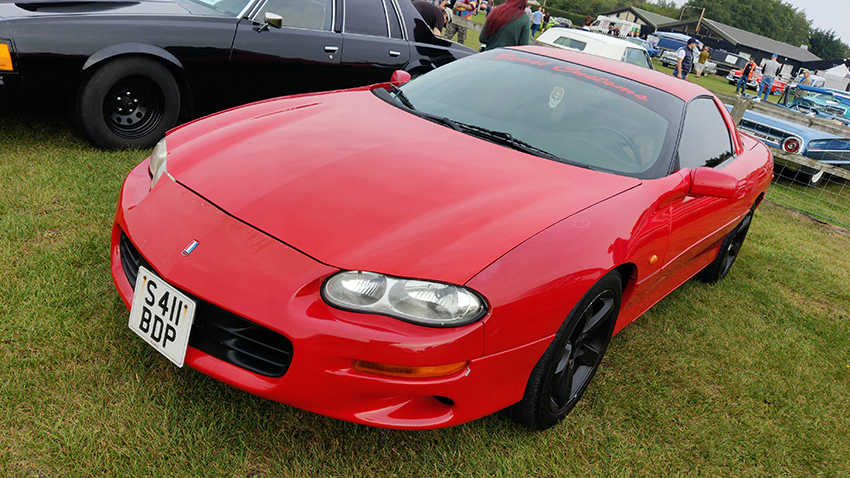
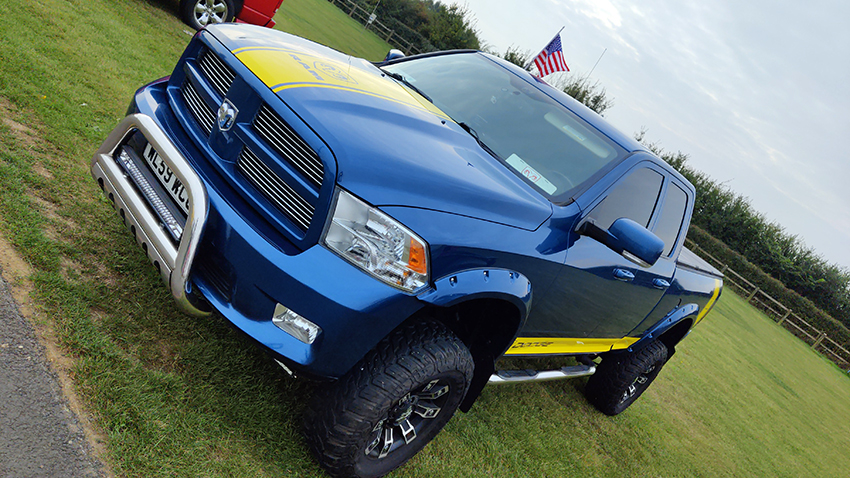
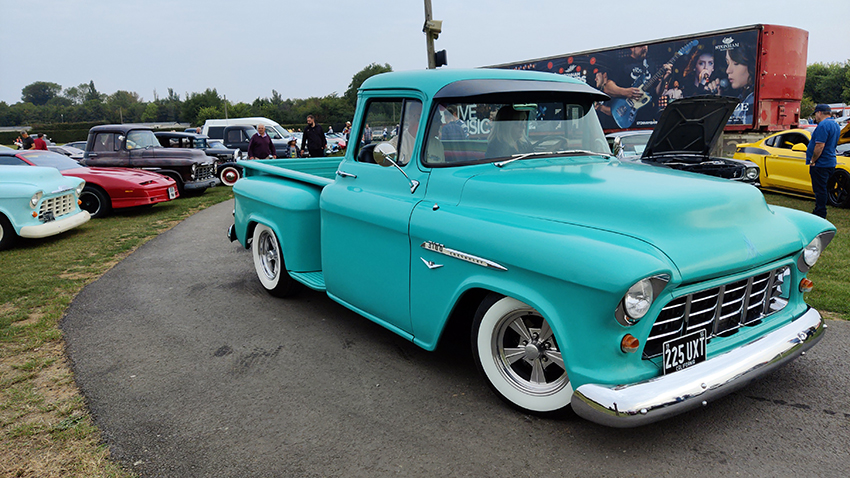
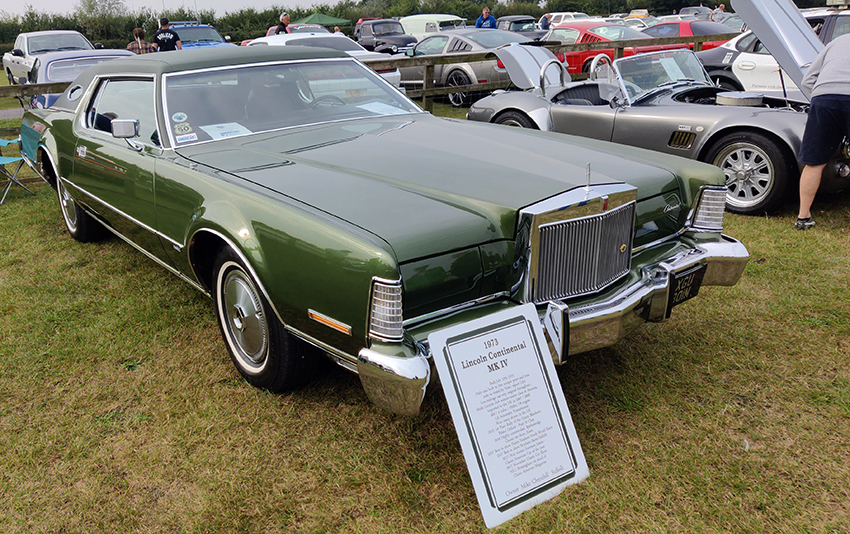
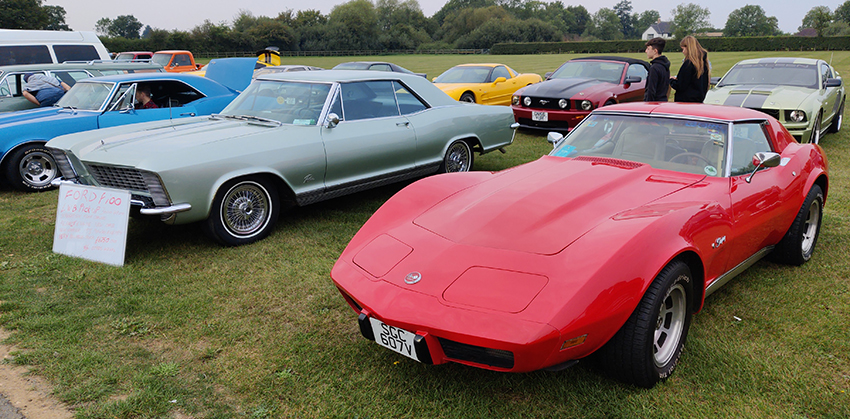
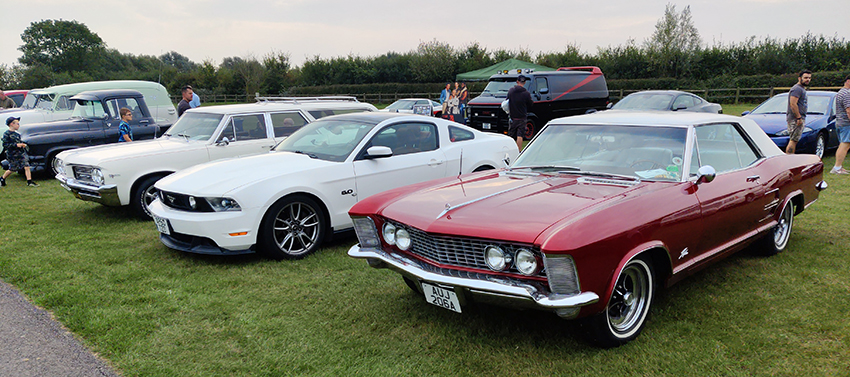
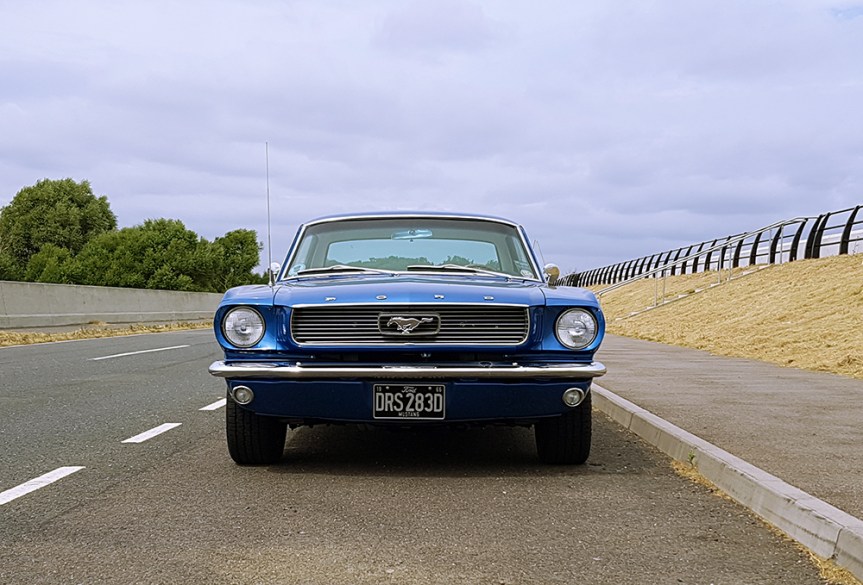
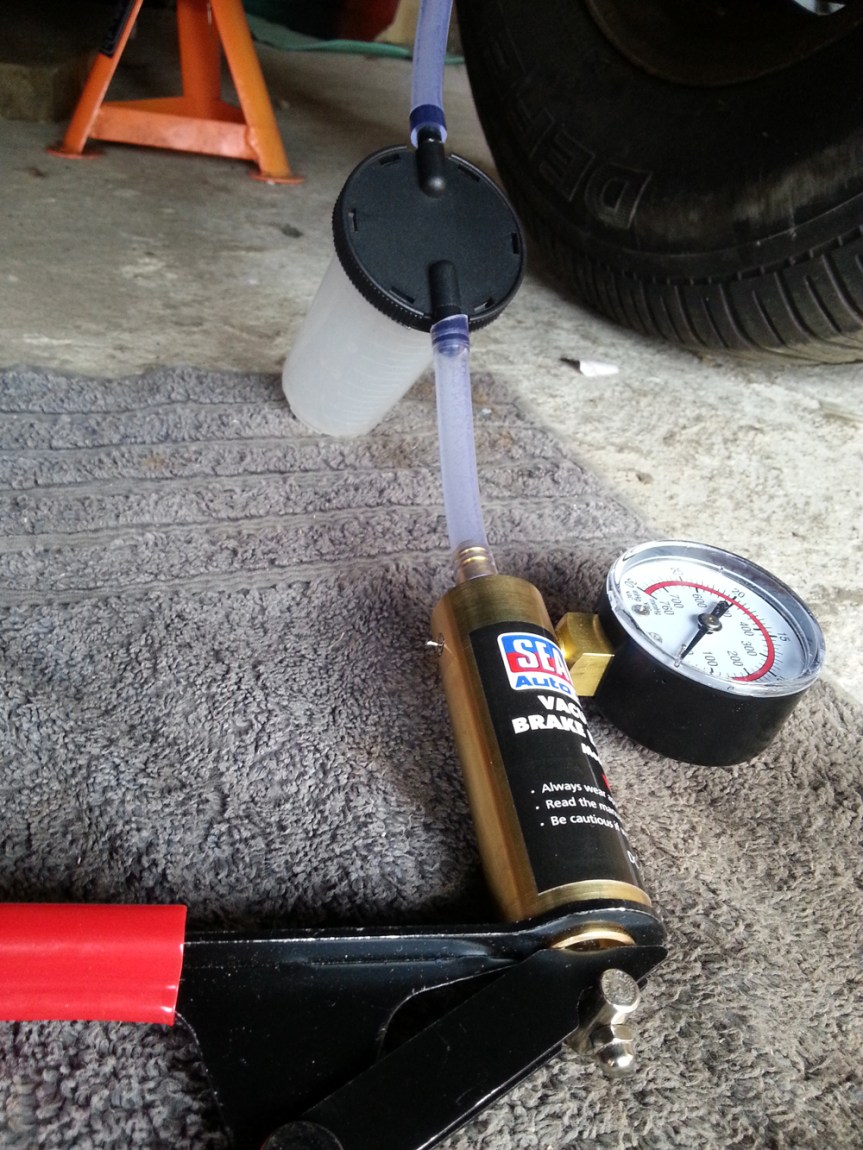
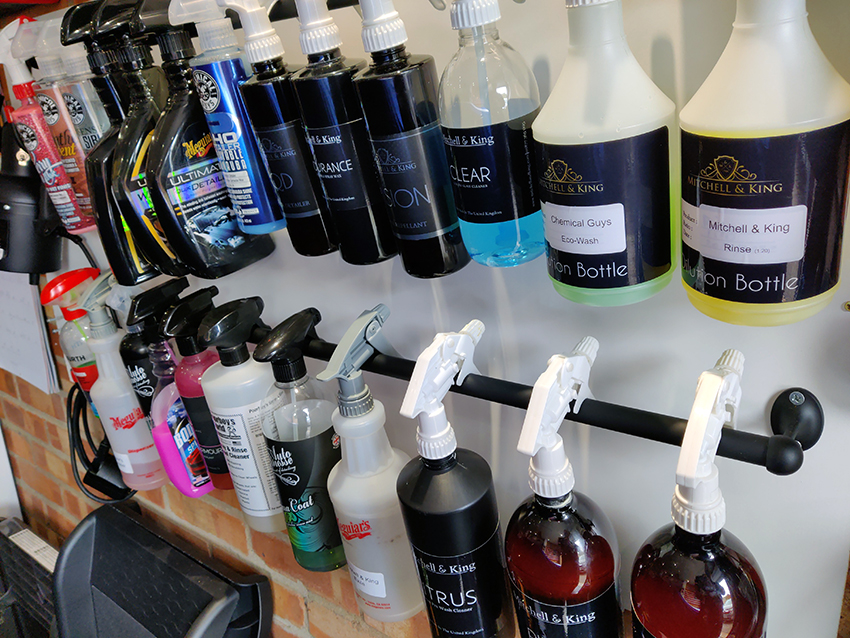
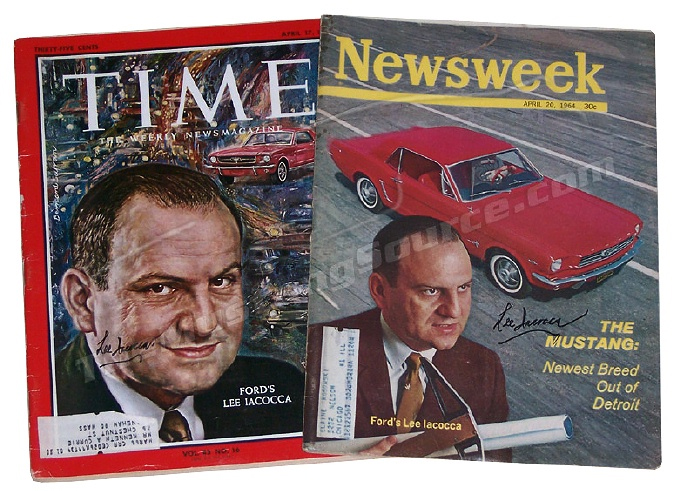
This show was held at Stonham Barns organised by the Knuckle Busters Car Club on the 19/9/2021. This particular car show was for American cars only and is usually well supported and this time around that was no exception. I arrived early and I was asked if I wanted to attend in the centre ring. Why not? Early bird gets the worm and all that. I parked up next to some stunning cars which made my car look like a Matchbox or Dinky toy!
I parked next to a massive Buick that could only be described as a ‘land barge’, such a nice car it was too. Me and the owner sat in our chairs and chatted most of the afternoon.
I decided to have a wonder round and take the pictures before the public came in.
I thought I would batch the Mustangs together here, but there wasn’t as many as I thought there would have been.
A car I had seen a couple of shows earlier, but I couldn’t get that close to before. Another iconic car from Ford – the Torino. I wanted that car so bad as a little boy. My nan even knitted me a Starsky jumper. Thinking about it; I still want one!
This Corvette was beautiful.
The ones next to it weren’t to shabby either.
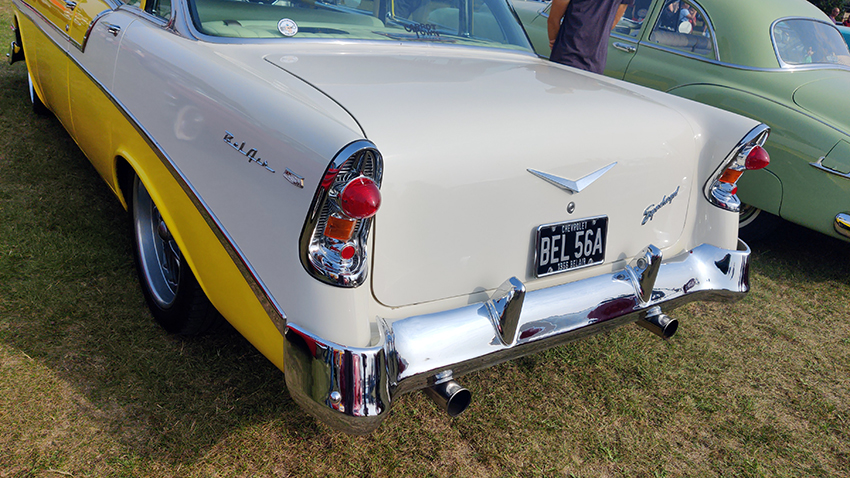
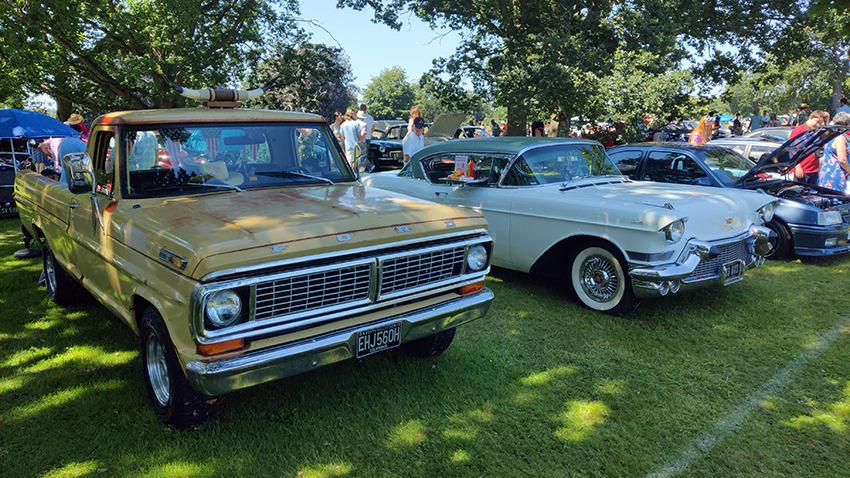
Back to the other cars now and in no particular order.
Truck Time. I was speaking to the guy who owned the Viper powered truck, he said it scared him on two levels; one the petrol it used and the other was that the truck wanted to kill him!
We have to pause and and look at what Pontiac did when they created this gorgeous and much coveted car.
And my no means least, I was also strangely drawn to the taxi as well.
Throughout the day there was music and a really good live band with plenty of 50’s rock & roll with a little dancing as well.
The day was dry and warmish and didn’t rain for a change. A great day and so much American iron I wanted to drive home. But, I could only drive one home and that was my little lady.
So that’s it, my last car show of the season and the drive home was the scenic route to make it last that bit longer. I was sad the shows were over. There are some New Years day runs, or Boxing day runs but I don’t attend them as the weather is usually bad or there is salt on the road.
When I got home the car was wiped over with a quick detailer that is carnauba infused. The chrome wheels were waxed but not buffed off, the wheels also got a squirt of Gibbs Brand into the seams to protect over the winter. The tyres given a heavy coating of tyre treatment before being put in the garage. Even though my car’s garage has a radiator to keep the frost out and a dehumidifier as well that runs day and night; the car still needs protection. I intend to get the car out over the next couple of months to give the car a polish and proper wax ready for next years shows, providing I have two clear days of dry weather to do it. The wax I use is recommended to leave on and cure as long as possible. Which in my case is overnight. The next day I will buff and shine up.
I will still be doing updates and I aim for some car detailing product reviews, so keep an eye out.
For Sale:
I have been selling a few of these ‘T Park Lock’ handles and the feedback has been good. I even sold out my first batch and now the second has arrived. I’m even throwing in a free little key ring as well now while the stock lasts. Click here to go to the For Sale page to buy one. Press to lock system and simple to fit with no modifications needed at all to your car.
It was a good year for 2021 car shows, let’s hope there is more of the same for next year. But, this is the UK after all and it rains – a lot! So I’m not gonna hold out to much hope that they will all be dry and sunny. We can live in hope though.
This is the second part of the Culford Car Show from 18th July this year. As I left the show I managed to take this picture without any photobombing of other cars or people wandering into shot as a lot of the cars had already left for home and I found a little open space.
But, my best efforts are not as good as some. I mentioned at the end of the last post that I met an interesting guy and we had a quick chat. It turns out that Steve Armon is a photographer who wants to take some pictures of my car for his ever growing portfolio. He has posted three pictures of my car along with some others on his Instagram account ‘trigpointpictures’. Stop by and say I sent you. Here are those pics he kindly sent to me and I just love them. Thanks Steve for the permission to use them.
Back to the show where I was wandering around still, and a reminder of the beautiful location first;
The cars, again in no particular order;
There was a hot rod section that i spent a little time hanging around for some obvious reasons. That Plymouth Super Bee was something else!
There was a Ferrari club there with some rather unusual examples there.
The award to the biggest set of rear wheels goes to;
At the front of the school;
Back up the other side of the grounds on my way back to the car.
Then I spotted this little animal, these rare MG Metro 6R4’s were in the Group B rally class. They were banned as they and cars like them at the time were often classed as ‘to fast to race’ in the 1980’s.
It was really hot to say the least and to eventually sit back under the trees and chat to the guys next to me was a very welcome relief along with the litre of water that I downed almost in one! The trip home had the manual air conditioning on full. The windows wound right down! Another wonderful trip through the country side with nothing but a v8 for company and have it barking at me when I occasionally pressed the loud pedal!
I hope you liked the pics as much as I liked the show itself.
I have been asked a few times about snow foam when I have been to car shows. I do use it now, depending on the product and how you use it can make a nice difference or leave you bitterly disappointed. When i started out with snow foam I just didn’t get it, what was I doing wrong? Combinations of equipment and product trials I eventually managed to get results worth talking about. I decided to create a little article of my own which I hope will help and guide you through the pitfalls and hype between products, or why we even consider using it. I mean it wasn’t around fifteen years or so ago so do we need it and why?
Snow foam looks amazing from a distance and often gets a few looks when you use it. Before this step was introduced, you used to get as much car shampoo bubbles on the paint to wash it right? This cleaning process has now been separated out into two steps. The snow foam and the shampoo. We will only be dealing with the shampoo step here.
Put very simply snow foam step is there to reduce the likelihood of damage to the paint during the cleaning process, a “Pre Wash” non touch step. This snow foam process is not necessarily restricted to car detailers or professionals, but also the weekend washer.
When you wash a dirty car with a sponge or a single bucket wash, the chances are that you could introduce paint damage by microscopic particles damaging the surface of your paint as they cling to your sponge or microfibre wash mitt. The deeper the damage, the worse the paint will look. I have explained these principles in depth on another article here and how to fix them. The basics are highlighted in the picture below to show the varying degrees of damage.
Common Terminology:
Pre-wash: A treatment that helps to make contact washing your car easier and more effective.
Non Touch: Cleaning without any physical contact with the paint.
Contact Wash: Any part of the washing process that touches your paint.
Contact time: How long your cleaning solution is in contact with the dirt on your car.
Dwell Time: How long the product needs to be left in order to work its magic.
Foam Consistency: Thick snow foam clings to cars, so it has a high contact time. Watery snow foam will dribble off your car, less contact time and won’t be as effective.
Cling: The ability of the product to stick to the panels without falling off.
Dilution: Reduction of concentrate to make the correct mixture operate effectively without waste.
Canister: The container where the mixture is held.
Snow Foam lance: A special nozzle for your pressure washer that turns the snow foam liquid into a thick foam. Also referred to as Snow Cannon, Snow Gun etc.
Nozzle: The end of the lance/cannon/gun which controls the amount of product and how it applies the foam to the car.
pH neutral: A substance which is neither acidic nor alkaline but chemically neutral.
Water Spots: The marks left behind from the hard water drying out on the paint work.
We know that (contact) washing a dirty car will make it look better, but done wrong that short term cleanliness will be taken over by swirls, marring scratches etc. So before you even think about putting a wash mitt or similar cleaning item, the less debris that there is on the car, the better.
This is where ‘Snow Foam’ comes in. The snow foam is designed to cling to the paintwork, which will in turn moisten and loosen up any of the surface dirt. When you rinse and wash off the snow foam it should take the dirt and grime with it. This in theory will leave you with a much cleaner surface to clean with significantly reduced chances of damage to your car’s paint job.
The ideal scenario is a foam that will dwell on the paint for a while, then roll off the paint prior to rinsing taking the dirt with it.
How does a Snow Cannon work?
In a nut shell; the water pressure from the jet washer creates a syphon that lifts the snow foam mixture from the canister via a pipe into the pressurised water stream. The wire mesh inside the the cannon body agitates the mixture up into foam. More water the less dense the foam and will lasts longer. The nozzle is the key as to how the foam is sprayed onto the car, anything from a jet spray to a wide angle fan. These cannons can vary from £15 to £100 depending on style, fitting(s) and quality of build.
Misconceptions:
+ The thicker the foam the better.
To a degree this true, but what is the point of a great foam if it sticks to the car, but doesn’t clean it? If the snow foam is more like a bubbly water and bounces straight of the paint then again it has done no good. There is a happy medium based on the car’s requirements and is explained a little further down.
+ PH Neutral is a must.
If you start researching snow foams, at some point the chemical composition will show up. So all you really need to know is the difference between pH neutral and non-pH neutral (or alkaline) snow foams.
The pH obsession has arisen due to information propagated by self-professed experts on the internet. In actual fact, most damage to car finishes is caused by tiny particles stuck onto a road film or dirt that cause abrasive damage when being removed by washing with mitt or sponge. Thus inducing the swirls, hologram, scratching and paint wear depending on the severity of damage to the paint.
Even some manufacturers of ‘ceramics’, last stage products and waxes insist on a pH7 (neutral) shampoo or cleaners.
This intrigued me, so after a quick bit of Google research it showed me that the normal range for rain water is pH 5-6. (Look it up if you don’t believe me! ‘pH balance of rain water’.) This is one of the main reasons that your car wax/sealants tend to loose their effectiveness over time and need reapplication.
+ pH Differences
A pH neutral snow foam is generally gentler on your car’s paintwork, so it’s worth getting if your car is valuable or needs to look its best for a special occasion. This comes at a cost as heavy debris is still there.
A normal or regular alkaline snow foam isn’t quite as good for your paintwork, but it is more effective at removing dirt. However, you can easily mitigate some of the effects on your paintwork by giving your car a proper wash and wax, though, which will put a new layer of protective wax onto your car. If you have the protection on the car, the alkaline snow foam won’t remove the wax protection or touch the paint anyway. It’s certainly not a caustic mixture for your car.
The damage from a heavy alkaline product is; caustic soda (sodium hydroxide). This can dull and leave paint finishes matt and lifeless when used on a long-term basis.
Perhaps you may need two types of snow foam, regular maintenance wash for light soil using pH neutral product, and a stronger alkaline for the heavier soiling when needed.
+ You need a jet wash or pressure washer
Nope. The jet wash is not the be all and end all of the snow application to the car. Some snow foams are quite happy to be applied by a hand held pressure pumped bottle. As long as the foam product is the correct dilution, is applied to the paint and allowed to dwell before its removal – then its job is done.
+ All Snow Foam lances are the same
Nope. They come in all shapes and sizes. Some brass body, some made of cheaper metals or plastic. You get what you pay for.
Honestly, I had a Karcher cannon that could barely muster a lather no matter the product. The Autbrite snow cannon with the same mixture was an incredible difference. My only advise here is to make your choice wisely.
+ You must use Snow Foam
Well sort of. You could use some good quality shampoos at a push. But their pre-wash cleaning ability is not as good as the snow foams. Most car shampoos tend to have additives to allow slick washing and glide the cleaning applicator (mitt of sponge) over the paint and a level of protection. It’s best to get a product designed as a snow foam.
Types of Snow Foam:
Apart from the pH values as we have discussed above most snow foams are pH neutral. The main differences are the cost per litre when mixing for the dilution ratio. The cling properties which varies a great deal, their proclaimed cleaning properties, colour and the scent. Some of these scents are sublime; water melon, lemon, citrus fruits, strawberries, cherry, beer etc. Or nothing if just want a no gimmick product that does the job. I have used a few in my time:
Some have been worse than useless, some have been better than others and one is my now go to product.
Application:
Mix your snow foam as per the manufacturers recommendations. This is usually a ratio of around 1:10 or 1:20 etc. some are even 1:100.
Next attach the snow lance to the jet wash, adjust the mixtures and apply (if needed). This will take a little tweaking for the ideal balance between dilution ratio, the water pressure, size of the nozzle and the product you are using.
Different products on the same foam cannon will be very different and need further adjusting to suit.
Most of the products advise not to allow the product to dry out. The product can be affected by the Sun, warm paint, wind rain etc. Most manufacturers go on to say apply ‘in the shade’ and ‘apply to cool paint’ etc in order to mitigate the drying out process of the product.
Always start from the bottom and work up. The huge majority of debris and soiling is on the bottom half of the car. As you get to the top less show foam is needed.
Types of application.
A snow foam application will solidify into nothing eventually and slide off the car. If the snow is to thick it will fall of the car (no clinging properties) in clumps before it has had a chance to work. So, thicker is not always better. But it does look good below.
After a few minutes of dwell time it will look less impressive.
Some of the poorer week applications look half dead before they are applied and very watery. These products tend to run off and dry out very quickly.
If the product starts to dry out, there is no harm in reapplying more.
Some of the better quality products have ‘wetting’ agents in them to aid in keeping the product wet on the paint to avoid it drying out. This product application is a little thin now, but was taken after a few minutes. Although below looks less, it has in fact been doing it’s job well and was staying like this without additional applications.
Once the dwell time has elapsed, rinse of with a medium force jet wash. You can then wash the car as normal to avoid any water spots.
Results:
The results vary considerably by product. I have some before and after pics to show what it was before the application and what was there after rinsing.
Here is a very well known market leader product that has a very good cling and thick foam. But, it left a film of dirt and didn’t wash off the dirt.
Another very well known brand but is a cheaper product. Thin application, not very good cling and failed to wash of dirt. the dirt was still on their without being moistened.
A Premium brand, clings well, but failed to wash the dirt off completely. The dirt was moistened and was easier wipe off with a finger. So it did help.
This is well know brand to those in the detailing world. The foaming qualities not great and are to be desired. But when this runs of the paint it takes the dirt with it.
This is the result you want. The dirt and film is gone ready for a proper contact wash. It even cleaned some brake dust off!
Summary:
Don’t believe all the hype. The snow foam step is not a magical ‘foam the the car and it’s clean’ process. This foam step is to pre wash the car and should be treated as such. You need to manage your own snow foam expectations depending on the product. I have done a number of snow foam reviews on this website now.
I have been sceptical of the snow foam step even critical to a point. I saw it as the latest fad with no benefit to be honest. I have learned the hard way by working up the ladder. I tried the weaker brands which put a bit of foam on the car and emptied my wallet for no reason. I tried the big name brands which gave a great clinging foam but not much else. I tried premium brands which gave a good enough foam and decent moistening to the dirt. I tried the in the know ‘detailers’ brands. These later ‘detailer’ brands were by far the best performing of all the brands I have used so far.
Some brands are so much better than others to the point I haven’t even reviewed some of them, I used them up as a patio cleaner. After application of some brands, the dirt was not loosened and was still difficult to remove with a finger even after rinsing, like you shouldn’t do by the way. If the dirt is difficult to remove after the snow foam step then you are potentially going to washing a little harder to get the debris off the paint, in turn potentially introducing damage that you are trying to avoid in the first place.
If you are careful and use top quality shampoos with a two bucket method, then you can do away with this step as we have done for decades way before all this snow foam malarkey.
This snow foam step is trial and error which works for you. I have tried at least six products before I found something came close to something i could review or even partially liked. You may need to do the same, or look out for fellow detailer’s product reviews.
Eight and a half years ago, way back on October 28th 2012 I wrote my first post on my little ol’ blog. I had nothing planned other than to share with a few friends what I was getting up to and how I was getting along with my Mustang restoration. Ultimately I could look back in a few years time and take a trip down memory lane with the photos I had taken a certain points of the restoration.
Delivery of my project car 17th September 2011, before it went to Mustang Maniac where I had professional help & guidance on my restoration over the years. Those guys have become some of my best mates of mine as a result.
When I attend car shows or via my blog and emails etc. I often get asked how I clean and detail my cars;
Some of the Car Shows and photo opportunities;
I get asked how I fitted things, how I upgraded this or that, I even get asked for advice on their own restoration projects.
That got me to thinking about adding extra sections like the tools (a selection of them here), that I used on project and since use, considering that I’m just a weekend warrior with a spanner.
Products that I used to keep our daily cars clean and the Mustang fully detailed.
My merchandise I bought over the years or have been given since I started my journey with the Mustang.
I even get requests to review items, all of which I buy if I think I could use them myself. As a result of all these things, my blog has evolved into an entity of it’s own.
Fast forward a number of years to 2021 where I my little ol’ blog has reached a massive milestone. This is not intended as some bragging rights by the way, but more like myself being proud of the result. Somebody within the USA this morning 15th May 2021 made my day:
My blog has just passed 1,000,000 hits!
I am absolutely amazed to think this could ever happen, I remember getting excited about getting ten hits in one day!
I value every single one of you that has followed me or just pops in for a quick read, like or even the odd comment. I would like to say a massive “Thank You” from the very bottom of my heart.
I don’t actually get anything from my blog/website on WordPress, other than some add money that goes straight to the hosting and my domain fees. It’s sort of self sufficient in a way. If anything I’m out of pocket, but reading the comments and seeing the views more than make up for it. Hopefully I can help somebody, somewhere with something.
My first follower was Debbie Nuessle (click here for her latest venture), from across the pond. We both started blogs within a few days of each other, both revolving around our love of American Muscle cars, especially Ford Mustangs of course. We keep in touch outside of the Blog circle and have become good friends.
I have a number of followers who ‘like’ the posts I put up after even after all these years, thank you all, it means a lot to me. I have such a range of followers; a very talented and well-known Soprano opera singer; Charlotte Hoather (click here for her blog), mechanics, engineers, oil rig mover, artists, photographers, builders, wildlife photographers, fellow classic car owners, writers, product manufacturers, shops, brands, a few younger bloggers, students, world travellers, petrol heads, gear heads, car clubs, writers, novelists, journalists, teachers, photojournalists, professional bloggers, social influencers, religious followers, the list just goes on. (There is even ‘ahem’ some adult orientated content following me!) The full list makes for some amazing reading.
Just in case anybody is interested in some of the more selective stats;
I have a total of 2,700 followers, of which 871 are on WordPress, 2,300 on social media, just over 2000 on Facebook, which is not my favourite of all the platforms I must admit.
I have been visited by 199 countries and the top ten countries in order are; USA, UK, Canada, Australia, Germany, China, France, Netherlands, Finland and New Zealand.
There are stunning islands that have visited me, Mauritius, Seychelles & Maldives. Some of those Islands are so small they wouldn’t be able to fit a Mustang on them! My bucket list is to spend a few days on these islands to chill and take in some sun.
The more obscure countries with a single visit are: Burkina Faso, Falkland Islands, Kosovo, Tonga, Northern Mariana Islands.
To date I have posted 340 blogs including this one over the eight and half years I have been posting on this blog.
These figures are quite low compared to some of you mega stars out, there with you super popular blogs I know that. But for me, like I said earlier, I’m honestly humbled and grateful to every single one of you who wants to look at a blog all about one man and his Mustang!
A while ago I spotted a a Mustang with a grill to radiator cover plate fitted and I liked the look of it. Over the years I have sort of kept an eye out for one for my car and eventually found one a couple of weeks ago. This is a little post on me fitting it as it doesn’t warrant a full fitting guide as there are only four bolts to hold it in place.
The old look of the car was fine but there is always that gap after the grill to radiator, it’s just an empty void.
The part was ordered from the USA and arrived about ten days later well wrapped in a box with plenty of padding.
The “Show Panel” as the company called it done a few variations; natural finish, anodised black or a brushed steel finish. As my under hood colour scheme is naturally a satin black with chrome, I went for the black anodised look.
This panel is the single flat panel type and my preference, as it covers the gap, but leaves the natural look of the radiator top rail. The other point is that it will allow just a little more airflow to the radiator as well. There are other designs on the market where the panel is bent up into an “L” shape to then cover the front of the radiator support.
With this panel there comes a roll of edging strip and four plastic washers.
On the first test fit it was obvious that the panel was not going to fit with the horns in their correct locations mounted on top of the radiator support.
The supplied instructions (which came on a post it note sized bit of paper), advised you to move the horns out of the way lower down. Where you wanted to move them to is your choice of course, but lower down to keep things looking clean made sense instead of cluttering inside the engine bay.
I removed the first one and it just happened to be that the top radiator bolts would be perfect, but the horns would need a little mod. The mod came to the holding brackets of the horns which need a more pronounced “S” curve to move it away from the support panel. I could have left them untouched if I pointed them both towards the centre of the radiator, which could have a detrimental effect on the cooling.
The test fitting here shows the initial bracket ‘modification’. The locating pin to stop the horn twisting in the original position(s) was straightened out to allow a flush fit.
Both horns were removed and cleaned before they were refitted to their new locations.
There was enough slack in the horn wiring loop to allow the connection again all be it through a different hole where the aircon radiator pipes would have passed through.
That was the worst part done, now it was time to fit the edging strip to the panel. This was a nice touch and finished the panel of nicely. I made sure that the join wouldn’t be seen as it would be hidden under the fender lip.
The instructions advise to cover the panel with masking tape to protect it from damage while fitting along with the edges of the fenders and around the hood latch. As I was being super careful and I didn’t actually need it.
Two bolts from the middle hood latch and two that hold the top of the grill in place to the headlight buckets needed to be removed. As they were satin finish I thought they would look better in polished finish. I think that was a good call, same bolts here, but one was polished and the other still in natural satin.
The panel needed to be slotted under the radiator support top rail, while bowing the middle up to slot under the front edge of the fender lip.
With the panel in place it was a case of refitting the two centre latch bolts and the two end bolts for the headlight and grill. The supplied plastic washers were used to protect the panel.
The two end bolts didn’t quite line up, so I had to loosen a few smaller bolts to locate the panel where I could then refit the bolts. With everything aligned it was simple case to tighten everything back up again.
With everything in place, I could then clean the show panel from my finger marks.
As it was getting dark now. I decided to call it a day there and fit the remaining edging strip to the hood bump stop holes.
In hind sight I should have done it before fitting, arrowed.
So there you have it, my new panel that I made dirty again with my finger prints, which needed another clean. I can see me constantly cleaning this panel as it shows any finger prints.
the final step was to fill the holes in the radiator support where the horns were with black grommets to finish the look.
Before………………………………….After
I just think the panel neatens things up a bit and I’m really pleased with the result. 🙂
As virtually all the car shows have cancelled or postponed this year due to the Covid-19 running riot there is a slight chance that two are still going ahead. Pre-booking has been essential and due to obvious reasons they have been over subscribed with people wanting to show their cars, or just get out for the day to look at cars. With this in mind I decided to give my little lady a check over as I always, tyres, levels, leaks etc. When I opened the hood there was a strange and a rather ‘funky’ smell. After each car show season has finished I take out my water washer bag, or colostomy bag as they are often referred to and empty it out and put it back to stop the water going bad. The reason being this is a breeding ground for bacteria, the engine bay gets hot, then cold, then hot again. The end of last year I forgot to empty it out and clean it. So, when I opened the lid on the bag it wasn’t good news.
I disconnected the bottom pipe from the bag, quickly put my finger over the drain hole and took out the bag to the drain where it was emptied out. There was some black algae in there, which needed lots of rinsing, some citrus cleaner and more rinsing in order to clean it out properly. It took a while, but in the end it ran clean and smelt a whole lot better.
The back of the bag also showed some signs of being dirty. I started to clean it and thought I would share it with you, so this is sort of a third of the way through it. I started then general wipe down with some Meguiar’s multi purpose cleaner. Spray on let it dwell, then with a brush work it into the bag. Rinse and repeat a few times.
After a few applications it came back to white again after being dried out.
The bag is now empty and waiting for a refill before the next show. I do add screen wash to the bag which stabilises the water a bit. If I have to use the screen jets I don’t want any of the mixture running onto the paint and leaving a stain which I would have to buff back out again. After all the screenwash has a mixture of chemicals in the product to cut through the dirt and grime. Also in order to help avoid water spots or marking I only use de-ionised water, it’s cheap enough and the de-ionised water is also much better for your car’s cooling as well. I always keep a litre of de-ionised water in the trunk, just in case.
While I was waiting for the cleaners to dwell on the washer bag, I decided that my valve caps were also dirty. I didn’t realise just how bad they were. Only one of the caps here has been cleaned and waxed. Yes, I do indeed wax my valve caps too.
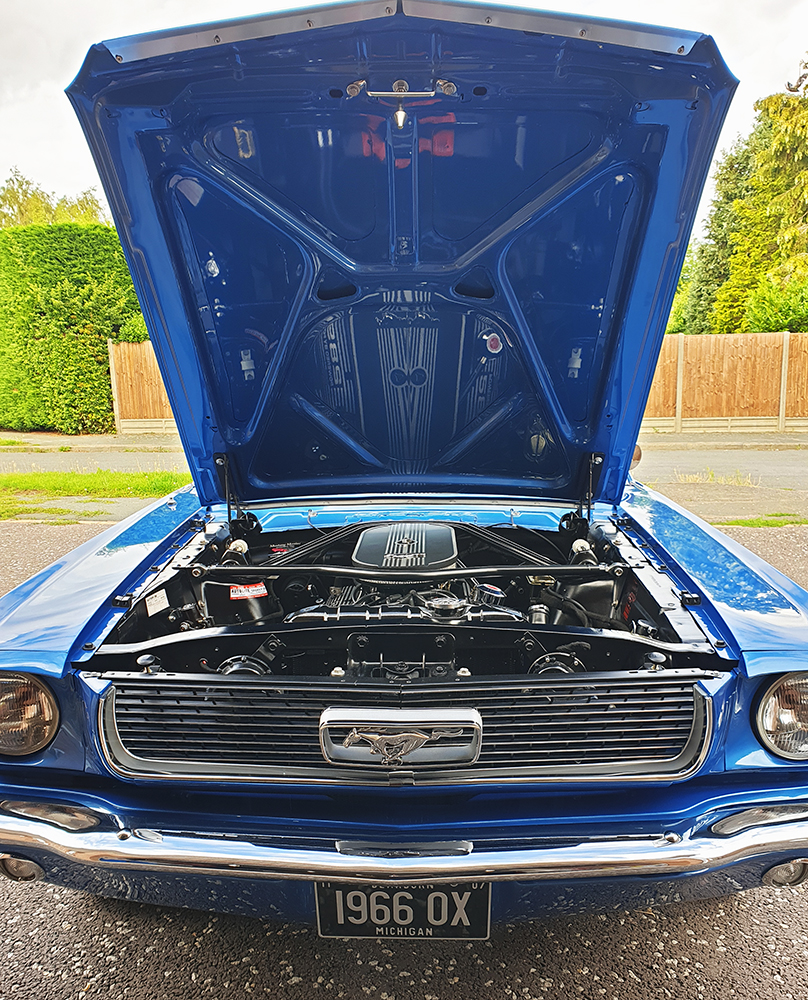
With the hood up I thought that the underside looked a little dull, so I waxed that as well, just because I can. I also think it’s quite a cool picture too.
What turned out to be an hour or so quick check up turned into a few hours of cleaning. Not that I mind really, just a bit disappointed with myself that I forgot to do it. It must be my age 🙁
Will I get to a car show this year? Will mother nature be cruel and rain on the day that one of the only car shows is due to take place next Sunday? Watch this space and find out!
During this lockdown we can’t go out in our much loved and pampered cars to any car shows. We can start them up and clean them. Something which I have been doing a lot of recently as well. As time has gone on my love for my Mustang has never waned or faltered ever! Since the car has been on the road technology has moved along in respect of the lighting on cars. DRL or Daytime Running Lights have become the norm as has LED headlights. LED technology has taken over where the HID bulbs left off. The HID had to have a massive current draw have their own relays etc. LEDs don’t have that problem. So I had a word with Adam at Mustang Maniac and he has been researching for me and came up with a little prototype pack. This is the story of the pack which consisted of two lenses and two sets of LED bulbs. Both sets were similar in specifications, but different fitting styles.
My brief to Adam was that I wanted the replacement bulbs to be like the original standard ‘sealed beam’ style which I had refitted back on my car with correct Ford logo lenses.
These are the proposed replacements with optional side lights.
The side by side comparison of both bulbs, Ford on the left and the proposed replacements on the right. Not to bad at all and I certainly didn’t want the clear type lenses.
The replacement halogens looked great and provided a nice upgrade compared to the fillament ‘candle’ power of the originals.
All the lightbulbs on my car are LED, and I just wanted that super white look on the headlights and of course the increased night vision and visibility to other road users.
Adam always comes up with a solution and asked me if I wanted to trial them for him. Of course I jumped at the chance. So here is the walkthrough of that process.
Process:
Removing the headlight.
The headlight doors are held in place by four screws, one in each corner.
The headlight door is not attached to anything and can be lifted off cleanly.
With the door off the headlight retaining ring becomes visible which in turn is held in place by three screws. Removing the threee ring screws will release the glass and could fall out if you are not careful.
With the ring off it was an ideal time to give the brightwork another polish and clean up before being refitted. Metal polish applied and buffed to a shine. I was surprised just how dirty they had become.
Lift the bulb towards you to expose the wire loom fitting behind the bulbs. Disconnect the plug fitting and the sealed bulb unit will come free.
The main problem is that there is a clearance issue behind the bulb. With the sealed beam and fitting plug in place there is just a few millimetres at most.
The LED Bulb Sets:
There are many options of LED bulbs. Most of the high power LED bulbs will need to have some sort of cooling. That may be provided by the use of built in mini fans or heatsinks. The passive heatsinks are predominantly bigger and will definitely not fit behind the bulbs.
Active bulbs have a fan which will extract the heat produced from the LEDs over the cooling fins thus enabling the LEDs to operate properly and last as they are intended to do so, 30,000 hours or just under three and half years in this bulb set case.
Here you can see the comparison of bulbs. The standard length of the H4 bulbs on the left and the LED option on the right without any excessive heatsink. The blue LED much larger base contains a small fan built within it and is considerably shorter than some other LED fan options available. Even so, the additional 10mm longer, plus the loom fitting causes the problem of clearance at the back of the bulb when test fitted. It was worth the try and would have been a very neat option. This was the “it could fit” option, but these will not fit as they are. Yes you can cut the connector of and make individual blade fitting but that is a real pain and will still be very close the fender fronts and not recommended.
The other option of bulbs to try was the fan and heatsink. In order to make this fit a wire pigtail will plug into the loom fitting and not plugged in directly behind the bulb itself. Not as common, but a very nice alternative. Also with LEDs there is an option to customise the colour of light from the LEDs. These are the 6000k option which gives a very clean crisp white light, very much like the HID bulbs. Of course the 3000k or the 4000k options will give the more standard filament bulb warmer look. These are the “they should fit” option.
With the additional pigtail connection this means that the bulb body can be longer itself without being a problem. Below is the longer fitting bulbs compared to the other already too long option in blue. Although the bulb is even longer the net length is shorter as the fitting is held away from the bulb itself via the pigtail. The pigtail and loom connection will tuck neatly behind the bowl at the back. Comparison of the bulbs getting longer left to right., Halogen, all in one, and the pigtail variation.
Bulb Power:
The power of a bulb is rated on its output power known as Lumens or ‘lm’ suffix.
– Halogen standard bulbs are rated at 1000 – 1500lm. Although some bulbs can be tweaked to give more, but are much more expensive than their standard counterparts.
– The blue LED bulb has a rating of 12000lm total which is 6000lm each side.
– The pigtailed version is rated at 10800lm total which is 5400lm each side.
Thus the LED giving off considerably more light than the halogen, more on that at the end with comparison shots. Supposedly these LEDs are 300% brighter. I don’t think it’s near that, but they are certainly much, much brighter.
The pigtailed bulb has a clever fitting for the sprung loaded fitting or the normal H4 recess cut out. The LED bulb twists out via bayonets and allows the plate to be swapped over for both style of fittings as required. A nice touch by the makers.
Lenses.
The option I have here is the pattered type (as I wanted) lenses with the side light option. The lenses come with a dust cap, pre fitted H4 halogen bulb and sidelight.
Standard clip to remove the halogen bulb.
The sidelight option is removed by pulling from the snug fit grommet and is also a standard BS9s filament bulb.
As I have LED/indicator side lights at the front this additional sidelight isn’t required at the moment, so I removed the bulb and will be blanked. I may refit the bulb later if I get the urge, as long as it’s an LED alternative of course.
Measuring the height of these replacement lenses the standard 6″ depth with the longer bodied LED (blue) bulb is past the limit with the loom fitting plug in place. Verified by a test fitting.
Sidelight Options.
You can leave the sidelight in place and use it, leave it in place not used, or blank it off. I did the later using the original grommet and slightly smaller blank off grommet inside the other hole to fill.
In order to avoid the black plug which can be seen through the glass I decided to spray them with a little left over chrome car spray I had left over.
The results were good enough and can just bout see them. The pic on the left is the hole exposed and the right is blanked off.
Fitting The LED Bulbs:
Test fitting of the pigtailed LED bulbs showed that the dust cap will not allow the bulb to be fitted with the dust cap in place as the bayonet fittings are covered up.
The answer is to turn the dust cap inside out and cut back the additional internal collar with a sharp knife, I used a scalpel and a new blade. When the dust cap is reverted back to the correct orientation it clears the bayonets fine.
Note: Before cutting the dust cap I did confirm a test fit that the lens and the bulb fitted together back into the bulb bowl, there was enough clearance to allow the air flow at the back for adequate cooling.
Another reason the bulb plate is removable because the spring loaded clips will not bend around the motor and heatsink. Clip the plate in place first without the main body of the bulb. (Test fitting of the bulb without the dust cap in place is shown in the larger picture).
Now the clever bit; place the dust cap over the bulb and insert the LED main body into the base plate and twist the bulb until it clicks in place. You can see from the Picture here below that there is space around the bulb for the heat exhaust.
Important:
To align the beam pattern which is so much more visible now, the LEDs are to be facing 9 – 3 orientation, or the centre of the flat bulb vertical. You may need to adjust this angle once the bulb is fitted back in place and to then checking the aim of the lights as well.
Refitting the Headlight
Clip the loom connector to the pigtail.
Move the headlight back into the mounting bowl and thread the wiring to the back of the headlight bowl.
The headlight has three ridges which sit within the headlight bowl to stop it twisting and moving the headlight pattern. Seat the headlight in place and fit the retaining ring onto the lens and tighten up properly when all is held in place.
Check the headlight aim and all is working correctly.
With everything working and in its correct place refit the headlight door.
Time Taken:
In theory it should take around half an hour to replace a headlight bulb each side.
However as I was trialling different bulbs and to see what fitted it took me longer. Of course I won’t add that to the overall time as I have done the working out for you. The only non standard part is the trimming of the dust caps to allow the LEDs to locate in the holding plate. That only took a couple of minutes to do it neatly with a sharp knife. Alignment of the bulb within the lens is the only bit to remember before final screwing up.
Full time took around forty minutes all in for each side.
Results:
I pushed the car out of the garage a bit and shut the door to keep out much of the light as I could. I changed the driver’s side first in order to give the comparison. Left pic the original halogen, the right pic the LED bulb. I tried to keep the exposure the same to show the difference.
The results on the wall test looked very noticeable as well. The left side of the pic is the LED shows very white. The right side shows the warm light of the halogen and not much light pattern definition.
With both LED bulbs fitted.
I am well pleased as this is a great upgrade and will certainly help with the nigh time running and visibility to other road users, or in poor weather. A very modern upgrade that doesn’t look out of place. Less strain on the alternator regarding power draw is a major advantage as well.
With the engine of and the headlights on there is a very faint hum of a motor which comes from the back of the LED bulbs. With the engine on you will never hear it. In the open you can hardly hear it, but if you listen for it you can hear it – just. The motors are ball bearing based and designed for long. I would say that it’s kinda cool that I have cooling fans for my LED headlights on an old classic car if anybody asks!
I have to thank Adam and Mustang Maniac for his time into researching the possibilities and getting them sent out to me so I can have a play over the bank holiday. Will Mustang Maniac stock these along with his other LED kits I can’t say. But, to get LED headlight’s on a budget these are a great conversion you should really consider. The visual results speak for themselves. In fact anybody who uses the standard 7″ round headlights may be able to use this combination.
I will be posting some more car detailing reviews very soon so watch this space under the “Car Detailing Reviews”. I have found a new source of products from a great company and they are honestly amazing. No I’m not on commission and i buy all the stuff myself before you ask!
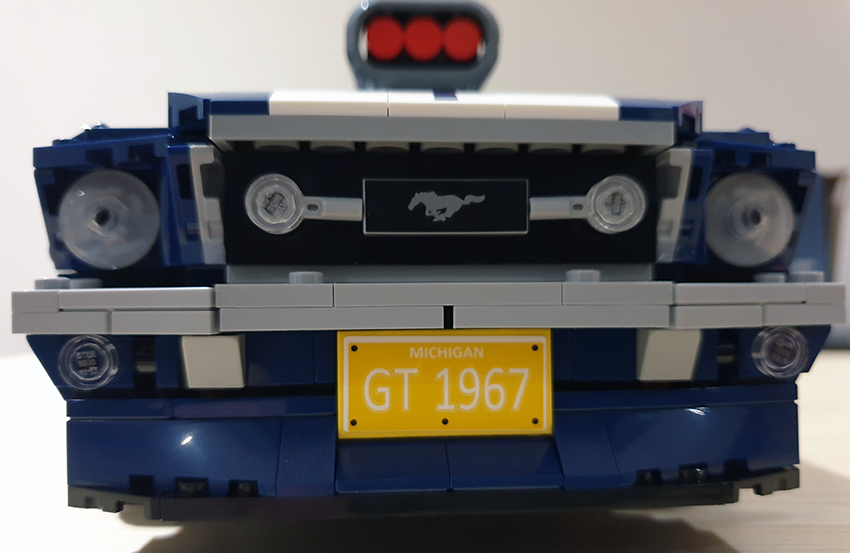
So here I am under government instructions to stay at home to stem the spread of the Covid19, as is the rest of the country. Some are taking this enforced lockdown more seriously than others I might add. All the car shows I had lined up to go to and have been looking forward to have been cancelled, I can accept that if it’s short term, as long as I can at least get a few in before the end of the year. But what can you do in the mean time? To while away the time I have just finished my mini project which I was going to make last when I have a little time over the weekends. Now I have more time than I actually planned for. So not only have I completed my project, I have written about it too. You will be pleased to know that it’s Mustang related of course, but in the form of Lego. So if you were wondering is it worth it and what’s involved let me explain;
The Sales Pitch from : Lego
Discover the magic of an iconic 1960s American muscle car with the LEGO® Creator Ford Mustang, featuring dark-blue bodywork with white racing stripes, bonnet scoop, printed mustang grille badge, GT emblems and 5-spoke rims with road-gripping tires. Developed with input from Ford, this authentic replica comes with optional add-ons for customization, including a selection of license plates, supercharger, rear ducktail spoiler, beefy exhaust pipes, front chin spoiler and a nitrous oxide tank. You can even adjust the lift of the rear axle for an extra-mean look! Remove the roof panel or open the doors and you have access to the detailed interior with handsome seats, radio, working steering and a mid-console gearshift. Store items in the trunk or lift the hood to reveal a detailed big block 390 V8 engine with battery, hoses and air filter detailing. This advanced building set has been designed to provide a challenging and rewarding building experience full of nostalgia and makes a great centerpiece for the home or office.
– Authentic replica of a 1960s Ford Mustang featuring dark-blue bodywork with white racing stripes, air scoop, 5-spoke rims with road-gripping tires, and a selection customization add-ons.
– Open the doors or remove the roof panel to access the detailed interior with handsome seats, radio, mid-console gearshift and working steering.
– Open the trunk to store items and lift the hood to reveal a detailed Ford Mustang V8 engine with battery, hoses and air filter.
– Includes a printed mustang grille badge and 2 GT emblems.
– Customize the Ford Mustang with the included supercharger, rear ducktail spoiler, beefy exhaust pipes, front chin spoiler and a nitrous oxide tank.
– Choose from a selection of license plates.
– Lift the hood to check out the realistic engine detailing.
– Adjust the lift of the rear axle for a real mean look!
– New-for-March-2019 special elements include 5-spoke rims, 2×8 brick with bow, 1×3 mustang logo tile, 2×4 bow with ‘GT’ Emblem.
Measures over 3” (10cm) high, 13” (34cm) long and 5” (14cm) wide.
You get a big box and a lot of smaller plastic bags inside, an instruction manual and a sticker sheet.
What’s In The Box?
You get eleven plastic bags of parts although they are labelled as one to six with all but bag five having a smaller bag with the same number. A total of 1471 parts for you to try and sort out.
TIP:
Don’t open all the bags at once, only open what you need!
Instructions:
The instruction book starts with a brief background to Ford and the Mustang with time lines. A nice little addition it must be said.
The start of the instructions tells you which packets to use for which section build.
The instructions are all diagram based with the parts you need counted out and shown to you before assembly. Where the similar looking parts and colours are used the instructions has a 1:1 check to make sure you get the correct part. Some of the differences are very subtle.
Building the Model
This is the first time I have touched Lego in about forty five years or so. Oh how it’s moved on. The tolerances are still perfect, things fit together and don’t fall apart. A huge leap forward to building cars and houses when I first played with it and stood on the bricks!
The hours just rush by when building this. I challenge anybody to spend only what they think is an hour doing a build without anything to tell you the time. When you think it’s been an hour it’s a lot more than that. I found it addictive to do a page, then think ‘I will quickly do that bit as well’, it draws you in.
You start at the back of the car building the suspension, lots of little cogs seem to be placed for no apparent reason, then a few pages later it suddenly comes together. The sense of achievement is well thought out and makes you want to come back for more.
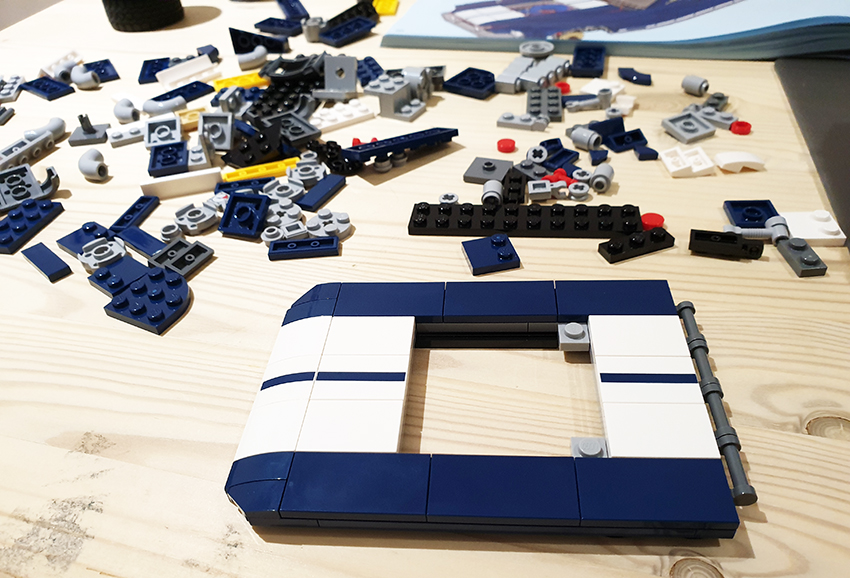
I found it easier to get all the parts I would be using for that little build located into an area to save looking for the parts as I went along, which I found could delay my build of that little section. Find it, collate it, then build it and repeat. No matter how you do it, the whole process is enjoyable. It actually started to upset my OCD in the end and I had to line the bits up I was about to use and separate into little bub piles of parts.
Next you move to the middle of the car for the transmission tunnel, adding the gear shift, radio and dials to the bricks. Parts seem to be built modular style then applied to the overall model itself.
Steering and engine next, considering the level of detail in this model I found my first grump. The engine only has four spark plug leads. They could of made it eight and just gave it that little bit extra detail.
Nice detail touches on the engine due to the name and the oil cap etc.
Building the body work is interesting how it comes together.
The door hinges caught me out as I had a little bit round the wrong way. The supplied brick separating tool is great and saves digging your fingernails between the bricks.
The design of the model has taken a lot into account for the assembly. They get you to place some round white bricks under the front corners of the car. When you press the bricks onto the model, these corner blocks means that it doesn’t flex or come apart when you add the little sub sections of build. When the car is finished the round white bricks are then removed, fitted together to make the NOS bottle for the trunk, providing you want that of course. How cool is that to reuse bricks in order to make your build journey enjoyable?
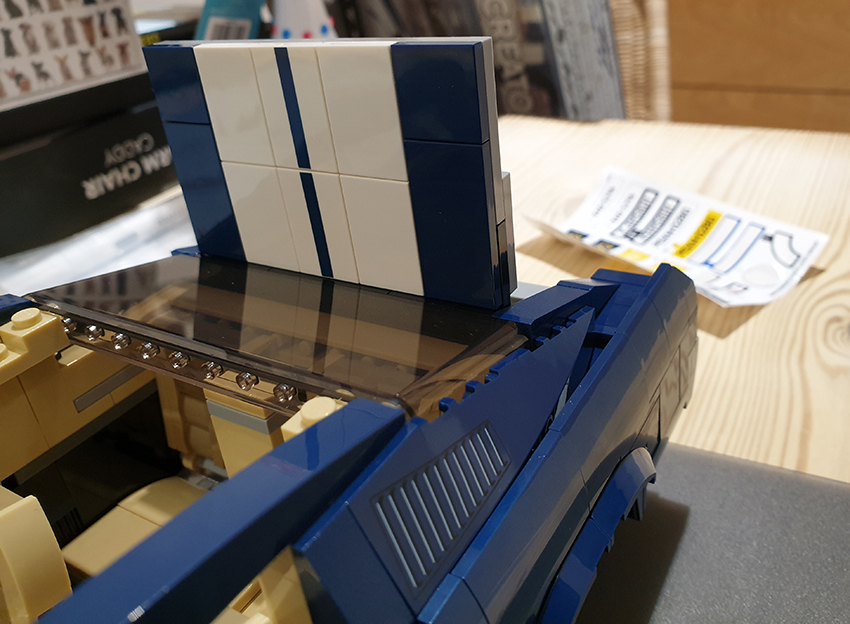
Just like restoring a real car, seeing the seats go in and the rear ‘glass’ starts to show the model is nearing completion. The hood offers the option for the stock scoop look or the opening for the super charger. It doesn’t matter if you change your mind later, it only takes around five seconds to swap it over.
The roof is designed to be a single section so it’s easy to remove and see the detail inside the model.
The other options for the model are the side pipes, front spoiler, rear spoiler and NOS bottle.
The completed model looks just as mean as the real thing.
I mentioned earlier about the two engine options; the standard or the hot rod version. The super charger will poke out the opening in the hood, or use the stock pan and the scoop. I built both just because I could and can swap them as I want.
The Super charger option works well and looks in proportion to the rest of the car.
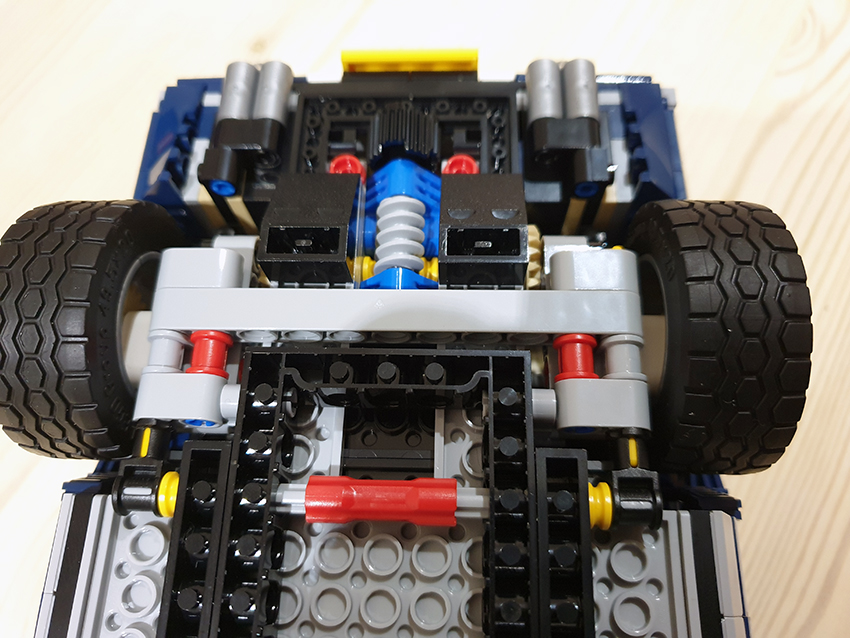
The underside of the model shows the level of detail you can’t see, it also allows access to the thumb adjustable wheel to raise up the back of the car’s stance.
The completed model looks quality and withstands being handled without falling apart.
There is a third party option to add LED lights to the model. It does involve some disassembly, but the instructions and video show you how to do that and only take fifteen minutes or so to upgrade. If you want your car to be on show with the lights then it could be worth fitting that kit at the same time to save a bit of hassle later.
Results:
An amazing model and sits nicely with my other model. I need to get a little case for this one as well I think
It was a joy to make, and is a pleasure to look at. The parts are real top quality as you expect from genuine Lego kits, everything just works together. I had no missing parts and everything was there.
Rating: 9 out 10
An excellent model as I said, but there was just the number of spark plug wires that let the detail aspect down a bit as a model for me.
The instructions are very good indeed and well paced, the printing was fine and clear. The colour definition between the lighter coloured parts could be confusing and I would liked to have seen a bit more colour definition. Those are the only two reasons I marked it down.
Ease of use – 8 out 10
Finish – 10 out 10
Conclusion:
A lot of money for a Lego kit, but I was impressed. On the other hand you do get a lot of good quality model for that money. The price may put this kit out of reach for many to buy and build. As with all things Lego the price seems to stay put and not vary much.
The age range to start this is suggested at 16+ which I personally think is a little harsh, perhaps a petrol headed 14 year old into cars would like it, 15 years old on should be fine. Sometimes the small fingers do help, rather than my big hands getting in the way. This build will keep you quiet for a good few hours either as a young adult or a middle aged man like me.
The instructions take you on a journey that you’re not aware of, and completing each little bit leads gives you a sense of achievement enough to make you want to complete the next section. The Lego look with the little bumps and strange lines works well on the model and certainly doesn’t detract from the over all look. You can see it’s Lego and will appreciate that somebody has gone to good lengths to complete it and enjoyed it at the same time.
When it was finished I was a bit gutted that I didn’t have any more to build to be honest.
Would I recommend it? Yes. But, it’s expensive.
So there you have it, a good many hours spent working on a Mustang, all be it a much smaller, modular version of the real thing. I will be writing some more car detailing reviews soon, so keep an eye out for those. If I can’t drive my my car at least I can still clean it, even though it’s already clean. It also keeps me out of the way being indoors with the wife. The more I get under her feet the more she will find me “jobs” to do. She is trying to teach me to cook as well, me and kitchens don’t go well it has to be said. Yet when I try and get her to clean, polish, wax and detail her own car, the same levels of (non) enthusiasm I showed to cooking is reciprocated and more.
I do know that my time is already being allocated to redecorating the house, even though it did some of it just over a year ago. I have spotted the delivery of a few large tins of paint. So I need to keep busy, keep scarce in order to put off the the job that I seriously detest – decorating.
I think I need to get another model though to keep me quiet in these unprecedented times of forced isolation. Or I may end up cleaning walls and applying paint rather than applying extra layers of top quality wax to my pride and joy. Who am trying to kid? It’s not if if decorate, it’s a case of when!
I wasn’t sure if I was to split this post into two or not. I eventually decided to keep it all in one place. It might be a bit of a long post but I think it’s worth it. As a follow up to my mega wax comparison test the write up for my comparison of Dual Action polishing pads is now completed. This post has taken me many, many hours to collate and put together, not only for my own sanity of product comparison all in one place, it will hopefully be a help for you as well. That’s regardless of being a Professional Detailer or a Weekend Washing Warrior like me.
There is a huge minefield out there when it comes to buffing pads by various manufacturers for similar products. Although they may look the same they can perform very different tasks. They can do the same things but are different colours, it’s all very confusing. It drove me mad, so what I have tried to do here is create a chart of the most well known manufacturers and their Dual Action pad products. I chose the ‘Dual Action’ variables for a couple of reasons;
1) I have a Meguiar’s MT320 Dual Action tool.
2) Rotary tools and pads are for the experienced user or professionals. Incorrect use can damage your paint job. You have been warned!
I am a weekend washer as I mentioned, I’m not quite up to the professional detailing standards yet, but I keep trying. If I take my car to show or just taken out for a drive, I clean it via quick detailer product when I get to where I’m going. When I get home the car gets a full waterless wash before it goes in the garage and covered up again.
I found many charts and explanations from many sources, but none that done a full comprehensive comparison side by side. My Pad Guide which I collated below is for reference and you really should get the right pad for the right job. The chart here is also downloadable in High Quality PDF as well. 🙂
I have tried to provide links to each manufacturer and the descriptions of their own pad products below. If you find any others that may be of use, just let me know and I will try and add them.
Clicking on the individual links below will take you to that company’s website for more details. Some are great pages with lots of info, some are rather shabby to say the least. I honestly recommend having a look at the links as they will explain in greater depth why you should use their products and for what tasks.
I found a couple of images from the net (below) that are pretty good to explain some of the terminology of this coveted detailing skill. There are many, many books out there and plenty of ‘how to..’ videos on YouTube as well, so I won’t duplicate them here who are much better qualified to explain it than me.
Marks on the paint can be from poor washing routines, bird lime, tree sap, third party damage such as keys or car park dings, damage from hedges when driving to close or stone chips etc. These sorts of damage can spoil the look of your car may require the polishing step. The easiest way to remove these marks are with the DA pads.
First the misconception of ‘Polishing’ and ‘Waxing’ are the same thing! They’re not.
Polishing Pads or Cutting Pads or Compounding Pads,: Choosing your correct pad and polish combo is critical, using a waxing or ‘finishing’ soft or super soft pad won’t do much at all, and you will be there a while wasting your time. The courser polishing pads or ‘cutting’ pads are designed to work the product to the paint and not just apply it.
Waxing Pads or Finishing Pads: Most of the waxing or ‘finishing’ pads are soft or super soft, they are designed primarily to apply the product to the surface and not ‘work’ the product into the paint as such.
A little common sense; before you decide to polish, you must wash the car thoroughly. I won’t go into the full details of how to wash your car, but I will touch on the main points before the polish and the eventual choice of pads. You can use waterless washing if you want of course, but applying waterless washing tends to add an element of protection to the paint.
An ideal prep for a polish is to use a pre washing “Snow Foam” first if you can. This tends to remove the worst of the debris on the car as a touchless process. If you don’t have access to a snow foam, then at least rinse the car first and then wash the car using the two bucket method with a wash mitt, not a sponge. Remember that a good quality shampoo should nourish the paint and prepare it for a wax layering process, it shouldn’t remove the wax that is already on the paint surface. The least amount of contact with the dirty paint is desirable.
Remove any wax that is on the surface of the car’s paint. This is a separate step after washing using a specific product just for that wax removing job. However, some of the cheap and nasty car washing products will also remove the wax at the same time as washing, saving you that extra wax stripping step. Use a proper de-wax wash product like Chemical Guys ‘Clean Slate’ to leave the paint bare to the elements. Don’t be tempted to use cheap washing up detergents to wash the car, as they themselves can also be abrasive and often contain salt.
Once the car is washed clean, there is a step that is often overlooked before polishing; the ‘Clay bar’. This is as it sounds, a piece of soft clay which is flattened out into a thin pad and rubbed over the surface of the paint using fingertips. This clay lifts the stubborn contaminates and they in turn stick to the clay. Use the clay with a recommended lubrication and turn frequently to a fresh piece of the clay when it becomes dirty. If you drop the clay bar, Never Ever pick it up and re-use it on the car, get a fresh piece and continue. If you dive straight into the polishing stage you could end up dragging these foreign particles over your paint making things worse. It’s always best to try and get the paint as smooth as possible first before you tackle that polish stage. I have review links to a great clay bar from Bilt Hamber here and pretty poor clay bar from Auto Finesse here. Choose wisely, not all clay bars are the same, some work and some really don’t. A Clay Bar will also remove wax as well. Rinse the car and dry thoroughly.
Tip: Polishing is an acquired skill and shouldn’t be taken on with a slap dash approach. Go to a scrap yard, get an old fender or hood and practice on that first. Practice on an old car, or a favour to mates old car. With a heavy cutting compound, or an overly abrasive pad along with undue pressure being applied during the polishing process, there is every chance that such an abrasive combination could take the paint of your car. Rule of thumb is that a polish cleans the paint with mild to very abrasive product.
Some polishes are known to have fillers to hide imperfections and to give a richer look to the surface paint of the car. Auto Finesse ‘Tripple’ is such an example or Meguiar’s ‘3 in 1’.
Another step than can be used instead of a polish is a ‘Glaze’. This can be applied by hand or a DA machine. This product is a filler for fine scratches or swirl marks. This will only mask the problem of damaged paint. It certainly won’t cure or fix the problem like a proper paint correction or polish would.
What is Polish and Polishing?
Depending on the paint condition this will determine the pad and polish product you will need to use.
Polish, or sometimes referred to as a ‘compound’ is usually in the form of a liquid which contains a varying degree of abrasive content. The polish abrasiveness is also referred to as it’s ‘Cutting’ strength. During a polish you are in effect removing microns of your paint, the harsher the abrasive or cutting, the more of the paint or clear coat will be removed. Polishing can also restore the shine of the paint on your car from a faded or neglected surface. If you see some slight discoloration, damaged paint from bird lime or similar, or when you think there is a lot of dirt that has got stuck on the surface that won’t be removed after a wash with a good shampoo, it may be better to go for the polish. Small scratches can be reduced or removed after a polish. This can also be known as a ‘paint correction’.
The majority of the time a Polish will require multiple applications of finer or less course cutting polishes and softer pads to obtain that smooth mirror like surface. Rule of thumb, start soft. If nothing is happening go heavier and work back to the light combo again. If the paint is getting to hot – STOP. Many experienced detailers and car body work painters just know what they need to use.
Why Polish?
Simple answer is that if you see scratches or swirls the polishing step could remove them depending how bad they are of course. This would leave a mirror looking paint if done correctly.
How does it work?
The light hits our eyes at strange angles, which shows up as a scratch, blemish, swirl etc. on the paint work. If the paint is smooth with no marks the light is bounced in an even manor. This is explained a lot better with the help of a little diagram towards the end.
What is Wax (ing)
Wax is just a protective coat to protect the paint of your car from the elements, prolong the longevity and lustre. There are two main products, natural and synthetic. Natural tends to offer the best shine with not much longevity. Synthetic offers the best longevity but not quite a good a shine. There are of course mixtures of the two and hybrids. Some of the ‘hybrids’ are now incorporating the ‘ceramic’ technology which is creeping into the consumer market. Natural waxes are often found at high quality car shows or concours events to show the paint to it’s full extent. Synthetics are for generally for daily cars who also want a nice shine. Waxes have moved on with technology, these waxes often come with UV protection to help stop paint fading in sunlight. They last longer, apply easier and offer great value for money, well in most cases anyway.
There is also another step that can be applied, that is ‘Sealer’. this is applied before the wax as it says coats the paint job to protect it better than a wax – so it’s said. Sealers do one job only and not designed for pure shine. More to protect what you already have before the shine is applied.
Waxes come in two main application forms; liquid or paste.
Paste wax or hard wax, is more of the traditional method and often classed as old school. Often requiring application, curing and then buffing to a shine, often repeated to build up the protection or shine. Usually the enthusiasts or connoisseur’s choice. These products are best applied as ‘a little goes a long way’.
Liquid wax or soft wax, is the modern approach. They tend to be quicker, easier and generally don’t require cure time or additional applications, also know as ‘wipe on, wipe off’ products. The down side is that you tend to use more of the product.
Why Wax?
Waxing protects the car from elements and even sunlight. It also makes the car look good and helps to retain the vehicles value.
How does it work?
The wax forms a protective barrier between the paint job and the elements.
There is no right or wrong for the type of waxing you take, what ever suits you. I have it on good authority that there are no differences between the paste wax and the liquid waxes apart from composition. The only real choice you have is what you want the wax to do, last, shine or a bit of an all rounder?
Understanding the paint problems
I found these various diagrams to show what the polishing is designed to do. Make the paint as smooth as possible, then protect it with wax (or sealer).
They say a picture speaks a thousand words and I think these pictures do just that to explain it better way than I ever could.
Some examples of things that can damage the paint and how badly, and yes that does say ‘fingernails’!
As I mentioned earlier on how the eye sees the light. If light reflects badly and is distorted instead of a bouncing straight back, that is when you get to see the marks on the paint as shown here:
Various way to fix this is the buffing with pads to get to the bottom of the damage to leave a smooth even reflective area. As I have already explained, things likes glazes, sealants and waxes can help along with disguising these areas of damage to make the light reflect in a much more uniform manor. Thus making the surface look smooth and shiny again.
Then we get a little more techy with the thicknesses of paint and how the paints are applied. Of course the different applications of paint (Single coat, 2 pack, water based, cellulose etc.), amount of paint applied, types of paint; solid, metallic, pearlescent, matte, special mix custom. The type of primer, fillers, top coats, clear coats all need their own types of care. For some one product may not work the same on another manufacturers paint etc. Some manufacturer paints are known as hard paints, while others are considerably softer. This diagram shows the generic application of thicknesses, these vary wildly depending who done what. Some respray jobs cost £2,000 and others £20,000 and that’s for a good for a reason.
The ‘basics’ of the paint application;
Don’t worry that is as technical as it will get about paint and the theories behind it. After all we are just looking at the comparison of pads to ‘fix’ the paint, according to my very own comparison chart above.
When I mentioned the combination of products and pads above, this is the visual representation of just that.
Not all these DA pads are for polishing or cutting alone. Oh no, Many people use the much softer pads to apply the waxes to the car for a much easier, smoother and even application of wax. I have a link here on 10 wax comparisons in a mega test.
During the last quarter of last year, the UK had a few nice days of sunshine and as I had a few days off work owing to me, I decided to use my holiday up. That time was put to good use and completed a little project I wanted to try for myself. It’s often done on YouTube, but not to this degree, I think.
There are often a few car cleaning products compared on YouTube channels, but not ten side by side, with the same testing criteria by the looks of it. When I say “Top Branded”, I mean top manufacturers and their best selling products for normal weekend washing warriors on the street. Those of us who like the best products that work and at reasonable prices using traditional waxes, not the latest in thing of ‘Hybrid’ or ‘Ceramic’ waxes. Lets face it, there are some truly great products on the market at the moment, some of which are even essentials of my own cleaning routines, still. To put this into context there are waxes out there that are expensive for expensive sake, like Swizöl International’s Divine costing £2,150, Brough & Howarth’s Definitive Wax Marble costing £24,000, Zymol Vintage Glaze costing £2,400 or The Ultimate Shine costing an insane £65,000 which can be seen here: http://www.performancemotorcare.com/car-cleaning-product-news/worlds-most-expensive-car-wax/1808
However, there has been (a strong) rumour that the ‘Ultimate Shine’ wax itself is actually made by Mitchell & King in Scotland. I can’t verify this, but can only state what I have read so far. The original mix (allegedly) sold by M & K is called Gold Rush Rally at £75 a pot which is a mere 0.11% of the price! This brings me back to my point, although these ten waxes are (mostly) affordable and will last a good number of applications, they are not in that stupid silly money league. However there is an in-between level of Luxury car waxes such as Swissvax Crystal Rock at £300, BMD Prometheus £120, Auto Finesse Desire at £120 and Mitchell & King’s top of the range wax ‘Lily’ around £600 where only One pot is made a year, or anything in between from M&K for a comprehensive range of waxes between £45 to £600.
I will be reviewing Mitchell & King’s ‘Lily’ in a very special review coming soon. This was purchased with my wife’s very own money for a special Christmas gift. Before anybody asks – No, I’m not on commission or paid by them.
If you can afford those crazy sort of prices I suspect you will get somebody else to clean the car for you. I’m guessing most of those super high end waxes are being applied to Veyron’s, Ferraris or any other super or hyper car where money is no object. Then there is the other end where Poundland stores sell car shampoo for £1. Pure logic dictates that there has to be a difference right? But somewhere in the middle, there is a sweet spot and that’s these sort of products I have reviewed here.
Anyway, back to these standard off the shelf and top selling waxes, I have been very happy with most of these waxes and will continue to use them on my daily cars. Some do a great job and perform well after application. That’s why I really wanted to compare these particular mainstream products. Picking the best of the best that I like, then at a later date this summer step up to the ‘Real Luxury’ car wax to see the real differences, if any. But a couple of these waxes are getting close to treading on the toes of the ‘Luxury wax’ end of the market; Dat Wax and Illusion based on their cost to volume ratio. The scores I have given in the past to some of these products I stand by. At the time I didn’t know any better or had anything else better to compare them against until now that is.
Costs:
Multiple products which varied from a very reasonable £12 to a eye watering £75. All these products I purchased myself, no sponsorship to skew reviews. These are my own thoughts and findings for the products with my own hard earned cash I parted with for each of them.
Meguiar’s :
Gold Class paste £21 for 311g click here for individual review
Ultimate Wax Paste £40 for 311g click here for individual review
Mirror Bright Polish Wax £23 for 226g click here for individual review
Nxt Gen liquid Wax 2.0 £26 for 532ml
Auto Finesse :
Glisten £12 for 500ml
Illusion Show Wax £75 for 150g click here for individual review
Chemical Guys :
Butter Wet Wax £23 for 473ml
Cherry Dripping Wet wax £23 for 473ml click here for individual review
Instawax+ £16 for 473ml click here for individual review
The full video of this test can be found on my YouTube channel orherefor the shortcut or paste the link to YouTube. It’s easier to see what is going on rather than read about it. The video lasts for thirty two mins or so and has be trying to film, commentate, wax and buff all at the same time. I think I pulled it off after a bit of editing.
I have reviewed many products for detailing, especially waxes and quick detailers. Some have been rated 10 out of 10 by me when I tested them. Which at the time was correct as I used the product in isolation. However, there are always those nagging thoughts in my mind; what about side by side comparisons? Are the expensive waxes worth it? Can you tell the difference? I aim to answer these questions the best I can.
When you apply a wax on it’s own you can only gauge by what you are working with, application may be great and buffing at the time. But, you forget how others perform that you had previously used or reviewed.
So; I got my favourite waxes out and decided to compare them. That’s five hard paste waxes – old school and my preferred option. Then five soft or liquid waxes of similar products not made in a wax form.
The top three big boys are Meguiar’s, Chemical Guys, Auto finesse and a wild card of Dat Wax.
There are only really three actual ‘hard’ paste waxes which are the Meguair’s trio, Gold Class, Ultimate and Mirror Bright Polishing Paste Wax (made by Meguiar’s). The Auto Finesse Illusion and the Dat Wax are both very soft butter texture type waxes not quite liquid, but not a hard paste in comparison either.
The Sales Pitch(s):
These are found under each of the reviews I have done to date. See the links above. I still have a proper Glisten review to do and my latest purchase of the Butter Wet Wax.
Each of these products claims to have the best shine possible and protection, but they can’t all be right can they?
Instructions:
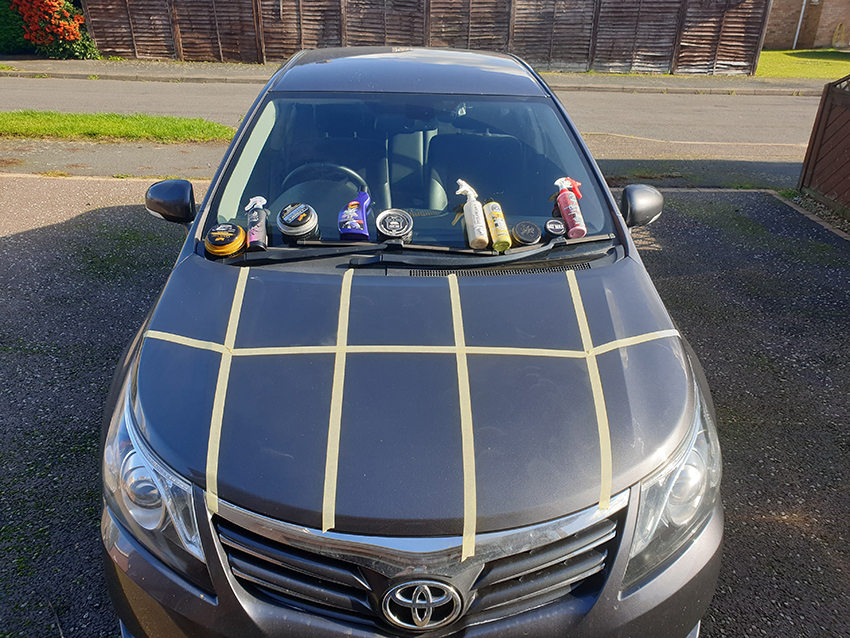
The instructions were followed on the tins and bottles of each product. The donor hood was my 2014 Toyota Avensis in a metallic grey. I divided the hood into roughly ten even sections via some masking tape. The day was overcast and sunny, but not enough to make the metalwork hot to the touch.
The top five sections were for the hard waxes, and the bottom five sections were for the soft waxes.
Top; left to right – Meguiar’s Gold Class, Meguiar’s Ultimate, Mirror Bright Polish wax, Auto Finesse Illusion, Dat Wax.
Bottom; left to right – Auto Finesse Glisten, Meguiar’s NXT Gen 2.0, Chemical Guys InstaWax+, Chemical Guys Butter Wet Wax, Chemical Guys Cherry Dripping Wet Wax.
Application:
The hood was first given a wipe down with quick detailer to get the light dirt off.
The hood was then clayed with Auto Finesse clay bar and a Megs Quick Detailer, not the greatest detailer it has to be said, it’s recommended by Meg’s as a clay lubrication product as well.
The hood was then given a good spraying with 99.9% Isopropyl Alcohol to remove anything left, which was quite a lot based on the clean white 100% cotton cloth.
My fingers dragged and squeaked across the paint, I knew then it was clean. The hood was the taped up ready to apply the products.
Each Product
Rather than going into pages and pages of what I did and how I did it, the video will show you each product as I went along.
Each product was applied with a clean applicator or cloth. The pastes and liquids were left to haze except for the Auto Finesse Glisten which could be buffed off straight away. It took around 15 minutes for all the waxes to cure / haze over.
Each buffing was done with a clean 280gsm microfiber cloth all from the same manufacturer for consistency, the only difference being the colours. I tried to apply each product in the same way, and buff off in the same way. The only difference being the Mirror Bright Paste as that required working into the paint as it was a polish as well. Failing to apply that correctly would have compromised the product. It’s interesting to note that the Auto Finesse Illusion and the Dat Wax never actually hazed over probably due to the oil content not evaporating.
I tried to apply the products to the paint for the same amount of time, and buff to a shine for the same amount of time for continuity.
Each product was only applied once to the cleanest of my paint work I could muster up. That way they all have a same starting point. It was obvious that some required additional coats to get to the desired levels of coverage. But, to be honest, you do need to actually build up the wax layers. It wouldn’t be fair to apply two coats of one and just a single coat of another.
The Video
This is a full half hour video I uploaded to my YouTube channel. The Video has me narrating (some say droning) on what I was doing and what I had found on the comparisons. Put thirty minutes aside and enjoy.
Results:
Don’t get me wrong, I like these products or I wouldn’t have bought them in the first place. I have previously given some of them 10 out of 10 for a review. They are all (mostly) great products from the top suppliers.
HOWEVER; when they are side by side there is a difference and I didn’t think for one second that the results I got were what I was going to predict below, that actually shocked me.
The results I decided to do in three categories. Touch, Shine, Water Sheeting/Beading.
The Touch Tests:
No matter where I go at a car show and my car is all shiny, somebody wants to feel the paintwork. Not sure why, but they do. So I decided to make that a test. No amount of photos will ever show you the feel of a wax.
Process: I had a single cloth soaked with Isopropyl Alcohol that I could wipe my fingers on between each touch test. That way I had no other waxes on my fingers to cross contaminate to the next touch test.
After a single application of the products and allowed to cure then buffed, touch test was ready. This was a simple feel for the surface, was it smooth, was it streaky or still there. My fingers really could feel a difference. The Meguiar’s Gold Class applied an adequate coating, but no doubt about it that it needed two or three applications to become a nice smooth barrier like the rest. It was really odd to feel the paint roughness still though.
I often refer on the video to a wet feel, of course it wasn’t wet, but just sort of feels silky or smooth buttery texture.
The touch test results are for the Pastes waxes:
1) Mirror Bright,
2) Dat Wax,
2) Auto Finesse – Illusion,
4) Megs – Ultimate,
5) Megs – Gold Class
Conclusion for Paste Waxes: The mirror Bright just felt like glass where as both the Dat Wax and the Illusion felt more oily which was to be expected by their constitution to be honest. Some may prefer that type of feel. Ultimate was in no way a let down and felt like the Mirror Bright but not quite as deep feeling as it were. The Gold class could be felt as a coating there but certainly not great on a single pass.
The touch test results for the Liquid waxes:
1) Chemical Guys – Butter wet,
2) Chemical Guys – Insta Wax+,
3) Megs – Tech wax 2.0,
4) Chemical Guys – Cherry Dripping Wet,
5) Auto Finesse – Glisten
Conclusion for liquid waxes: The CG Butter Wet Wax was the clear winner here with the Instawax+ with hardly any difference and a close run for top place. Megs Tech Wax 2.0 felt just like the Ultimate and a glassy feel to it. The CG Cherry Wet Wax was super smooth but just shaded a little by its siblings, a second coat and I would say it would be right up there with the winners. Glisten was on there but felt more watery based and you could feel there wasn’t much of a coating on the paint work, although a little better than then Gold class for a single application.
Overall: There is a difference between the feel of the waxes. The pastes are applying a thicker coating than the misting of Glisten for sure. Especially when you run a finger from bare paint to the waxed areas. It’s a very close thing between the Butter Wet Wax and the Mirror Bright. For a straight forward wax on the Butter Wet takes it, for a little cleanse and slightly harder work the Mirror Bright takes it. The Dat Wax and the Illusion over car show coatings feel like an oily coating to give that much desired consistent smooth look across all panels.
The Visual Inspection
Process: After the applications I was going to look at the colour and how the reflectivity, gloss, depth and warmth of colour of the waxes looked on a paint job. As my car has metallic flake this would be a real tell-tale of shine.
As I mentioned before this was a single application of waxes and inspected from their. The sun was in and out during the inspection. When the sun was out the metallic was made to pop by some waxes better than others.
The results are for the Pastes waxes:
You can clearly see from the top of this picture that the Meguiar’s has warmed the colour of the paint and clear to see.
The results for the Liquid waxes:
This picture shows the same warming glow to the paint from the Chemical Guys Butter Wet Wax.
Conclusion:
As each of these products are now applied they should be performing as a finished product as it were. That’s the look of the waxes once applied and the effectiveness of the waxes.
There IS a difference in the way that these waxes can effect the look of a paint, say on a white car using a yellowish based wax will give a warmer glow compared to a white wax for example. It not as immediately obvious on much darker colours. I picked my Toyota as an example to test for the metallic and the neutral grey. My hunch was correct as the colour differences can be clearly seen.
Consider the look of the paint you require if you are that into it, or not worry it’s up to you.
Overall:
The waxes either the paste or liquid made little difference in the end to the look of the paint. A personal preference obviously comes into play as it does all the reviews. But I found the liquid of the Butter Wet wax and the Ultimate wax paste was virtually undisguisable.
1) (Meguiar’s) Mirror Bright Polishing Wax
2) Chemical Guys – Butter Wet
3) Megs – Ultimate
One thing to remember here, the hard waxes will last way longer than the liquid versions just by the nature of how they are applied. This could be a major factor when considering a purchase – value for money.
Water Tester Sheeting and Beading
Process:
I filled a gallon pot with clean water and chucked it over the car. This would show the clearing capacity of the wax properties for sheeting and beading.
I did multiple tests of the water deluge on the video and it’s very easy to see the differences.
On a personal note: to see the beading looks great as there is a barrier between the paint and the water. But as the car moves it will run off anyway. I prefer to see the water run off the car completely, but ‘Bead Bragging’ rights is a huge thing in the detailing circles.
Why do I prefer to see it all run off? Well if dirt lands on the car or dust it will sit around the beads. Once the beads are gone it will leave a dusty layer looking like a moon surface. With sheeting it will at least be a uniform film of dirt.
For the hard wax beading I found the following;
Meg’s Ultimate Wax
Mirror Bright
Meg’s Gold Class
Auto Finesse Illusion
Dat Wax
For the liquid wax water beading I found the following;
Meg’s Nxt Gen
Chemcial Guys Insta Wax+
Auto Finesse Glisten
Chemical Guys Butter Wet Wax
Chemical Guys Cherry Dripping Wet Wax
For the Overall Sheeting ability I found the following;
Chemical Guys Butter Wet Wax
Meg’s Mirror Bright
Chemical Guys InstaWax+
Dat Wax
Conclusion:
Without a question some waxes bead better than others, Meguiar’s take that crown here with both the paste and liquids.
Large amounts of water should run of quickly, and small rain drops tend to form together until the beads are to big and run off.
A little misting and ALL these waxes will bead very nicely and there isn’t a lot in it at all. In fact I would go far as to say you wouldn’t be able to tell the difference.
Perhaps by full on pour of the water is a little unfair, but the sheeting tests is similar to those used on ceramic coating demos. I was just showing the same type of reaction from a well applied wax.
The difference between the hard and soft waxes is minimal if at all.
Overall:
Such a difficult thing to sum up.
It has to be preference for application. Traditional or old school – Hard wax on, cure and buff off. Great results and little goes a long way. New or time saver – Liquid waxes apply and buff off to a great result. This method tends to use more product, but is cheaper.
Beading / Sheeting, under heavy water its easier to see the ones that deal with it quicker, but allowing for beading they all performed well with the hard waxes being the more consistent beaders.
Scores:
Various out of 10 for these as I have reviewed most of the products before, but more to come soon.
Conclusions:
I’m not convinced that the fine mist spray waxes like Glisten are on a par with the liquids / hard waxes from the other suppliers. Personal preference is a huge factor for application, you either see it as an art form process – hard waxing, or an exercise to keep the car protected and looking good – soft waxes.
Costs between these waxes is insane – £75 for Auto Finesse Illusion that applies beautifully and smells nice looked no different from Chemical Guys InstaWax+ at £16 once both buffed off to a shine.
There is an amount of snobbery regarding brands between users out there. But the big boys vs the cheap end of the market there is a difference no doubt about it. However when you get to these high quality level of suppliers, all their great products in relation to each other there is virtually nothing in it.
Some prefer the wax of ‘So & So’ because it doesn’t streak, but on another car’s paint it may be difficult to buff to a shine. I found that I am using mixtures of brands to get what I want from a detail for a show. No one brand has everything covered better than the rest. You just have to try it for yourselves. If you buy it again then you have a product that works for you. I have a couple of friend’s Craig and David who are both as sad as me when it comes to detailing, we swap products between us to see what we like. I may like the look, but not the process, where as he may like the gloss that I don’t. We have different cars and they are very different colours, white, grey, black, dark blue, light blue etc so we can see the varying results.
I do need to mention that the waxes are dyed. Thats the Chemical Guys Butter Wet Wax after applying it to a car for two coats it looked like had been smoking 60 a day for the last twenty years. Same with the Cherry Dripping Wet Wax which left me with red fingers like I had been picking strawberries all day. Just saying!
So, when I go to a car show and a want a wax on the car not just a quick detailer, then it’s a liquid wax. At home with plenty of time it’s back to the hard waxes. I never thought I would hear my self saying that, but I use both types of waxes now. So I have moved on with the times, I think.
Would I buy them again?
To be fair most of them I would, but not the £75 Auto Finesse pot or the Auto Finesse Glisten, not my favourites to be fair, but both are at the opposite end of the price scales to each other. The hard waxes will last me a good few years yet and will probably still be some left to polish the handles on my coffin when I drop dead! Having to choose, the Butter Wet Wax I would buy again, as I would the Mirror Bright polish paste.
Would I recommend any of them?
Without a doubt some I would; such as the Meg’s Ultimate and Gold Class (when multiple layers applied), Butter Wet Wax and Mirror Bright. However, it’s hard to recommend a wax for £35 for few fluid ounces in a little jar or a £75 for a wax that don’t last long as it’s a “show wax”. Especially if there is no real difference that can be seen straight away after application.
Like I said earlier, I am looking forward to using a premium hand blended quality wax which I will review and apply before some car shows – weather permitting of course. To suppliment this post I have also created a Dual Action pad comparison & guide from the manufacturers. Once I have written that up I will also post that very soon before the car show starts again in earnest. This post may not all be exactly Mustang related, but it could be for any car and I hope useful. I have learnt a lot from speaking to the designers of the products and I will share a little of that information in the next forthcoming posts. I am really pleased to say that the blog is also attracting some car detailers to and not just Mustang fans.